
Reheated fried chicken can be crisp outside and juicy inside, but a microwave-only shortcut often makes the coating soft. The oven and air fryer are better suited to restoring some crunch when the chicken was stored correctly. This guide compares both methods, explains sensible timing for different cuts, and shows how to verify the meat is thoroughly hot without cooking it far beyond what it needs.
Table of Contents
Why Fried Chicken Loses Its Crunch in the Fridge
Fresh fried chicken has a dry, crisp coating around hot, juicy meat. Once the chicken cools, moisture moves from the interior into the breading and the surrounding air. Refrigeration protects leftovers when used correctly, but it cannot keep a crust as dry as the moment it leaves the fryer. The trick is to warm the chicken thoroughly without letting its coating sit in condensed steam.
A microwave heats quickly but often softens the breading because moisture stays close to the surface. The oven and air fryer circulate hotter, drier air and provide a better chance of bringing back some crispness. Neither method can make overcooked chicken perfectly juicy again, so use gentle timing and check the thickest piece instead of simply reheating for as long as possible.
Start with Chicken That Was Stored Safely
Reheating begins with safe storage. Put leftover fried chicken into the refrigerator within two hours of cooking, or within one hour when the surrounding temperature exceeds 90°F (32°C). Use shallow containers to cool portions promptly. Keep cooked chicken away from raw meat and use clean utensils. Do not leave leftovers on the counter overnight and assume reheating will make them safe.
Refrigerate at 40°F (4°C) or below. Cooked poultry leftovers are generally best used within three to four days when stored correctly. If you are unsure how long a piece sat out or whether the refrigerator stayed cold, discard it rather than relying on smell or extra heat. The FoodSafety.gov storage chart provides reference guidance. Our cooked chicken storage guide covers the timing question in more detail.
The Best Way to Reheat Fried Chicken in the Oven
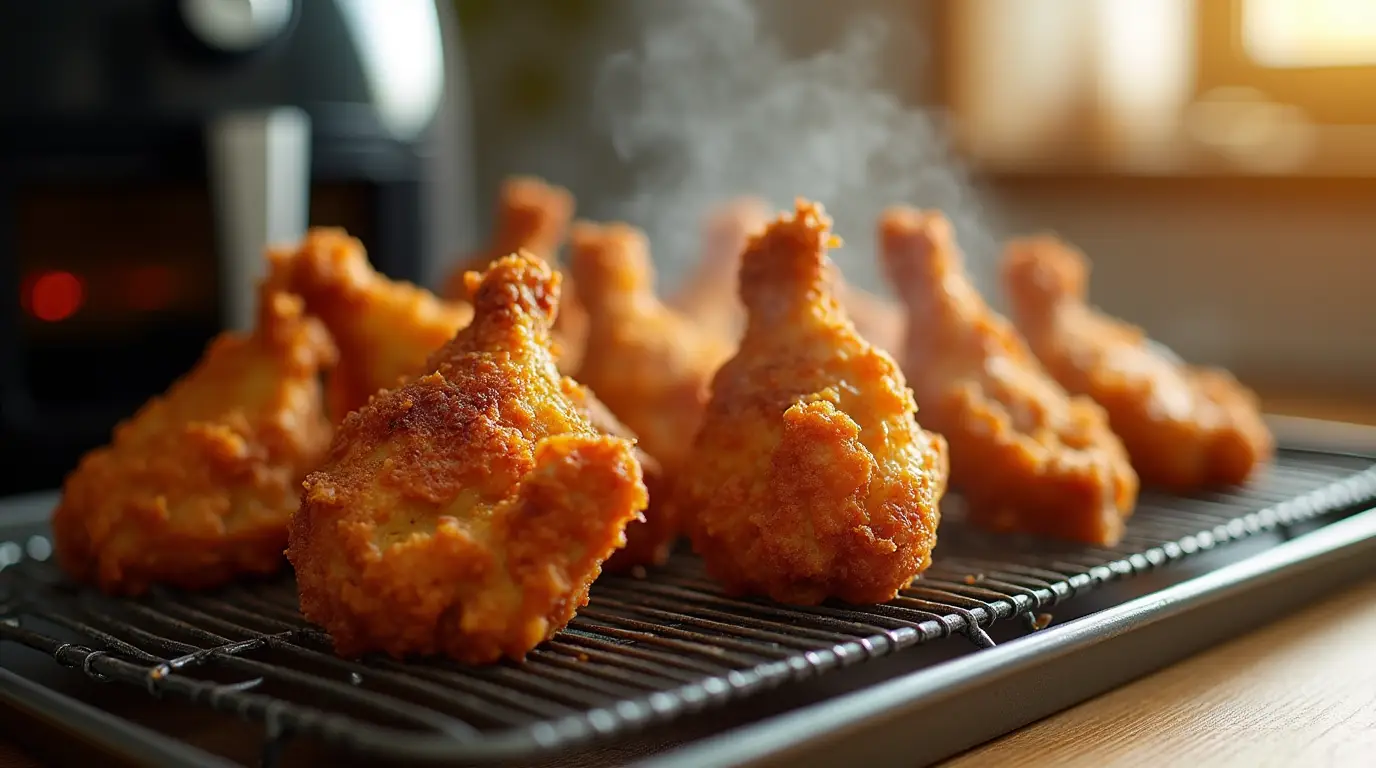
Preheat the oven to 375°F (190°C). Set a wire rack inside a rimmed baking sheet so hot air can circulate around the chicken and any excess moisture has somewhere to go. Arrange the pieces in one layer, leaving space between them. Do not wrap the chicken tightly in foil or stack several pieces together. Both habits trap steam and make the coating soft.
Place the tray in the oven and begin checking after about 10 minutes for small pieces. Larger bone-in thighs and breasts may take considerably longer, often roughly 15 to 25 minutes depending on their size and starting temperature. The exact minutes are only a guide; use a food thermometer in the thickest part of the meat, avoiding the bone, and reheat poultry leftovers to 165°F (74°C) throughout. Remove the pieces once they are hot rather than leaving them to dry out.
How to Reheat Fried Chicken in an Air Fryer
Preheat the air fryer to approximately 350°F (175°C) if the appliance instructions recommend preheating. Place cold fried chicken in a single layer with space around the pieces. Avoid packing the basket tightly, because overcrowding reduces airflow and can leave the breading patchy or damp. Small wings or tenders can heat much faster than thick bone-in pieces.
Check after four to six minutes for small portions, turn or reposition pieces if needed, and continue in short intervals until the thickest part reaches 165°F (74°C). Larger pieces may need substantially more time, and every air fryer handles heat differently. If the coating darkens before the center is hot, lower the temperature a little and finish gently. Do not add a wet glaze before reheating; serve sauces separately to keep the crust drier.
Oven Versus Air Fryer: Which Should You Choose?
The oven is the most practical choice when reheating several pieces for a family. A wire rack gives each piece breathing room, and a large tray usually handles more chicken in a single batch than an air fryer. The trade-off is a longer preheat and a slightly less aggressive surface crisping effect on small portions. Choose the oven for large, unevenly sized bone-in pieces or when you are warming sides at the same time.
An air fryer works especially well for one or two servings and smaller pieces. Its concentrated airflow can make the outside pleasantly crisp again, but the compact basket creates a risk of overcrowding. For a mixed batch, separate wings from thick breasts and check each group individually. Neither appliance is universally better; the right choice depends on how much food you are warming and the shape of the pieces.
Can You Use the Microwave Without Ruining the Coating?
The microwave is convenient when time is limited, but it is difficult to keep fried chicken truly crisp this way. Place one or two pieces on a microwave-safe plate and heat in short bursts, checking the temperature at several points. A paper towel beneath the chicken can absorb some surface moisture, although it will not restore a freshly fried crust. Avoid heating for one long uninterrupted interval, which may leave the exterior rubbery while other areas remain cool.
If you have a microwave and a skillet or air fryer, use the microwave only to warm the interior partway, then finish briefly with dry heat to improve the coating. Be careful with partially heated food: complete the reheating promptly and confirm the finished chicken reaches 165°F (74°C). A short skillet finish can work for small boneless pieces, but it is harder with a large breaded breast.
Keep the Breaded Exterior as Dry as Possible
Moisture is the main enemy of crisp breading. Set chicken on a rack rather than on a solid plate during oven reheating. Leave space between the pieces, avoid tightly covering the pan, and do not sprinkle the breading with water or broth. If the chicken already has a slightly oily coating, extra oil is usually unnecessary. A very light spray may help exceptionally dry areas in an air fryer, but too much oil can make the surface greasy.
Serve sauces on the side. Pouring dressing or gravy over the coating before reheating will soften it, even if the chicken becomes hot. If you are making a sandwich or wrap from leftovers, warm the chicken first and assemble with moist vegetables or sauce afterward. For another way to enjoy crisp chicken cooked fresh, see our Southern fried chicken recipe.
How to Reheat Large Bone-In Pieces Without Drying Them Out
Bone-in breasts and thighs take longer to warm evenly than wings or thin tenders. Use moderate dry heat and check the thickest part with a thermometer rather than relying on the color of the crust. When reheating several different cuts, remove smaller pieces as they reach the target temperature instead of making them wait for the largest piece. This reduces the risk of dry meat.
If the breading becomes dark before the interior is ready, reduce the oven or air-fryer temperature slightly for the remaining heating time. You can loosely shield a particularly dark patch of crust while keeping most of the chicken exposed to circulating air. Avoid cutting large pieces into tiny fragments before reheating if your goal is to preserve moisture. Slice them after warming when practical.
Reheating Fried Chicken Directly from Frozen
Cooked fried chicken can be frozen for another meal when it was handled safely before freezing. Package pieces individually or separate them with freezer-safe material so you do not have to thaw an entire batch to use one serving. Label the storage date. Freezing preserves convenience but does not guarantee that the coating will have its original texture after reheating.
For the most even results, thaw frozen cooked chicken in the refrigerator before using the oven or air fryer. You may reheat directly from frozen when the appliance can heat it evenly, but the process takes longer and requires extra attention to the center. Never thaw chicken on the kitchen counter. Whatever method you use, verify the thickest portion reaches 165°F (74°C) before serving.
Common Reheating Mistakes and Their Fixes
If the coating is soggy, the pieces may have been crowded or tightly covered. Spread them out and use a rack next time. If the crust burns before the interior is warm, the heat was too aggressive for the size of the chicken; reduce it and allow more time. If the meat dries out, it may have been overheated or left in the oven after reaching temperature. Use a thermometer to avoid guessing.
If one piece heats unevenly, consider the difference between thick meat near the bone and thin breaded edges. Repositioning the pieces helps, but do not rely on surface browning alone. For leftovers that have been stored too long or handled unsafely, there is no reheating trick that can guarantee safety. Our guide to checking chicken freshness explains why storage history matters.
Frequently Asked Questions
What temperature should reheated fried chicken reach?
Reheated poultry leftovers should reach 165°F (74°C) throughout. Check the thickest part with a food thermometer while avoiding contact with bone.
Is the oven or air fryer better for crispy leftovers?
Both can help. The oven handles large batches more evenly, while an air fryer can restore crisp edges quickly on smaller pieces.
Should I let fried chicken reach room temperature first?
No. Keep it refrigerated until reheating and do not leave it standing out to warm. Start with chilled chicken and use a thermometer to check doneness.
How long does reheating fried chicken take?
Time varies with piece size, appliance, and starting temperature. Small air-fryer pieces may need only several minutes, while large bone-in oven portions can take much longer.
Can I reheat leftover fried chicken twice?
Repeated temperature changes reduce quality and increase opportunities for mishandling. Portion leftovers so you reheat only what you intend to eat, and follow safe storage and heating guidance.