
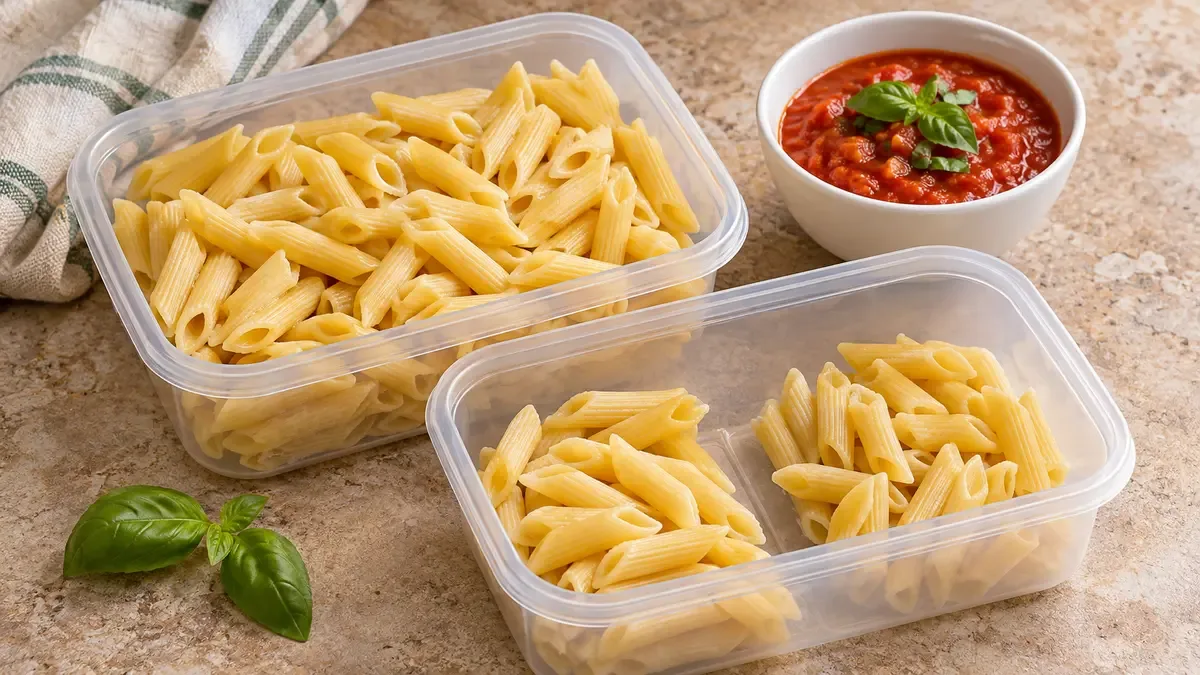
Cooking pasta in advance can save time, but reheating a frozen portion often produces the wrong texture: soft edges, clumped shapes, or a sauce that seems to disappear. The solution starts before the pasta reaches the freezer. How firmly you cook it, how quickly you cool it, and whether you pack it with sauce all determine how it will taste later. This guide explains how to freeze cooked pasta for meal prep, which dishes hold up best, and how to reheat each portion without turning dinner into a mushy bowl. It is a storage and technique guide, not a single recipe.
Table of Contents
Can You Freeze Cooked Pasta?
Yes. Plain cooked pasta can be frozen, although it will not have quite the same bite as pasta cooked immediately before serving. Freezing works best when you cook it slightly firmer than usual, cool it promptly, remove excess surface moisture, and package it in meal-size portions. Pasta that was already very soft before freezing is more likely to break or feel gummy after reheating.
The type of pasta matters. Penne, rigatoni, fusilli, and other sturdy short shapes generally handle freezing and reheating more predictably than delicate fresh pasta. Filled pasta needs extra care because the filling and wrapper can respond differently to moisture. If you are cooking specifically for the freezer, choose a sturdy shape and test a small portion before preparing a large batch.
Cook Pasta for Freezing, Not for Immediate Serving
Bring a generous pot of water to a steady boil, salt it to taste, and add the pasta. Follow the package time as a starting point, but begin testing a little early. Stop while the center still has a firm bite, especially when the pasta will be reheated in sauce later. Pasta continues to soften when it absorbs liquid during storage and reheating.
Drain promptly. Do not leave the pasta sitting in hot water while preparing the rest of the meal. For a batch intended for freezing plain, spread it briefly in a shallow layer so steam can escape and the strands or shapes do not remain in a hot, tightly packed mound. Avoid excessive oil, which can prevent sauce from coating the pasta evenly later. A light coating may help some shapes separate, but it is not a substitute for correct cooking and packaging.
Cool Pasta Safely Before Packing
Treat cooked pasta as a perishable prepared food. Divide large batches into shallow containers and refrigerate promptly instead of leaving them on the counter to cool for several hours. The FoodSafety.gov food-safety guidance advises refrigerating perishables within two hours, or one hour when temperatures exceed 90°F (32°C). Refrigerate first if the pasta is still very hot, then transfer chilled portions to freezer-safe packaging.
Do not seal a steaming-hot, deep container and assume the freezer will cool the center quickly. Shallow portions lose heat more effectively. Use clean utensils and keep cooked pasta away from raw ingredients. Freezing does not make improperly stored food safe again, so the handling before freezing matters just as much as the freezer itself.
Choose the Right Portion Size and Packaging
Freeze amounts you will realistically use at once. Single-serving portions are useful for lunches, while larger containers work for a family casserole. A thin, flat layer in a freezer bag freezes and thaws more evenly than a dense ball. Press out excess air without crushing the pasta, seal securely, and label each package with the contents and date.
Rigid freezer-safe containers are useful for pasta with sauce, especially when the sauce is liquid enough to leak from a bag. Leave appropriate headspace for expansion, follow the container manufacturer’s freezer guidance, and keep lids fully sealed. Reusable containers should be clean, dry, and free of cracks. For plain pasta, small portions are easier to reheat without overcooking the entire batch.
Should You Freeze Pasta With Sauce or Separately?
It depends on the sauce. Tomato-based sauces generally freeze well and help protect pasta from drying out. A modest amount of sauce can keep shapes separate and provide moisture during reheating. If you want maximum control over texture, freeze the sauce separately and combine it with the pasta when reheating. This is particularly useful when the sauce needs a different warming time.
Cream-based sauces may separate or become grainy after thawing, especially if heated too aggressively. Cheese sauces can tighten as they cool. For a creamy dish, reheat gently and add a little water or milk only as needed, stirring until the sauce becomes cohesive. Delicate fresh herbs, crunchy toppings, and raw salad vegetables are usually better added after reheating rather than frozen with the pasta.
How to Freeze Plain Pasta Step by Step
Cook a sturdy short pasta shape until slightly firmer than your preferred finished texture. Drain immediately. Spread the pasta in a shallow layer for a brief initial cooling period, then refrigerate promptly in shallow containers. Once chilled, divide into the portions you expect to use. Transfer each portion to a labeled freezer bag or container and remove unnecessary air.
If the pasta tends to stick, separate the shapes gently before packing rather than pulling them apart after they have frozen into a solid mass. Lay freezer bags flat until frozen, then store them upright if space is limited. Avoid piling warm packages tightly together because this slows cooling. Keep the freezer at 0°F (-18°C) or colder for frozen storage.
How Long Does Frozen Cooked Pasta Keep?
For best texture, plan to use frozen cooked pasta within roughly one to two months. That is a practical quality target rather than an absolute safety deadline. Food continuously held frozen at 0°F (-18°C) remains safe from bacterial growth, but flavor and texture can deteriorate over time. Packaging quality, freezer temperature stability, and the pasta’s original moisture level all affect the result.
Write the freezing date on each package and use older portions first. Ice crystals, dried edges, and a stale freezer odor suggest quality has declined. Discard food that was mishandled before freezing or shows signs of spoilage after thawing. Do not use smell alone to determine whether a previously mishandled food is safe.
Thaw and Reheat Without Making Pasta Mushy
For plain frozen pasta, a brief dip into simmering water can be effective. Add a small portion directly from frozen and remove it as soon as it is heated through. Do not boil it for the full original cooking time. Drain and toss immediately with warm sauce. This method is especially useful for sturdy shapes that were intentionally cooked a little firm.
For sauced pasta, warm it in a covered skillet over medium-low heat with a splash of water, stirring occasionally. The steam loosens the sauce while gentle heat reduces sticking. A microwave also works: use a microwave-safe container, cover loosely, stir partway through, and heat until the center is hot. Reheat leftovers to 165°F (74°C), checking with a food thermometer where practical. Avoid repeated cycles of warming, cooling, and reheating the same batch.
Which Pasta Dishes Freeze Best?
Short pasta with a robust tomato sauce is a practical starting point. A batch of tomato spinach pasta can be portioned for quick lunches, although the spinach will soften further on reheating. Baked pasta dishes often freeze well in individual portions, but their texture depends on how much sauce remains after baking.
For a baked casserole, slightly undercook the pasta before assembling if you plan to freeze it before baking. For a fully baked portion, cool promptly and freeze in a freezer-safe container. When you want a wider range of options, browse the pasta recipe collection and choose dishes with sauces that can tolerate gentle reheating. Avoid freezing crisp toppings with the pasta if you want them to stay crunchy.
Common Mistakes That Lead to Soggy Pasta
Overcooking before freezing is the most common texture mistake. Excess moisture is another: pasta packed while still wet can freeze into a heavy block, and thawing it in a pool of water makes the problem worse. Large portions are harder to reheat evenly, so the outer pasta may overcook before the center becomes hot.
Another mistake is treating all sauces the same way. A watery tomato sauce may need to reduce before serving, while a thick cheese sauce may need gentle loosening. Add liquid in small increments instead of pouring in a large amount at once. Finally, do not assume freezing extends the safe life of food that sat out too long before storage.
Frequently Asked Questions
Can I freeze cooked spaghetti?
Yes, but long strands can clump and soften. Freeze small portions and reheat briefly with sauce rather than boiling for several minutes.
Do I need to rinse pasta before freezing?
Usually not. Rinsing can remove surface starch that helps sauce cling. If you need to stop cooking quickly, prioritize prompt draining and safe cooling rather than prolonged rinsing.
Can I freeze pasta with pesto?
You can, but fresh herb flavors and color may change. For brighter flavor, freeze pasta separately and stir in fresh pesto after reheating.
Can I reheat pasta straight from frozen?
Yes. Small portions can go directly into simmering water or a covered skillet. Heat thoroughly and avoid prolonged cooking.
Can I refreeze thawed pasta?
Pasta thawed safely in the refrigerator can generally be refrozen, though texture will worsen. Avoid refreezing food thawed at room temperature.
Make Your Next Pasta Batch Freezer-Friendly
The most reliable method is simple: start with sturdy pasta, cook it a little firm, cool it safely, freeze realistic portions, and reheat only until hot. Keep sauces and delicate toppings separate when their textures call for it. A small test batch will tell you whether your preferred pasta shape and sauce survive freezing before you commit to a week’s worth of meals.