
One-pot tomato spinach pasta is the kind of dinner that earns a place in your regular rotation because the pasta cooks right in the tomato sauce. You soften onion and garlic in a deep pot, add dry penne or rotini with tomatoes and broth, and stir until the pasta becomes tender and the liquid turns into a sauce. Fresh spinach wilts in at the end, bringing color and a mild vegetable flavor without another pan to wash.
The key is managing the liquid. Pasta absorbs broth as it cooks, but different shapes and pots lose moisture at different rates. Begin with the measured amounts in the recipe card and add small splashes of warm water only if the noodles need more time. This is not an ordinary recipe where you cook pasta separately and drain it. The starch released into the pot is part of what makes the final sauce cling.
Why Cook Pasta and Sauce Together?
Cooking dry pasta in a seasoned tomato broth means the noodles absorb flavor while they soften. The pot also retains starch that would normally run down the drain with the cooking water. As you stir, that starch helps the tomato liquid become thicker and coat the pasta. The method is practical on busy evenings, particularly if you want an uncomplicated dinner with a short shopping list.
A one-pot method does require attention near the end. The sauce can tighten quickly as the pasta approaches doneness, especially in a wide pan over a strong flame. Instead of walking away, check every couple of minutes and stir to keep the bottom from sticking. If you prefer a recipe that uses a separate pasta pot and a finished sauce, browse our best pasta recipes guide for other options.
Choose the Right Pasta Shape
Short dry pasta is the easiest choice for this recipe. Penne, rotini, or similar medium shapes sit comfortably in the liquid and are easy to stir without breaking. Very long pasta may need a wider pan, and stuffed fresh pasta cooks differently enough that it should not be treated as a direct swap. The recipe uses twelve ounces of dry pasta, a practical quantity for four portions.
Pasta brands can differ in thickness even when they share the same shape. Start tasting before the package’s minimum cooking time, but expect the final time to depend on how vigorously the liquid simmers. The noodles should be cooked through while still holding their shape, not collapsing or becoming chalky in the center. When the pasta is right, the remaining sauce should coat a spoon rather than resembling a bowl of thin soup.
Why Diced Tomatoes, Broth, and Spinach Work
Canned diced tomatoes add acidity and small pieces of tomato throughout the dish. Use the juices in the can; draining them would alter the liquid balance. Low-sodium vegetable broth provides the cooking liquid and a savory base. Water brings the total moisture to the appropriate starting level without making the sauce excessively salty, which can happen when all the liquid comes from heavily seasoned broth.
Fresh baby spinach goes in near the end because it cooks quickly. If it went into the pot with the dry pasta, it would become overcooked long before the noodles were ready. Stir in one handful at a time and let it wilt; five ounces looks like a lot of greens at first but reduces substantially. Dried Italian seasoning and a pinch of red pepper flakes are optional ways to build flavor without complicating the method.
The Best Pot and Equipment
Use a wide, deep pot with enough room to stir twelve ounces of dry pasta without sending sauce over the rim. A large sauté pan with high sides or a Dutch oven works well. A narrow saucepan forces the noodles into a deep layer, which can cook unevenly, while an extremely wide, shallow pan may evaporate the liquid more quickly than the recipe assumes.
A wooden spoon or heat-safe spatula makes it easier to reach the bottom and corners where pasta sticks first. Keep a small jug of warm water nearby so you can correct the liquid level as needed. You will also want a chopping board for the onion, garlic, and spinach. The dinner is genuinely one-pot after the vegetables are prepped; there is no separate colander step.
How to Make One-Pot Tomato Spinach Pasta
Step 1: Soften the Onion
Warm olive oil over medium heat and add finely diced onion. Stir for several minutes until the pieces soften and turn a little translucent. The onion should smell sweet and mild, not browned or burned. Starting with this layer makes the final tomato sauce taste more rounded.
Step 2: Add Garlic Briefly
Stir in minced garlic and cook for about thirty seconds, just until fragrant. Garlic can scorch quickly on a hot pan bottom, so lower the heat if the oil is smoking. You are building aroma here, not frying the garlic to a dark color.
Step 3: Combine the Pasta and Liquid
Add dry penne or rotini, canned diced tomatoes with juices, vegetable broth, water, Italian seasoning, salt, pepper, and optional red pepper flakes. Stir until the pasta is distributed as evenly as possible. Bring the pot toward a gentle boil, making sure there is enough liquid around the noodles.
Step 4: Simmer and Stir
Reduce the heat to a lively simmer and cook uncovered, stirring frequently. The pasta should move freely enough that it does not adhere to the bottom. After about ten minutes, taste a noodle. If it is still firm and the pan looks dry, add hot water a few tablespoons at a time. If there is too much liquid, simmer a little longer, stirring so the noodles do not stick.
Step 5: Fold in Fresh Spinach
Once the pasta is tender and the tomato mixture looks like a sauce, add fresh spinach in two batches. Fold gently until the leaves collapse and wilt, usually in a minute or two. Avoid boiling the spinach for a long time; its bright color and tender texture are best preserved at the end.
Step 6: Rest and Serve
Turn off the heat and let the pasta rest for a couple of minutes. The sauce will thicken slightly as the noodles finish absorbing liquid. Taste for salt and pepper, then add grated Parmesan if desired. Serve while warm, with a green salad or crusty bread if you want a larger meal.
How to Tell Whether the Liquid Is Right
At the start, the ingredients may look like pasta in thin tomato broth. That is expected. As it cooks, the pasta absorbs water and releases starch, changing the sauce’s texture. Near the end, a spoon dragged along the bottom should leave a brief path before the sauce flows back. If the bottom looks dry but the noodles remain tough, add water in a small amount rather than turning up the flame.
A pot that is too watery at the finish may simply need another minute or two uncovered. Do not add flour to thicken it; the pasta starch is meant to do that work. Also remember that the sauce tightens as it rests, so stop cooking while it is still lightly saucy. A completely dry pan on the stove often produces clumpy pasta by the time it reaches the table.
Easy Variations and Ingredient Swaps
For a creamy finish, add a tablespoon of soft cream cheese or a spoon of ricotta after turning off the heat, then stir until smooth. This changes the dish from a light tomato pasta to something richer, so taste before adding extra salt. A handful of fresh basil at serving time is another option if you like a brighter herbal finish than dried Italian seasoning alone.
Canned chickpeas can add a little more substance: drain and rinse them, then stir them in near the end so they heat through without falling apart. If you prefer a non-tomato sauce, use our pesto pasta with cherry tomatoes rather than simply omitting tomatoes from this recipe. The starting liquid balance here depends on the tomatoes and their juices.
Common Problems and Practical Fixes
The Pasta Is Sticking to the Pot
Stir more often, especially during the first few minutes after the dry pasta goes in. Check that enough liquid remains to cover the lower layer. A pot with thin walls or a very strong burner can create hot spots; reduce the heat and add a small splash of hot water if needed.
The Pasta Is Soft but the Sauce Is Thin
Let the pot simmer uncovered briefly and stir until the sauce thickens. Be careful not to overcook the noodles while reducing. If the dish is already fully tender, turn off the burner and let it rest instead; the sauce often thickens naturally in a couple of minutes.
The Tomato Flavor Is Too Sharp
Canned tomatoes vary in acidity. Give the sauce enough time to simmer with onion and garlic, then taste before adding additional seasoning. A little grated cheese at serving may round out the flavor. Avoid piling in sugar immediately; you may only need a bit more salt or a short resting period.
The Spinach Becomes Dull and Mushy
Add it at the end and switch off the heat as soon as it wilts. Baby spinach cooks quickly and does not benefit from fifteen minutes of boiling with pasta. For larger mature leaves, remove tough stems and chop before adding.
What to Serve with Tomato Spinach Pasta
This pasta works as a simple meat-free dinner. A cucumber salad, roasted broccoli, or a piece of crusty bread are easy accompaniments. If you would rather serve a rich, creamy pasta, our fettuccine Alfredo uses a different sauce and cooking method. The two dishes offer useful variety within the dinner collection.
For more pasta inspiration, the pasta recipes pillar guide compares tomato sauces, creamier dishes, and oven bakes. This one-pot version is especially convenient when you want short preparation and little washing-up. Serve the finished pasta promptly, because the noodles keep absorbing sauce after they leave the stove.
Make-Ahead and Leftover Storage
Cool leftovers promptly and place in shallow containers in the refrigerator within two hours, at 40°F (4°C) or below. Cooked pasta leftovers are generally best used within three to four days when stored safely. The texture changes as the pasta continues to absorb sauce, so expect to loosen the portion with a splash of water during reheating.
Warm over medium-low heat, stirring until heated through. Avoid boiling aggressively, which can turn the pasta soft and break down the spinach. Freeze portions only after cooling safely; thaw in the refrigerator and expect a softer texture. For official general storage guidance, consult FoodSafety.gov’s cold-storage chart.
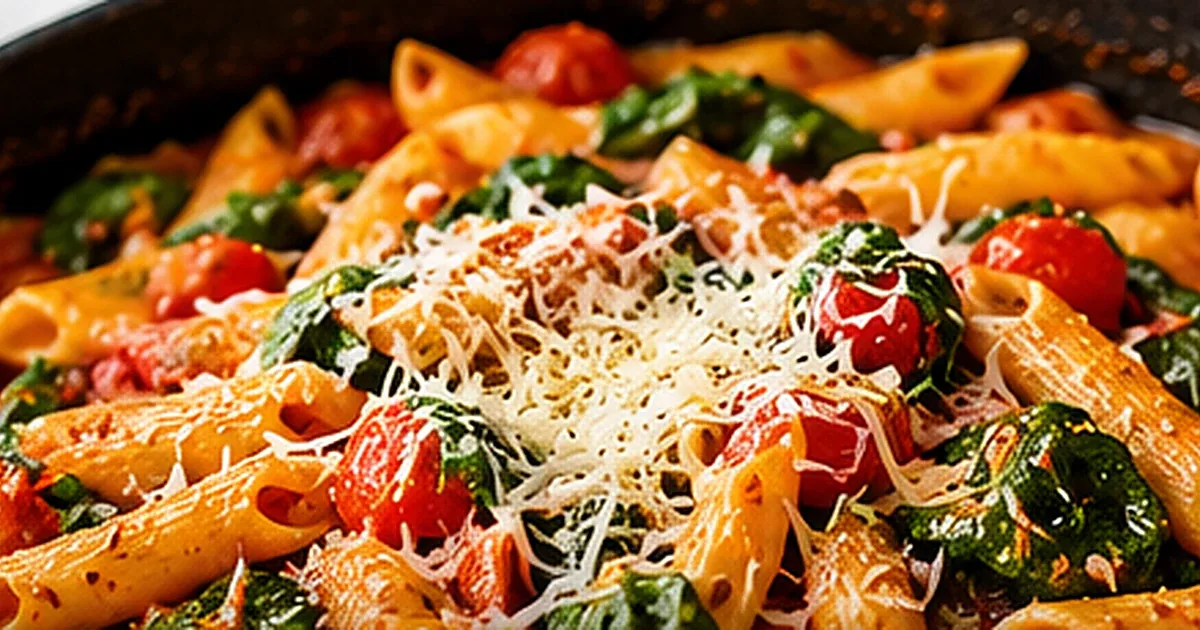
One-Pot Tomato Spinach Pasta
Ingredients
Equipment
Method
- Warm the olive oil in a wide, deep pot over medium heat. Cook the diced onion 3–4 minutes until softened.
- Add minced garlic and cook about 30 seconds until fragrant, taking care not to scorch it.
- Add dry pasta, tomatoes and their juices, broth, water, Italian seasoning, pepper flakes, salt, and black pepper. Stir and bring to a gentle boil.
- Reduce to a lively simmer, stirring often so the pasta does not stick. Cook uncovered 11–15 minutes or according to the pasta shape, until tender and most liquid has thickened into sauce. Add warm water in small splashes if it looks dry before the pasta is done.
- Stir in spinach in two batches and cook 1–2 minutes until wilted. Taste and adjust seasoning.
- Rest the pot 2 minutes to allow the sauce to cling, then serve with Parmesan if desired.
Notes
Frequently Asked Questions
Can I cook dry pasta directly in tomato sauce?
Yes, provided there is enough added liquid to hydrate it. This recipe includes broth and water because plain thick tomato sauce alone would not cook the noodles evenly.
Do I need to cover the pot?
The method uses an uncovered simmer and frequent stirring. A lid changes evaporation and may require adjusting the liquid and timing.
Can I use frozen spinach?
Yes, but thaw and squeeze out excess liquid first, then add it near the end. Frozen spinach has a different texture and can make the sauce watery if added directly in a large frozen block.
Can I substitute spaghetti?
Long pasta needs a different pan layout and may cook less evenly in this quantity. Medium short shapes such as penne or rotini are the more reliable choice.
Why does the sauce thicken after serving?
The pasta keeps absorbing liquid as it cools. Stop cooking while the sauce is still lightly loose and add a splash of warm water when reheating leftovers.
A Dinner with Less Washing-Up
What makes this tomato spinach pasta useful is the order of the method: soften aromatics, simmer the dry pasta in seasoned liquid, and finish with greens. Pay attention to the last few minutes and you will have a flavorful dinner without a second pot. When you want a different sauce or a more elaborate bake, return to our best pasta recipes collection for ideas.