
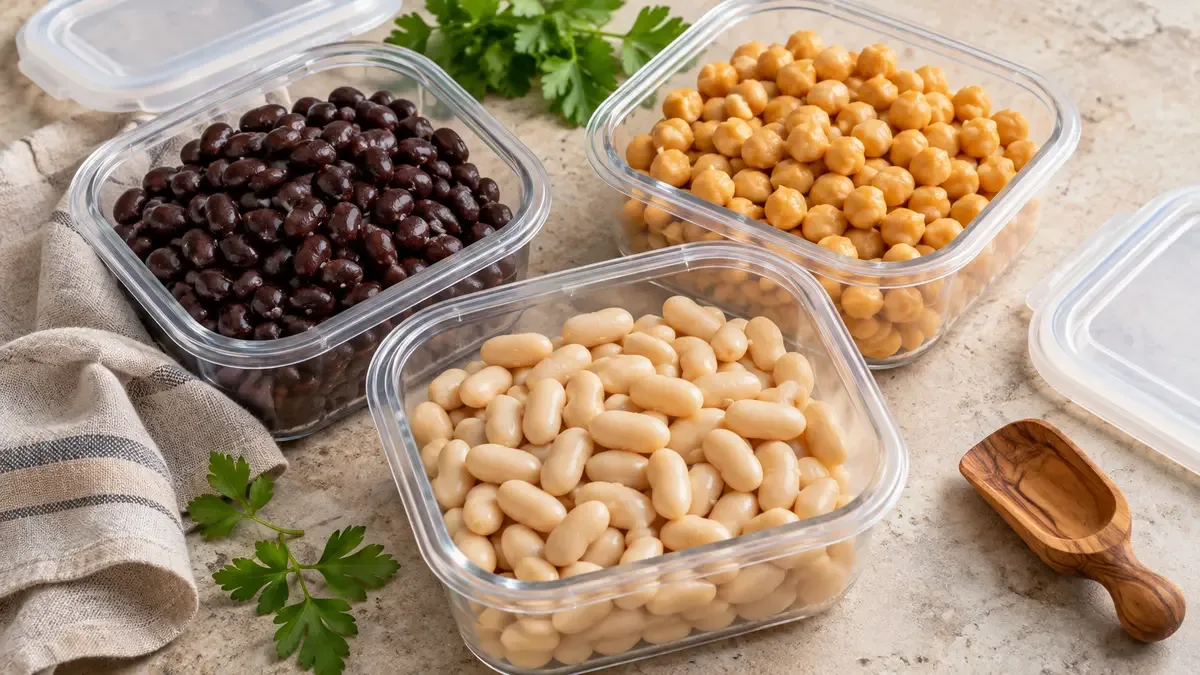
Freezing a pot of cooked beans can turn a long cooking session into several easy lunches. The trick is to freeze them while their texture is still firm enough to survive thawing, with just the right amount of moisture around each portion. Too much liquid makes a solid block that takes ages to reheat; too little can leave the edges dry and split. A simple portioning method solves most of those problems.
This guide covers home-cooked and canned beans, from black beans and chickpeas to white beans and lentils. You will learn when to drain them, which containers to use, how to cool them safely, and how to reheat a portion without turning it into paste. No special equipment is required beyond ordinary freezer-safe containers or bags.
Table of Contents
Which cooked beans freeze well?
Black beans, pinto beans, kidney beans, cannellini beans, navy beans, and chickpeas generally hold up well after freezing when they were cooked properly to begin with. Very soft beans will still taste fine in soups or mashed fillings, but they may break apart if you expect them to stay separate in a salad. Lentils vary more: firm green or brown lentils often retain recognizable shapes, while red lentils naturally soften and are better suited to blended or thick dishes.
Choose the texture according to the meal you plan to make. A bean destined for chili can tolerate a little more softness than one meant for a grain bowl. If your batch is still cooking and you know it will be frozen, stop when the beans are tender all the way through but not falling apart. Do not deliberately undercook dry beans simply to make them seem firm after reheating.
Start with properly cooked or canned beans
For a pot cooked from dried beans, finish cooking it safely before you portion it. Remove bay leaves or large aromatics that will be unpleasant to find later. Taste the beans for seasoning and doneness. If your cooking liquid is exceptionally salty, save less of it in the final freezer portions so that concentrated flavors do not overwhelm the next meal.
Canned beans can also be frozen after opening. Drain them if you are saving them for salads, taco bowls, or skillets, and rinse only when it fits the recipe. You do not need to freeze the original salty can liquid. Once a can is opened, move unused beans to a food-safe container promptly instead of treating the opened can as a storage package.
Decide whether to freeze beans with liquid
Use a small amount of cooking liquid for beans you will warm in soups, stews, or saucy dinners. A thin layer helps the beans stay moist as they freeze and provides a convenient starting point when you reheat them. It does not need to be enough to make every container into a bowl of soup. For grain bowls, tacos, and salads where separate beans are useful, drain thoroughly and spread out any excess surface moisture before packing.
Think about your next meal rather than one universal rule. Chickpeas destined for a crisp roasted topping should be well drained before freezing; beans for chili can stay lightly coated in broth. You can also freeze a batch two ways, with one portion in cooking liquid and the next drained, to learn which texture you prefer.
Cool beans safely before freezing
Do not leave a deep pot on the counter for hours while you finish other tasks. Divide the beans into shallow containers so heat escapes quickly, and refrigerate or freeze promptly. FoodSafety.gov explains that perishable cooked food should be refrigerated or frozen within two hours, or within one hour when exposed to temperatures above 90°F (32°C). A shallow container also helps avoid a warm center while the outer edges cool.
Hot food can go into the refrigerator in suitable shallow portions. Keep the refrigerator at 40°F (4°C) or colder and the freezer at 0°F (-18°C) or colder. The goal is quick, safe cooling, not waiting until everything reaches room temperature. If beans have already sat out beyond the safe window, freezing them does not reset their safety.
How to portion and pack cooked beans
Use the quantity you actually eat, not the biggest container you own. A half-cup portion may suit a small soup or salad; a full cup may work better for a hearty bowl or two servings of a side dish. Write the amount on the label so you do not have to thaw an entire bag just to use a spoonful. For households preparing several dinners, two-cup containers can be practical, but only if you plan to use the whole portion soon after thawing.
Rigid freezer-safe containers stack neatly and protect beans from being crushed. Leave a little headspace when liquid is included, because it expands as it freezes. Freezer bags save space: press them into relatively flat layers, remove unnecessary air, seal carefully, and freeze them on a tray until firm. Do not overfill or force a seal that might burst later. A flat pack thaws and reheats more evenly than a thick rounded lump.
Label each package with the bean variety, date, portion size, and whether it is seasoned. A label such as “Black beans • 1 cup • lightly salted” is more useful than “beans.” In the freezer, group similar portions together so older packages remain visible. If you have multiple batches, use the oldest first rather than continually hiding it behind new meals.
Freeze cooked beans step by step
First, finish cooking and decide whether the beans need their broth. Second, cool quickly in shallow portions within the recommended food-safety window. Third, place practical amounts in food-safe freezer containers or heavy freezer bags, leaving room for liquid to expand. Fourth, remove excess air, seal, and label the contents. Finally, lay bags flat or place containers in a stable part of the freezer where they can freeze without spilling.
For the best eating experience, I aim to use routine meal-prep portions within roughly two to three months, especially beans that must stay attractive in salads. That is a practical quality target, not a universal safety cutoff. Freezer temperature stability, packaging, and the initial texture all influence how pleasant a batch will be. Longer-frozen beans may still be useful for blended soup even if they no longer look ideal on a plate.
Thaw beans without a watery or gritty texture
Move a sealed container to the refrigerator for a gradual thaw when you have time. Place the container on a plate if you are concerned about condensation or drips. You can also reheat many cooked bean portions straight from frozen in a covered saucepan, adding a little water or broth so the bottom does not scorch before the center warms through. Stir gently once the block loosens.
Avoid repeatedly thawing and refreezing portions simply because they are too large. Choose the right pack size at the beginning. For a salad, thaw in the refrigerator, drain any excess liquid, and pat dry if the dressing needs to cling to the beans. For a soup or chili, the small amount of frozen cooking liquid can go straight into the pan.
Reheat gently, then finish the seasoning
A saucepan over moderate heat works well for most beans. Cover briefly to warm the middle, then uncover and reduce excess moisture if necessary. A microwave works too: use a microwave-safe covered bowl with a vent, pause to stir, and check that the food is heated evenly. Follow safe leftover reheating guidance; FoodSafety.gov recommends reheating leftovers to 165°F (74°C).
Frozen beans can taste flatter than freshly cooked ones. Instead of adding more salt at the start, warm them first, taste, and finish with a little lemon juice, olive oil, herbs, or appropriate spices. Add delicate greens after heating so they do not collapse. For salads, chill the beans again after safe reheating only when the planned preparation calls for it, or use beans thawed safely in the refrigerator according to your recipe.
Meal-prep ideas that use a single batch
A cup of frozen black beans can become part of a weeknight skillet, while chickpeas can bulk out a bowl with roasted vegetables. White beans work nicely in tomato-based soups and lemony salads. If you want a lunch using beans with seafood, try the site’s tuna and white bean salad, prepared with beans thawed safely and drained well. For a warm dinner, ground turkey and sweet potato skillet offers another use for black beans.
Chickpeas are versatile enough to reserve for a Mediterranean chickpea salad if the thawed texture remains firm. Prefer to prep a starch alongside them? The method in how to freeze cooked pasta can help you pack meal components separately rather than freezing a whole mixed dish that reheats unevenly.
Common mistakes that make frozen beans mushy
The biggest culprit is often overcooking before freezing. A second problem is reheating aggressively for too long, especially in a nearly dry pan. Giant freezer blocks encourage uneven heating and extra stirring, which breaks softer beans apart. Excess broth can dilute the final dish; too little moisture can scorch the beans. The remedy is straightforward: cook fully but not excessively, portion small, pack for the intended meal, and reheat only as long as needed.
Another common error is judging every frozen bean by salad standards. A batch that falls apart may be disappointing in a cold bowl but perfect for a thick soup, bean dip, or mashed taco filling. Check safe storage first, then choose the dish that suits the texture you actually have.
Frequently asked questions
Can I freeze cooked beans that were seasoned?
Yes. Ordinary herbs and spices can stay with cooked beans. Leave delicate garnishes or fresh acidic finishing touches until serving if you want their flavor and texture at their best.
Should I rinse cooked beans before freezing?
Not automatically. Drain them for dry applications, keep a little cooking liquid for soups, and rinse canned beans only when that fits your planned dish. Removing every trace of liquid is not necessary.
Can I freeze opened canned chickpeas?
Yes. Transfer the unused chickpeas promptly to a freezer-safe package, drain or lightly coat them according to the planned meal, label them, and freeze within the safe handling window.
Why are my beans splitting after thawing?
They may have been too soft before freezing, packed in a very large block, or heated too vigorously. Try firmer cooked beans, smaller portions, and gentle reheating with enough moisture.
How long can cooked beans stay in the refrigerator before freezing?
Treat them as cooked leftovers: FoodSafety.gov advises using refrigerated leftovers within three to four days and freezing sooner if you do not plan to eat them. Freezing does not make beans safe if they were handled improperly before storage.
Build a freezer routine that fits your meals
The next time you cook a pot of beans, reserve one portion for dinner and freeze the rest in the sizes you usually reach for. Keep some portions moist for soups and others drained for bowls. Label them clearly, rotate older batches forward, and adjust your method after the first thaw. Once you know how your favorite bean variety behaves, freezing it becomes a useful part of meal prep rather than another mystery container at the back of the freezer.