
When lunch needs to come together quickly, tuna and white bean salad is a practical way to use two pantry staples without cooking anything. Canned tuna gives the bowl a savory base, while white beans make it substantial enough to serve as lunch. Cucumber, cherry tomatoes, red onion, and parsley keep the texture fresh. Rather than a creamy mayonnaise dressing, this version uses lemon juice, olive oil, and a little Dijon mustard.
The method takes about 15 minutes if your ingredients are ready. The important work is simple: drain the tuna and beans thoroughly, cut the vegetables small enough to mix evenly, and toss gently to keep the beans intact. This recipe makes four lunch servings and works on its own, over greens, or with toasted bread. You’ll also find make-ahead advice, useful substitutions, and clear instructions for keeping chilled leftovers at a safe temperature.
Table of Contents
Why This Salad Works Without Mayonnaise
Classic creamy tuna salad binds the flakes with mayonnaise or a similar thick dressing. Here the goal is different. The beans provide body, the tuna adds flaky texture, and the vegetables keep every spoonful varied. A light vinaigrette coats the ingredients without turning them into a spread. It is closer to a bean salad with tuna than a filling intended to be packed into a sandwich.
White beans are useful because they are mild and soft. Cannellini, great northern, or other drained white beans can work, but their textures vary. Cannellini beans are especially convenient when you want large beans that stay distinct after mixing. Avoid vigorous stirring, which can mash them into the dressing. If a few beans split, that is not a problem; their starch may slightly thicken the lemon and olive oil.
Use canned tuna packed in water or olive oil. Water-packed tuna produces a cleaner starting flavor and makes the quantity of added oil easier to control. Oil-packed tuna adds richness; drain it and taste before adding all the dressing oil. Either way, thoroughly drain the tuna to prevent a pool of liquid at the bottom of the bowl.
Ingredients for Tuna and White Bean Salad
For four servings, use two 5-ounce cans of tuna, well drained, and two 15-ounce cans of white beans, drained and rinsed. Add 1 cup halved cherry tomatoes, 3/4 cup diced cucumber, 1/4 cup finely diced red onion, and 1/3 cup chopped flat-leaf parsley. For the dressing, measure 3 tablespoons fresh lemon juice, 3 tablespoons extra-virgin olive oil, 1 teaspoon Dijon mustard, 1/4 teaspoon freshly ground black pepper, and up to 1/4 teaspoon fine salt to taste. Lemon zest from half a lemon is optional but worthwhile if you have an unwaxed lemon.
You will need a colander, a large bowl, a small bowl or jar for the dressing, a sharp knife, and a spoon or flexible spatula. A salad spinner is useful for drying washed herbs, but paper towels also work. There is no oven or stovetop step.
Fresh Versus Canned Beans
This is designed around canned beans for speed. If you prefer beans cooked from dry, substitute approximately 3 cups of cooked and thoroughly drained white beans for the two cans. They should be tender but intact. Cool freshly cooked beans safely before making a chilled salad, and do not leave them on the counter for an extended period.
How to Balance Lemon and Olive Oil
The dressing begins with equal amounts of lemon juice and olive oil. That makes it bright rather than heavily oily. Dijon mustard helps disperse the oil and adds a little savory sharpness. Taste the mixed dressing on a clean spoon before adding it to the tuna; if your lemon is especially tart, a little more oil can soften the acidity. Adjust in small amounts so the final salad does not become wet.
How to Make Tuna and White Bean Salad
Step 1: Drain the Pantry Ingredients
Open the tuna and transfer it to a sieve, pressing gently to remove free liquid. Drain the beans into a colander, rinse under cool running water, and shake off excess moisture. Leave them to drain while you prepare the vegetables. If the beans are fragile, handle them gently to keep the skins from splitting.
Step 2: Prepare the Vegetables and Herbs
Wash and dry the cucumber, tomatoes, parsley, and lemon. Halve the tomatoes; dice the cucumber into pieces about the size of the beans. Mince the red onion finely so its sharpness is spread through the bowl rather than arriving in large pieces. Chop the parsley after drying it so extra rinse water does not dilute the dressing.
Step 3: Whisk the Lemon Dressing
In a small bowl, whisk together the lemon juice, olive oil, Dijon mustard, black pepper, and optional lemon zest. Start with only a pinch of the measured salt, because canned tuna and beans differ in sodium content. Whisk until the mixture looks slightly thickened and evenly combined. A tightly lidded jar also works: shake briefly, then open carefully.
Step 4: Assemble Without Mashing
Put the drained beans, cucumber, tomatoes, onion, and parsley in a large bowl. Add the tuna in bite-size flakes rather than crushing it to a paste. Pour most of the dressing over the top and fold everything together gently with a wide spoon. Add the remaining dressing only if the salad needs it. Let it stand for five minutes in the refrigerator if time allows, then taste and adjust salt or lemon.
Step 5: Serve Chilled or Freshly Mixed
Divide among four bowls. You can serve it immediately, or cover and chill briefly. It is excellent over arugula or romaine, with toast or flatbread on the side. When serving over leaves, keep the beans and tuna salad separate until the last moment to preserve the greens’ crispness.
How to Keep the Salad Fresh and Textured
The main enemy of a cold bean salad is unnecessary water. Rinse the beans, then drain them well. Dry the herbs and vegetables after washing, and consider removing the watery cucumber seeds if your cucumber is particularly large. The beans and tuna do not need to be bone-dry, but visible pooling liquid will thin the vinaigrette and wash away flavor.
Chopping matters too. Very large tomato pieces and thick red onion slices make the salad awkward to eat. Finely diced onion is easier to distribute without overpowering the milder beans. If raw onion tastes too sharp, rinse the chopped onion briefly in cold water and dry it before adding; this reduces its bite but does not change the basic recipe.
Do not crush the beans during mixing. A folding motion works better than stirring rapidly around the bowl. And do not add several extra tablespoons of lemon juice because the salad seems underseasoned; check the salt and pepper first. Acid, oil, and salt should work together, not drown the ingredients.
Serving Ideas for a Flexible Lunch
For a simple lunch, pair one serving with toasted whole-grain bread and sliced fruit. For a larger dinner salad, spoon it over sturdy greens and add a few cooked potatoes on the side. If packing lunch, put the salad in a tightly sealed chilled container and keep bread separate. A small container for delicate greens protects them from becoming wet during transport.
This preparation also provides a useful alternative to a hot tuna sandwich. JonasRecipes already has a tuna melt with a healthy twist when you want melted cheese and toasted bread, and its healthy turkey and avocado wraps offer a different portable lunch. Those pages answer different meal preferences rather than competing for this salad’s specific no-mayo bean-and-tuna search.
If you enjoy canned-tuna lunches but want a crisp handheld option, SABSEA’s easy tuna lettuce wraps use lettuce cups and a creamy filling. They are a useful alternate preparation, not a second version of this lemon-and-bean salad. The link belongs here because it gives readers a genuinely different way to use the same pantry ingredient.
Substitutions and Variations
Replace parsley with dill or a mix of parsley and dill for a different herb note. Use small white beans or great northern beans if cannellini are unavailable. A tablespoon of well-drained capers can add briny contrast; if using them, reduce the optional salt and taste again. Chopped celery adds extra crunch without much moisture. For a fuller Mediterranean-style bowl, a few chopped olives can work, but avoid adding several salty extras all at once.
Chickpeas can replace the white beans in the same approximate quantity, but this turns the salad into a chewier variation. If you want the exact search intent of tuna and white bean salad, keep white beans in the primary recipe and treat chickpeas as a substitution. Do not change both the beans and the dressing simultaneously when comparing the result, or it becomes difficult to tell which alteration you prefer.
You can prepare the vinaigrette and chop the vegetables in advance, but store the components separately if you need the crispest texture. Combine the tuna and beans with the vegetables close to serving time. For a packed lunch, chill the ingredients before leaving home and use an insulated lunch bag with an ice pack.
Storage and Food Safety
Cover and refrigerate tuna salad promptly, ideally in shallow containers kept at 40°F (4°C) or below. FoodSafety.gov lists tuna salads as suitable for three to four days in the refrigerator when properly stored, but the cucumber and tomatoes in this version are at their best earlier. For preferred texture, plan to eat within a day or two and use the official cold-storage window as the maximum, not a quality guarantee. Do not leave the salad at room temperature for more than two hours, or more than one hour in temperatures above 90°F (32°C). FoodSafety.gov’s cold-storage guidance
This cold salad does not freeze well. Cucumber and tomatoes lose their structure on thawing, and the beans can become mealy. If you want to prepare ingredients far ahead, keep unopened cans at appropriate pantry temperatures and make the fresh salad when you need it. Discard any serving that has been held unrefrigerated beyond the safe time limit.
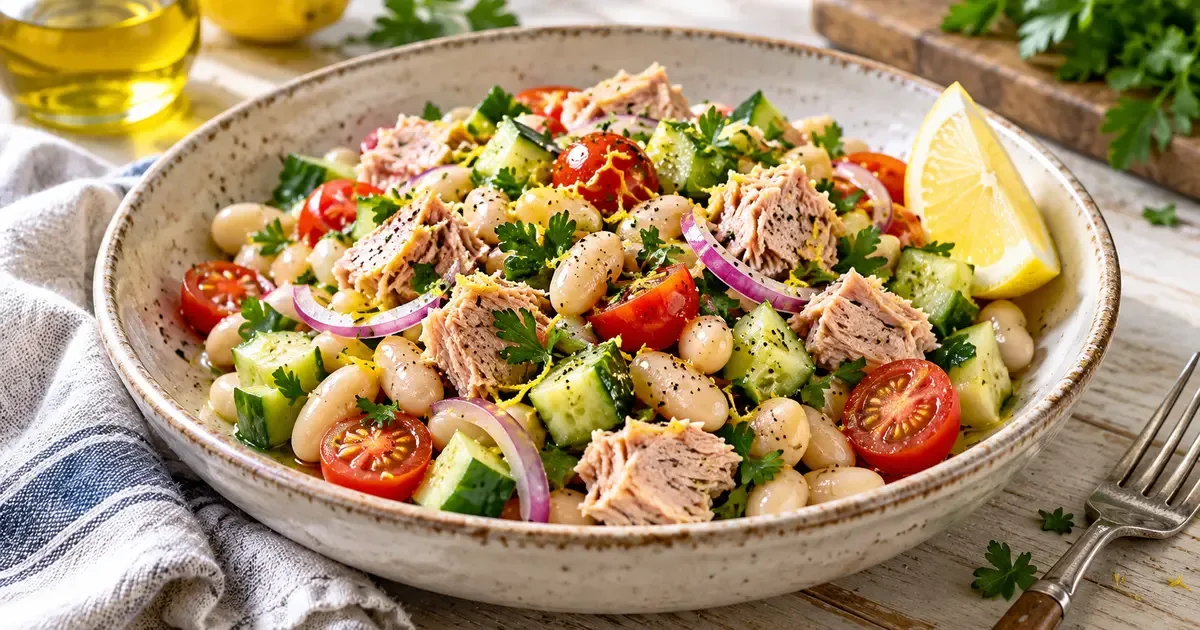
Tuna and White Bean Salad with Lemon and Fresh Herbs
Ingredients
Equipment
Method
- Drain tuna and rinsed white beans thoroughly.
- Wash, dry, and cut the tomatoes, cucumber, red onion, parsley, and lemon.
- Whisk lemon juice, olive oil, Dijon mustard, pepper, and optional zest. Taste before adding salt.
- Gently fold white beans, vegetables, herbs, and flaked tuna with most of the dressing.
- Add remaining dressing if needed. Divide into four portions and serve freshly mixed or chilled.
Notes
Frequently Asked Questions
Can I make tuna and white bean salad without mayonnaise?
Yes. This recipe is specifically designed without mayonnaise. Fresh lemon juice, olive oil, and a little Dijon make a light dressing that coats the beans and tuna without turning them into a creamy sandwich filling.
What are the best beans for tuna salad?
Cannellini beans are an easy first choice because they are mild and hold their shape. Great northern and other cooked white beans also work. Drain and rinse canned beans thoroughly, and mix gently to avoid crushing them.
Is canned tuna packed in oil suitable?
Yes. Drain it well and start with slightly less of the added olive oil, then taste before adding the remainder. Oil-packed tuna can be richer than water-packed tuna, so the dressing may need small adjustments.
Can I make this salad the night before?
Yes, if you refrigerate it promptly in a covered container. The lemon dressing will continue to season the beans, but cucumber and tomatoes soften over time. For the crispest result, keep those vegetables separate and fold them in shortly before serving.
How long does tuna and white bean salad keep?
Properly refrigerated tuna salads have an official three-to-four-day window. Because this version contains fresh vegetables, aim to enjoy it earlier for better texture. Keep it at or below 40°F and do not serve a batch left unrefrigerated beyond safe time limits.
A No-Cook Lunch Worth Keeping in Rotation
The appeal of tuna and white bean salad is that a pantry-based meal can still feel fresh. Drain the ingredients thoroughly, keep the vegetables crisp, and use a balanced lemon dressing instead of a heavy sauce. With the quantities and storage guidance above, this becomes a reliable lunch option that is different from the site’s existing tuna melt or wrap recipes.