
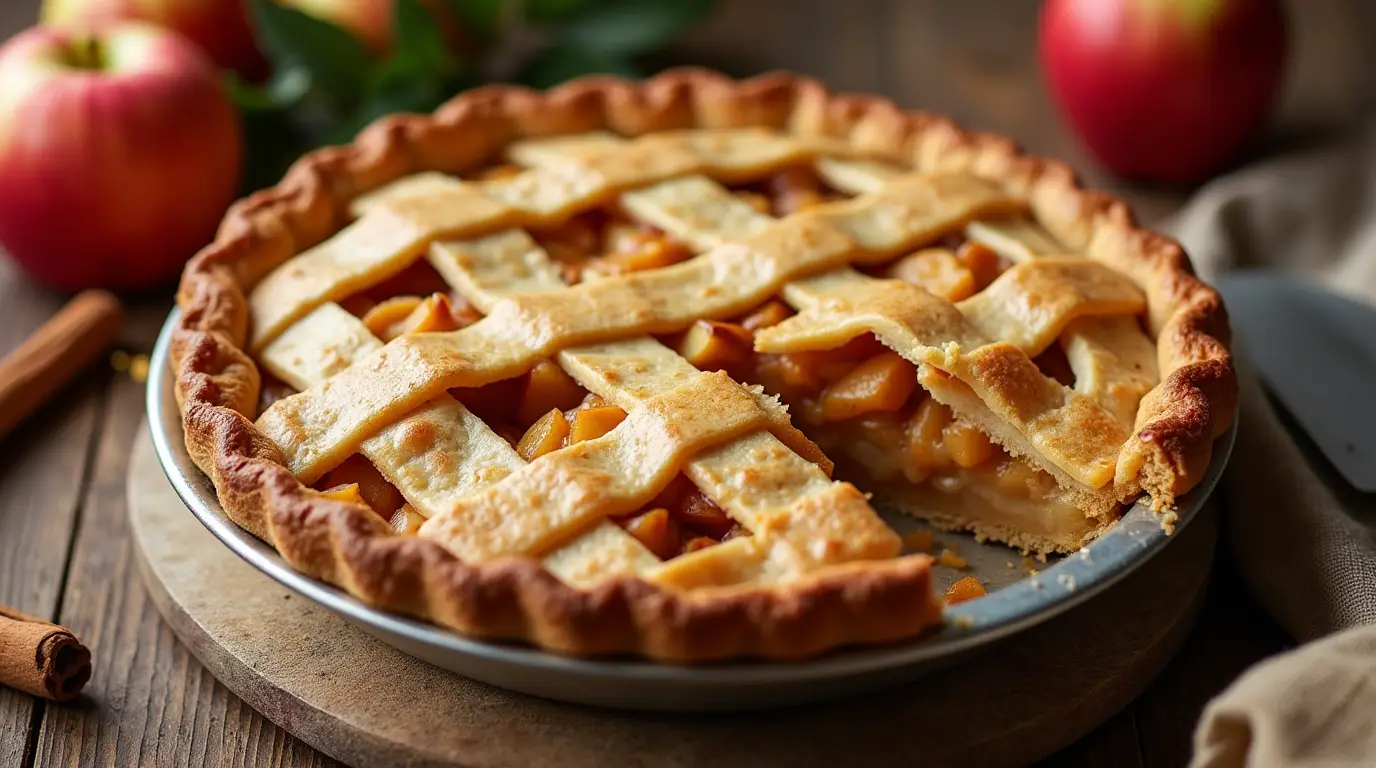
Yes, you can freeze apple pie before or after baking. The important differences are how you protect the pastry, whether you want to bake a fresh crust later, and how much time you have before serving. This guide covers whole pies, individual slices, wrapping, thawing, and reheating, so you can choose a method that fits the pie you already made.
Table of Contents
Should You Freeze Apple Pie Before or After Baking?
Yes, you can freeze apple pie either baked or unbaked. The better choice depends on when you want to serve it and how much oven time you will have that day. An unbaked pie gives you the opportunity to bake a fresh crust when guests arrive. A baked pie is convenient when you want to reheat a finished dessert or save leftovers. Both methods work best when the pie is wrapped carefully and kept consistently frozen.
Choose an unbaked pie when the crust is sturdy, the filling has been prepared for freezing, and you have enough time for a longer bake from frozen. Choose a baked pie when the pastry is already golden, you have leftover slices, or you need the quickest route to serving. A cream-topped or custard-based pie needs different handling from a standard apple pie; the guidance here focuses on traditional fruit filling with a pastry crust.
How to Freeze an Unbaked Apple Pie
Prepare your usual apple pie in a freezer-safe metal pie plate or another pan explicitly rated for freezer-to-oven use. A disposable aluminum pie plate is practical because it avoids the risk of temperature shock associated with moving ordinary glass directly from a freezer into a hot oven. Fit the bottom crust into the pan, add your prepared apple filling, then top it with the second crust or a lattice. Seal the edges securely.
Put the assembled pie on a level tray in the freezer, uncovered, until the surface is firm enough to wrap without crushing the design. Once firm, wrap the entire pie closely in plastic wrap and then a second protective layer, or seal it inside a large freezer bag. Remove as much air as possible without pressing on the pastry. Write the filling, preparation date, and baking instructions on a label so nobody has to guess later.
Freeze promptly. When ready to bake, remove the wrapping, set the frozen pie on a baking sheet, and follow a recipe designed for baking from frozen. It generally needs more time than a freshly assembled pie, but exact minutes depend on the recipe, pan, and thickness of the filling. Protect the rim with foil if it browns too quickly. Look for bubbling filling through the vents and a thoroughly baked bottom crust, not merely a golden top.
How to Freeze a Fully Baked Apple Pie
Let the finished pie cool enough to handle without trapping steam inside the wrapping. Steam condenses into moisture and can soften the pastry after freezing. Do not leave a pie containing perishable additions, such as custard or cream, at room temperature for an extended period; follow its more restrictive storage directions. For a conventional fruit pie, cool it on a rack, then move it into protective packaging.
For the best shape, freeze the pie uncovered until firm before wrapping it. Use a snug layer of plastic wrap, followed by a freezer bag or another well-sealed protective layer. If the pie will stay in the freezer for a while, a rigid box can protect the crust from being crushed by other food. Label it clearly. Keep the freezer at 0°F (-18°C) or colder, and place the pie on a flat shelf rather than balancing it on other containers.
When you want to serve it, thaw the baked pie in the refrigerator if needed, then reheat gently in the oven until the center is pleasantly warm. Cover loosely if the top is already brown. A low-to-moderate oven temperature helps warm the filling without scorching the crust. Exact reheating time varies with pie size and whether the center is frozen or thawed. Let it rest briefly before cutting so the fruit juices can settle.
Freezing Individual Apple Pie Slices
Slices are the easiest option when only one or two people want dessert at a time. Refrigerate or cool the pie appropriately, then cut clean wedges with a sharp knife. Put the wedges on a lined tray with a little space between them. Freeze until firm. Wrap each slice individually and transfer the portions to a labeled freezer-safe container or bag.
Individual wrapping protects the cut edges and makes it possible to remove just one portion. Place parchment between pieces if the filling is sticky. When reheating, unwrap a slice and place it on an oven-safe dish. A toaster oven can restore some crispness, but keep a close eye on exposed edges. The microwave is faster and may soften the pastry; choose it when convenience matters more than crispness.
If you plan to add ice cream or whipped cream, freeze the pie plain and add the topping only at serving time. Dairy toppings can separate or become icy in the freezer. Fresh fruit garnish is also best added later.
Preventing Soggy Crust and Watery Filling
The biggest texture problem is moisture. Apples release juice as they cook and thaw, while a pastry crust absorbs that liquid if it sits too long. Start with apples suited to baking, cut them to reasonably even thickness, and use the thickener called for in your tested pie recipe. Do not improvise large amounts of starch, because excessive thickener can produce a gummy filling.
With an unbaked pie, keep the filling cool before assembly and avoid leaving a filled crust on the counter for a long time. A thin layer of finely ground crumbs on the base is sometimes used to absorb excess juice, but it changes the texture and is not essential. For a baked pie, allow steam to escape before wrapping and reheat in the oven when possible.
If the filling looks loose after reheating, allow the pie to rest. Fruit desserts often thicken somewhat as they cool; the same principle appears in our guide to how cobbler filling sets as it cools. A pie that was under-thickened before freezing cannot always be fixed by reheating alone, so begin with a reliable filling method.
How Long Can Apple Pie Stay in the Freezer?
Freezing preserves food by keeping it below the temperature at which microbes grow, but it does not make poor packaging disappear. Over time, exposed pastry may develop dry patches, stale flavors, or freezer burn. For home baking, plan to use frozen pie within a few months for the most appealing texture, and label the date rather than relying on memory. The exact quality window depends on the filling, fat in the pastry, packaging, and freezer stability.
Keep a freezer thermometer at 0°F (-18°C) or below. The FoodSafety.gov cold storage guidance distinguishes freezer quality recommendations from safety limits for food held continuously frozen. Treat any pie that has thawed during a power outage according to the applicable food-safety guidance rather than assuming it is safe because it still feels cool.
Fruit-only pies and pies with eggs, dairy custard, or cream are not interchangeable for storage decisions. Follow the recipe or manufacturer instructions when those perishable ingredients are present. Keep the filling covered and avoid leaving slices out for long serving periods, particularly in hot weather.
Baking and Reheating Without a Burned Edge
Before baking a frozen unbaked pie, remove every layer of plastic and confirm the pan is oven-safe. Put the pie on a rimmed baking sheet to catch bubbling juices. Begin with the temperature specified by the original recipe, then allow extra time for the cold filling to heat through. If the crust edge darkens before the center is ready, shield it with a ring of foil rather than lowering the temperature so far that the bottom stays pale.
For a previously baked pie, the goal is warming rather than cooking raw pastry. Heat it in a moderate oven and check the center before serving. If only a slice is needed, warm the slice separately. Reheating repeatedly dries the crust and can dull the apple flavor, so divide leftovers before freezing when possible.
Do not put a frozen ordinary glass pie dish straight into a preheated oven unless the manufacturer specifically allows that use. Thermal shock can crack some glass bakeware. A metal pan avoids that particular problem, though you should still use oven mitts and a stable baking sheet.
Common Mistakes to Avoid
Wrapping a warm pie tightly traps condensation. Leaving a pie uncovered for days exposes the crust to freezer odors and dry air. Freezing slices in one solid stack makes it difficult to separate them. Putting a cold glass dish directly into a hot oven can damage the dish. These are avoidable problems that matter more than choosing a fancy freezer bag.
Another mistake is assuming every frozen pie needs the same bake time. A shallow pie with thin apple slices cooks differently from a deep-dish pie packed with thick fruit. Check the center and bottom, and use the method specified by the recipe you prepared. If the pastry looks browned but the filling is not bubbling, the pie may need more time with the rim protected.
Finally, keep toppings separate. Ice cream, cream, and delicate fresh fruit are best added just before serving. For a different fruit dessert, our guide to serving cobbler warm or chilled explains how temperature changes the texture of a spoonable fruit topping.
Frequently Asked Questions
Can I Freeze Apple Pie With a Lattice Crust?
Yes. Freeze the assembled pie until the lattice is firm, then wrap it carefully without pressing the strips together. A rigid outer container helps protect the design.
Is It Better to Freeze Apple Pie Raw or Cooked?
Both are useful. Freeze raw when you want a freshly baked crust later and have oven time available. Freeze baked when convenience and leftover portions matter most.
Should I Thaw an Unbaked Apple Pie Before Baking?
Usually not when the recipe is designed for baking from frozen. Use an oven-safe pan and the recipe’s frozen-pie directions. Avoid putting ordinary frozen glass bakeware into a hot oven.
Can I Freeze Apple Pie Slices Separately?
Yes. Firm them on a tray first, then wrap each slice individually. You can remove and reheat only the number of portions needed.
Why Is My Pie Crust Soggy After Freezing?
Condensation, a wet filling, or reheating with too much trapped moisture can soften pastry. Cool before wrapping, seal well, and reheat in an oven when crispness matters.