
A ground turkey cabbage skillet is a practical answer for evenings when you have one pan and ordinary vegetables to work with. Lean ground turkey browns with onion and carrot, then finely sliced cabbage softens in the seasoned pan. Tomato paste, garlic, smoked paprika, and a splash of broth give the vegetables a savory coating without turning them into soup. The dish is warm, filling, and easy to divide into four dinner portions.
The challenge is making the cabbage tender while keeping the turkey juicy and safely cooked. If the pan is crowded from the beginning, the meat steams instead of browning. If the cabbage cooks too long under a lid, it can become watery. This method gives the meat a short head start, adds vegetables in stages, and finishes uncovered so any extra moisture can evaporate. Use a thermometer to check that ground turkey reaches 165°F (74°C).
Table of Contents
Why Ground Turkey and Cabbage Work Together
Ground turkey provides a savory base with relatively little cooking time, while cabbage adds body and a subtly sweet flavor as it softens. Tomato paste sticks to the meat and vegetables, creating more depth than simply pouring in a tomato sauce. Smoked paprika rounds out the flavor and a final squeeze of lemon keeps the mixture from seeming flat. The recipe does not need cream, a pre-made sauce, or several separate pots.
Using both cabbage and carrot also gives the finished pan different textures. Thin cabbage strips become flexible and tender, while finely grated or matchstick-cut carrot blends into the mixture without taking too long to cook. The vegetables make the dinner feel generous, but the method remains straightforward. If you already enjoy the ground turkey sweet potato skillet, this is a separate variation built around cabbage rather than starchy sweet potatoes and beans.
Choose the Turkey and Prepare the Vegetables
One pound of 93% lean ground turkey is a convenient balance for this recipe. Extra-lean turkey can work, but it is easier to dry out and may benefit from a little extra broth. Do not use raw poultry and vegetables on the same cutting board without thorough cleaning in between. Wash your hands and sanitize surfaces that have contacted the raw turkey, and keep the meat chilled until the skillet is ready.
Slice about five cups of green cabbage as thinly as you reasonably can. Thick chunks take longer to soften and leave the meat waiting in the pan. Dice the onion, grate the carrot, and mince the garlic before cooking begins. Have the broth or water measured beside the stove, because adding cabbage in batches is easier when you are not searching for ingredients halfway through the process.
The Best Pan and Heat Level
A wide, deep skillet works best because it creates room for turkey to brown and cabbage to wilt. A 12-inch pan with a lid is ideal. If you only have a smaller skillet, add the cabbage in smaller batches or use a deep sauté pan; do not force all five cups into a shallow pan at once. A crowded surface traps steam and makes the turkey appear pale even when it cooks through.
Begin over medium-high heat with a tablespoon of olive oil. Once the turkey is broken into pieces and most of its pink color is gone, add the onion and carrot. When those vegetables soften, reduce the heat slightly before adding garlic and tomato paste. This prevents the garlic from burning against the pan. You will use moderate heat and a short covered period for the cabbage, followed by an uncovered finish.
Brown the Turkey Without Drying It Out
Put the ground turkey in the hot pan and break it into bite-size pieces with a wooden spoon or spatula. Give the pieces a little contact time against the skillet before moving them constantly. Ground turkey does not need a deep brown crust, but light browning improves the savory flavor. Avoid draining all the juices away unless there is an unusually large amount of rendered liquid.
Stir in onion and carrot and cook for several minutes. Then mix in garlic, tomato paste, smoked paprika, oregano, salt, and pepper for about forty-five seconds. This brief step distributes the paste and wakes up the seasonings. If the paste sticks aggressively, add a tablespoon of broth to loosen it rather than scraping so hard that the vegetables become mush. The turkey will finish cooking with the cabbage, but it must still reach a safe final temperature.
Printable Recipe Card
The printable WPRM card below lists the exact ingredients, prep time, cook time, yield, and complete order of cooking.
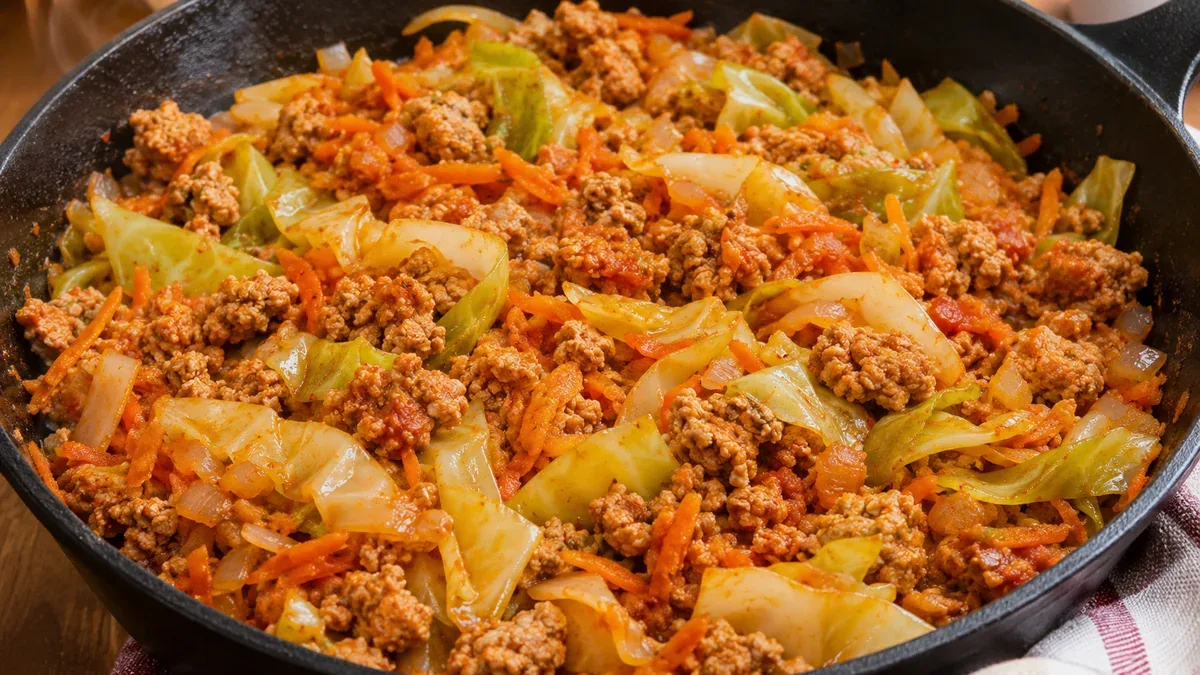
Ground Turkey and Cabbage Skillet
Ingredients
Method
- Core and thinly slice cabbage; have the other vegetables ready before heating the pan.
- Warm oil in a large deep skillet over medium-high heat. Add ground turkey and break up with a spatula; cook until most pink is gone.
- Stir in onion and carrot; cook 3–4 minutes. Add garlic, tomato paste, smoked paprika, oregano, salt, and pepper, stirring for 45 seconds.
- Add cabbage in batches, tossing to coat, and pour in 1/2 cup broth or water.
- Cover and reduce heat to medium for 5 minutes, then uncover and cook 5–7 minutes more until cabbage is tender and excess moisture evaporates.
- Use a thermometer to confirm the ground turkey has reached 165°F (74°C) in multiple spots. Stir in lemon juice, taste, and serve hot.
Notes
Steam the Cabbage, Then Uncover
Add the cabbage in two or three handfuls, folding each into the hot mixture so it begins to soften before more is added. Pour in the measured half cup of low-sodium broth or water, cover, and reduce heat to medium. Five minutes under the lid provides enough steam to help thick strips relax. The cabbage should reduce in volume noticeably while staying recognizable, not turn into a smooth puree.
Take off the lid and cook for another five to seven minutes, stirring occasionally. The uncovered stage is essential: it lets excess liquid escape and gives the meat and vegetables a light coating instead of a watery broth. If the pan dries before the cabbage is tender, add a small splash of water. If too much liquid remains, simmer uncovered a little longer before finishing with lemon juice.
Food Safety and Doneness
Color alone cannot prove that ground poultry has reached a safe temperature. Check several spots with an instant-read thermometer, especially any larger turkey pieces, and confirm a minimum of 165°F (74°C). Wash the probe between uses according to its instructions. Avoid tasting the dish until the meat is thoroughly cooked and use clean serving utensils after handling raw poultry.
If the vegetables are done before the turkey reaches temperature, keep the pan over moderate heat until the thermometer confirms doneness. If the turkey is cooked but the cabbage needs longer, use a small splash of water, cover briefly, and let the cabbage soften without aggressive frying. The aim is to finish both ingredients at the same time, not to leave cooked turkey on very high heat while waiting for thick cabbage strips.
Variations and Ingredient Swaps
Ground chicken can replace ground turkey, but it is also poultry and must reach 165°F (74°C). White cabbage is the simplest choice, though savoy cabbage can work with a shorter cooking time. Red cabbage changes the color and may need a different cooking time, so use it only if you are comfortable with a more distinct result. For stronger heat, add a pinch of chili flakes when the garlic goes in.
You can add sliced bell pepper with the onion or a small handful of chopped parsley at the end. Avoid loading the skillet with extra watery vegetables without adjusting the liquid: zucchini and mushrooms both release moisture that changes the final texture. If you want chicken and potatoes instead of ground poultry and cabbage, the skillet chicken and potatoes offers a different dinner method.
What to Serve With Turkey Cabbage Skillet
The mixture can be served in a bowl on its own, especially for a lighter dinner. Steamed rice, warm flatbread, or boiled potatoes make it more substantial and are useful for absorbing the savory coating. A spoonful of plain yogurt seasoned with lemon is another simple accompaniment. Keep side dishes neutral so the paprika and lemon in the skillet remain the main flavors.
To stretch the meal across a family table, serve a bowl of sliced cucumber or a lightly dressed green salad alongside it. A bright, crisp side contrasts with the warm cabbage. Our quick dinner recipes guide offers other routes for busy nights, but this one stands out because the whole main dish finishes in a single pan.
Refrigerate, Reheat, and Freeze
Divide leftovers into shallow airtight containers and refrigerate within two hours of cooking. Cooked poultry should generally be used within three to four days in the refrigerator. If freezing, pack cooled portions tightly and label them with the date; the cabbage may soften further after thawing, but the dish can still be useful for a future meal. Thaw frozen portions safely in the refrigerator rather than on the counter.
Reheat leftovers until thoroughly hot, reaching 165°F (74°C), stirring as needed for even heating. A skillet with a tablespoon of water over medium-low heat is a good method; use a lid briefly if the center needs more time. If microwaving, stop halfway through and stir. Avoid repeatedly warming the whole batch—portion before reheating so the remaining food stays properly chilled.
Frequently Asked Questions
Can I use ground chicken instead of turkey?
Yes. Ground chicken is also poultry and must be cooked to 165°F (74°C).
Why is my cabbage skillet watery?
Cabbage releases moisture as it cooks. Uncover the pan near the end and simmer until excess liquid evaporates.
Can I make this dish without tomato paste?
Yes, although the flavor will be lighter and less savory. Use extra paprika and a little broth, and adjust seasonings after cooking.
What goes well with turkey and cabbage?
Steamed rice, warm flatbread, boiled potatoes, or a simple cucumber salad all make good sides.
How long do turkey-cabbage leftovers keep?
Refrigerate within two hours, use within three to four days, and reheat thoroughly to 165°F (74°C).
A Dependable One-Pan Dinner
This ground turkey and cabbage skillet is built on practical decisions: slice cabbage thinly, brown turkey before adding the bulk of the vegetables, and uncover the pan to remove extra moisture. Season in stages and confirm safe doneness with a thermometer. Once you are comfortable with that sequence, you can adjust the herbs or serving sides without losing the core of the recipe.