
Looking for a low sodium mussels recipe that still tastes bright and savory? These lemon garlic steamed mussels use fresh aromatics, plain water and no added salt. Because mussels naturally contain sodium, this is a lower-added-salt approach, not a verified low-sodium nutrition claim. The method is quick, practical and especially useful when you want to control the ingredients in the steaming liquid.
Table of Contents
What makes a mussel dish lower in added sodium?
A good low sodium mussels recipe starts with a simple distinction: reducing added salt is not the same as removing all sodium. Mussels naturally contain sodium, and their cooking juices become a concentrated part of the sauce. Broth, bottled sauces and seasoning blends can add still more. This recipe uses water, fresh lemon, garlic, olive oil and parsley rather than salty stock or a packaged seafood seasoning. That approach helps control added sodium, but it does not establish that a serving meets a regulated “low sodium” threshold. If you have a prescribed sodium limit, calculate the finished recipe from reliable ingredient data and your actual portions, or consult a registered dietitian.
Ingredients for lemon garlic steamed mussels
For four modest servings, use 2 pounds (about 900 g) live mussels in their shells, 2 tablespoons olive oil, 4 garlic cloves thinly sliced, 1 small shallot finely chopped, 1/2 cup plain water, 1 lemon (zest and 2 tablespoons juice), 1/4 teaspoon freshly ground black pepper, 1/4 cup chopped fresh parsley and optional crushed red pepper flakes. Do not add table salt. Choose water rather than broth unless you have checked a broth’s sodium label. Use a large lidded pot so the shellfish can steam evenly. The edible yield varies with shell size, and the sauce includes natural juices released during cooking.
Choose and inspect fresh mussels carefully
Buy mussels from a reputable seller who keeps shellfish properly chilled and can provide harvest or source information. Keep them cold during transport. Before cooking, discard shells that are broken or cracked. Live mussels may be slightly open; tap them and discard any that remain open and unresponsive. Scrub the shells under cold running water and remove the fibrous beard when present. Do not leave live mussels soaking in fresh water for extended periods, and do not store them submerged or sealed airtight. Keep them refrigerated in a breathable container and prepare promptly, following the seller’s storage guidance.
Step 1: Build a fragrant base without salt
Place a large heavy pot over medium heat and add the olive oil. Add the chopped shallot and cook for 2 to 3 minutes, stirring until softened but not browned deeply. Stir in the sliced garlic for about 30 to 45 seconds, just until fragrant. Burned garlic tastes bitter, so reduce the heat if it starts to color too quickly. Add lemon zest, black pepper and optional red pepper flakes. These aromatics create a flavorful foundation without relying on salt. The goal is a light, fragrant base rather than a thick sauce.
Step 2: Steam the mussels
Pour in the water and bring it to a lively simmer. Add the cleaned live mussels, cover the pot and cook over medium-high heat, shaking the pot occasionally. Begin checking after 4 minutes. Many mussels open in roughly 5 to 7 minutes, but timing varies by size, quantity and heat. Continue cooking until the shells open and the mussel meat is cooked through; do not rely on the shells opening alone as a complete food-safety test. The FDA recommends cooking shellfish to an internal temperature of 145°F (63°C), when that can be measured reliably. Discard any mussels that remain closed after cooking. Never force them open to serve.
Step 3: Finish with lemon and parsley
Remove the pot from the heat. Add the lemon juice and chopped parsley, then toss gently so the shellfish are coated. Taste a spoonful of the cooking liquid before considering any further seasoning. Because mussels release naturally briny juices, you may find that no salt is needed. If the sauce is too intense, a small splash of hot water can soften it; if it is too acidic, add a little olive oil rather than salt. Divide the mussels and a modest amount of broth among four shallow bowls. Serve immediately while hot.
Why water works better than salty broth here
Many classic steamed mussel preparations use stock or bottled sauces. They can be delicious, but sodium can accumulate quickly when broth, shellfish juices and seasoning mixes are combined. Plain water allows garlic, lemon zest and the mussels’ own liquid to form the sauce. If you prefer broth, read the nutrition label for the exact amount used, and remember that “reduced sodium” is relative to a regular product. “No salt added” also does not necessarily mean sodium-free. The simplest way to manage sodium is to choose ingredients intentionally and measure them rather than relying on product claims alone.
How to estimate sodium per serving
A defensible nutrition estimate needs the edible mussel weight, not merely the weight of shells, plus sodium values for every other ingredient. Record the amount of liquid actually served, because some naturally salty cooking liquid may remain in the pot. Divide the calculated total by the number of portions actually served. Different mussel species, harvest locations and edible yields can produce different values, so an unverified sodium figure would be misleading. For readers who need a strict limit, consult a qualified nutrition professional and check applicable food-labeling criteria before calling the finished dish “low sodium.” This recipe is intentionally lower in added salt, not certified low in total sodium.
What to serve with the mussels
Serve with plain cooked rice, roasted vegetables or a side salad dressed with olive oil and lemon. For a simple side, see our Mediterranean chickpea salad, adjusting its ingredients to your sodium needs. Bread can also be served, but packaged bread contributes sodium, so check its label if you are tracking intake. A cucumber and parsley salad adds freshness without a bottled dressing. For a complete dinner, plan portions around the edible mussel yield and the other foods on the plate. Avoid automatically adding salted butter, Parmesan or a salty dipping sauce, since those additions can defeat the purpose of controlling sodium.
Variations that keep the focus on flavor
For a Mediterranean-style variation, add chopped tomatoes and fresh basil to the aromatic base. For a gently spicy version, add a small pinch of crushed red pepper. For a herb-forward version, replace half the parsley with dill. If you use canned tomatoes, choose a no-salt-added product and check the label. Avoid substituting soy sauce, bouillon cubes or heavily seasoned bottled marinades unless you have accounted for their sodium. Each variation changes the nutritional profile, so calculate it separately if you need to meet a defined sodium target.
A related garlic lemon mussels recipe
If you would like to compare another cooking approach, see SABSEA’s steamed mussels with garlic and lemon. It offers a related garlic-and-citrus preparation using a lower-sodium broth option. It is a useful companion for understanding flavor choices, but it should not be interpreted as a verified low-sodium finished meal. This recipe differs by using water instead of broth and explicitly avoiding added salt. Readers can choose the technique that fits their ingredients and dietary needs.
Storage, leftovers and reheating
Shellfish are highly perishable. Serve cooked mussels promptly and refrigerate leftovers within two hours, or within one hour if the surrounding temperature exceeds 90°F (32°C). Store in a shallow covered container at 40°F (4°C) or below. For best quality, eat refrigerated leftovers within one to two days; when in doubt, discard them. Reheat thoroughly to 165°F (74°C) and avoid repeated warming. Do not leave cooked mussels at room temperature for a buffet or lengthy meal. Anyone with a higher risk of severe foodborne illness should take particular care with shellfish handling and cooking.
Common mistakes when reducing sodium
One common mistake is using “low sodium” in the title as though it were a tested nutrition claim. Another is adding a generous quantity of supposedly healthy broth without checking the label. Overcooking is also a problem: mussels can become rubbery, making the dish less appealing even if the sauce tastes bright. Poor shellfish storage poses a much more serious risk than an underseasoned sauce. Finally, do not assume that lemon juice neutralizes sodium; it changes flavor perception, not the sodium content. For sodium control, ingredient selection and portion calculation matter more than any single garnish.
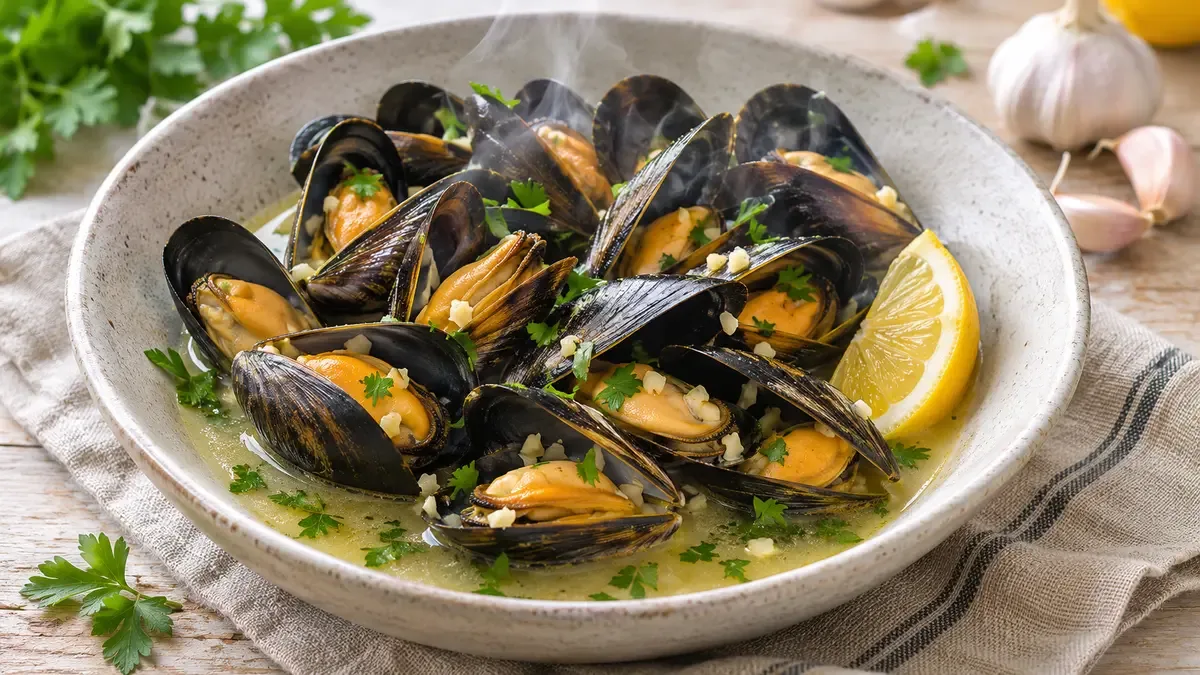
Lemon Garlic Steamed Mussels Without Added Salt
Ingredients
Method
- Check mussels; discard broken shells and those that remain open when tapped. Scrub and remove beards.
- Warm olive oil in a large lidded pot over medium heat. Soften shallot for 2–3 minutes.
- Add garlic and stir for 30–45 seconds, then add lemon zest, black pepper and optional red pepper.
- Pour in water and bring to a simmer. Add mussels and cover. Steam, shaking occasionally, checking from 4 minutes; cook thoroughly, about 5–7 minutes depending on size. Discard any that remain closed after cooking.
- Remove from heat, toss with 2 tablespoons lemon juice and parsley, and serve immediately with a little cooking liquid.
Notes
Frequently asked questions
Are mussels naturally low in sodium?
Not necessarily. Mussels contain naturally occurring sodium. Whether a finished serving meets a low-sodium standard depends on the edible portion, other ingredients and serving size.
Can I steam mussels without adding salt?
Yes. Garlic, shallot, lemon, parsley and the mussels’ own cooking juices can create a flavorful sauce without added table salt.
Is low-sodium broth required?
No. This recipe uses plain water, which avoids the extra sodium that broth may contribute. Check labels if you substitute stock.
How do I know mussels are cooked safely?
Cook until the mussels open and the flesh is cooked through; follow safe shellfish cooking guidance and discard those that remain closed after cooking.
Can I make this dish ahead of time?
Freshly steamed mussels are best. Refrigerate leftovers promptly, keep them cold and reheat thoroughly before eating.