
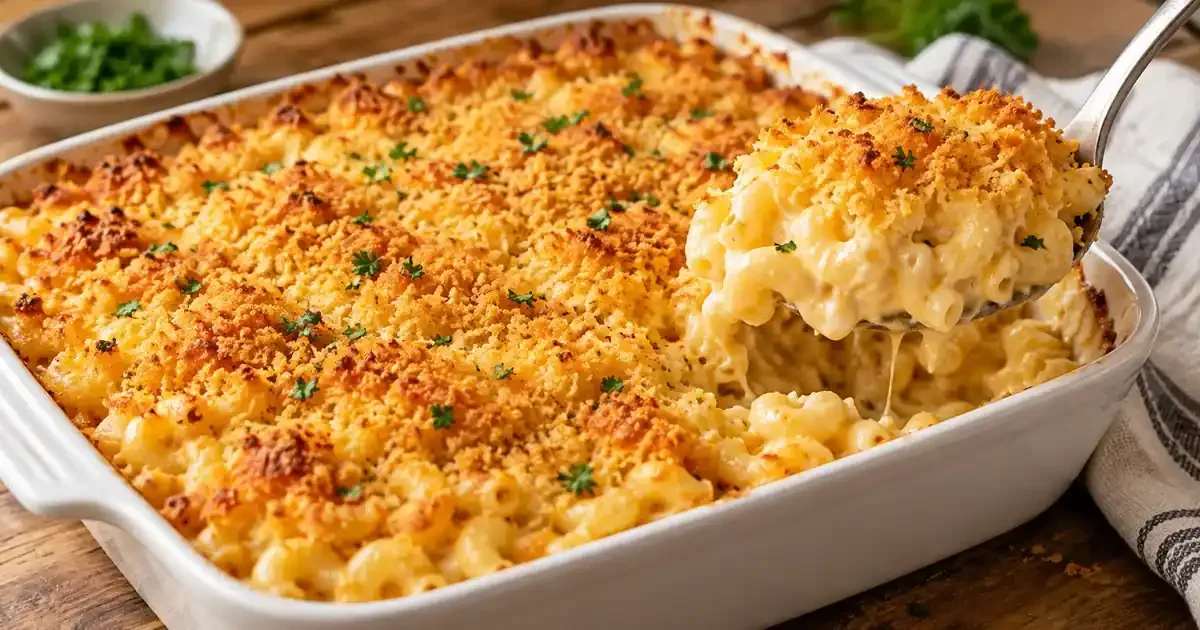
Baked macaroni and cheese is at its best when the pasta stays tender but distinct and the cheese sauce remains creamy beneath a lightly crisp topping. This version uses elbow macaroni or cavatappi, a butter-and-flour roux, warm milk, sharp cheddar, and mozzarella with a little panko for texture.
Looking for a different pasta dinner? Our best pasta recipes guide helps you choose between baked mac and cheese, creamy Alfredo, pesto pasta, tomato sauces, and lasagna.
A smooth cheese sauce depends on moderate heat. The pasta goes into the oven slightly undercooked, and the cheese is stirred into the warm sauce after the saucepan is taken off the burner. These details help prevent a greasy, grainy bake and produce a casserole that serves neatly.
Understanding the Perfect Cheese Sauce
The secret to a professional-grade sauce lies in the roux . A roux is a cooked mixture of equal parts fat (usually butter) and flour. Its primary purpose is to act as a thickening agent. When heat is applied, the starch granules in the flour swell and burst, creating a network that traps liquid and prevents the sauce from becoming watery. For a perfect cheese sauce, a ‘white roux’ or ‘blond roux’ is preferred, as it thickens effectively without introducing the toasted, nutty flavors of a darker roux.
To create the cheese sauce, one must first master the Béchamel, one of the five French mother sauces. By slowly whisking milk into the roux and simmering until thickened, you create a neutral, creamy base. Once cheese is folded into this Béchamel, it becomes a Mornay sauce . The key to a smooth Mornay is temperature control; adding cheese to boiling liquid can cause the proteins to clump and the fats to separate, resulting in a grainy texture. Always remove the sauce from the heat before stirring in your cheese blend.
Choosing the Right Pasta: Beyond the Elbow
While the classic elbow macaroni is the traditional choice, the physics of the pasta shape significantly impact the eating experience. The goal is to maximize ‘sauce cling.’ Shapes with ridges (like Cavatappi or Radiatori ) or hollow centers (like Penne or Shells ) are ideal because they provide nooks and crannies for the cheese sauce to hide. When boiling the pasta, always aim for al dente , slightly firm to the bite. This is crucial because the pasta will continue to cook and absorb moisture when combined with the hot sauce or baked in the oven.
Understanding Step-by-Step Excellence
To achieve the perfect result, follow these professional tips: 1. Grate your own cheese: Pre-shredded cheeses are coated in potato starch or cellulose to prevent clumping in the bag, which can make your sauce gritty. 2. Salt the pasta water: This is your only chance to season the pasta itself. 3. Temper the milk: Using warm milk when adding it to the roux helps prevent lumps from forming. 4. Seasoning: A pinch of nutmeg and a teaspoon of dry mustard powder are secret ingredients that enhance the savory notes of the cheese without being identifiable.
Common Cooking Problems
The most common issue is a ‘broken’ sauce, where the oil separates from the cheese. This usually happens due to excessive heat or using low-fat milk. Always use whole milk for the best emulsion. If your sauce is too thick, gradually whisk in a tablespoon of the reserved pasta cooking water; the starches in the water help stabilize the sauce. Another mistake is overcooking the pasta before it hits the sauce, leading to a mushy, unappealing texture. Remember: undercook the pasta by 2 minutes compared to the package instructions.
Dietary Variations: Gluten-Free and Lighter Options
Modern culinary techniques allow for inclusive versions of this classic. For a gluten-free alternative, use a high-quality brown rice or chickpea pasta and substitute the all-purpose flour in the roux with a 1-to-1 gluten-free flour blend or cornstarch slurry. For a lighter version, pureed roasted butternut squash or cauliflower can be blended into the cheese sauce. This reduces the overall calorie density while maintaining the creamy mouthfeel and golden color that defines the dish.
Ingredients and Equipment
Set out one pound of elbow macaroni or cavatappi, freshly grated sharp cheddar and mozzarella, unsalted butter, flour, warm milk, a little nutmeg, garlic powder, paprika, and panko breadcrumbs. The pasta and sauce cook separately before being combined in a large baking dish. A whisk, saucepan, colander, and nine-by-thirteen-inch dish are the essential tools.
Measure the ingredients before beginning and keep your work area organized. The detailed quantities and instructions are available in the recipe card below; the sections above explain the techniques that make the dish successful.
How to Make Baked Macaroni and Cheese
Step 1: Preheat the Oven and Grease the Dish
Preheat your oven to 375°F (190°C) and grease a 9×13 inch baking dish.
Step 2: Cook Pasta Slightly Under Al Dente
Boil the pasta in salted water for 2 minutes less than the package instructions (al dente). Drain and set aside.
Step 3: Make a Light Butter and Flour Roux
In a large saucepan, melt the butter over medium heat. Whisk in the flour and cook for 1-2 minutes until bubbling but not browned.
Step 4: Whisk Warm Milk into the Roux
Gradually whisk in the warm milk, a little at a time, until the sauce is smooth and thickened.
Step 5: Season the Creamy Sauce
Remove the saucepan from the heat. Stir in the nutmeg, garlic powder, smoked paprika, salt, and pepper.
Step 6: Melt the Cheese Off the Heat
Add 3 cups of the Cheddar and all of the Mozzarella to the sauce. Stir until completely melted and smooth.
Step 7: Coat Macaroni with Cheese Sauce
Fold the cooked pasta into the cheese sauce until evenly coated.
Step 8: Add Cheddar and Panko Topping
Pour the mixture into the prepared baking dish. Top with the remaining 1 cup of Cheddar and the panko breadcrumbs.
Step 9: Bake Until the Top Is Golden
Bake for 20-25 minutes until the top is golden brown and the sauce is bubbling.
Step 10: Rest Before Serving
Garnish with fresh parsley and let it rest for 5 minutes before serving.
Practical Tips for Consistent Results
Cook pasta a little less than the time printed on the package because it continues absorbing moisture in the oven. Drain well, but do not rinse away all the starch. The slightly undercooked pasta gives you a better chance of keeping individual elbows intact after baking.
A roux should bubble briefly without becoming dark. Gradually whisk the warmed milk into the butter and flour, starting with a small amount until the mixture is smooth. Adding all the milk at once can create lumps that are difficult to remove once the sauce thickens.
Remove the sauce from direct heat before stirring in the grated cheese. Heat that is too high can cause cheese proteins to tighten and the sauce to split. Cheddar provides sharp flavor; mozzarella melts smoothly and stretches slightly. Grating cheese from a block is often more reliable than using a pre-shredded product with anti-caking ingredients.
A thin layer of panko offers a crisp contrast without needing a thick crust. Sprinkle it evenly, keep the casserole uncovered, and check the dish before the edges become dry. Let the finished bake settle for five to ten minutes so the sauce has time to cling to the pasta before serving.
Serving Ideas and Variations
Serve this baked mac and cheese with roasted vegetables, cucumber salad, or steamed greens to balance its richness. JonasRecipes’ creamy tomato basil soup makes a contrasting soup course, while its Spanish rice and beans offers an entirely different pantry-based dinner.
When adjusting the recipe, make one change at a time and record how it affects the texture or cooking time. Substituting a different cut of meat, type of pasta, or baking dish may require a different method. Keep the basic proportions unchanged the first time so you can judge the original result before experimenting.
Storage and Food Safety
Cool cooked food promptly and refrigerate within two hours in shallow containers at 40°F (4°C) or below. For most cooked leftovers, plan to use them within three to four days. Use FoodSafety.gov’s cold-storage guidance to check a specific dish. Reheat leftovers containing cooked meat or poultry to 165°F (74°C).
Freeze portions that you will not use within the refrigerator window, with the date marked on each container. Thaw frozen cooked food in the refrigerator or with an appropriate controlled method, never for hours on the kitchen counter. Texture may change after thawing, especially for creamy sauces, flaky crusts, or crisp coatings.
Creamy Baked Macaroni and Cheese with Cheddar
Ingredients
Equipment
Method
- Preheat your oven to 375°F (190°C) and grease a 9x13 inch baking dish.
- Boil the pasta in salted water for 2 minutes less than the package instructions (al dente). Drain and set aside.
- In a large saucepan, melt the butter over medium heat. Whisk in the flour and cook for 1-2 minutes until bubbling but not browned.
- Gradually whisk in the warm milk, a little at a time, until the sauce is smooth and thickened.
- Remove the saucepan from the heat. Stir in the nutmeg, garlic powder, smoked paprika, salt, and pepper.
- Add 3 cups of the Cheddar and all of the Mozzarella to the sauce. Stir until completely melted and smooth.
- Fold the cooked pasta into the cheese sauce until evenly coated.
- Pour the mixture into the prepared baking dish. Top with the remaining 1 cup of Cheddar and the panko breadcrumbs.
- Bake for 20-25 minutes until the top is golden brown and the sauce is bubbling.
- Garnish with fresh parsley and let it rest for 5 minutes before serving.
Notes
Frequently Asked Questions
Why is my cheese sauce grainy?
Overheating cheese can make the proteins separate. Remove the saucepan from the burner before adding grated cheese and stir gently.
Should I boil macaroni completely before baking?
No. Cook it a little shy of al dente because it continues to soften in the oven.
Can I make mac and cheese ahead?
You can prepare components ahead, but pasta absorbs the sauce over time. A small splash of milk before reheating can help refresh the texture.
What cheeses melt well for this recipe?
Sharp cheddar provides flavor and mozzarella melts smoothly. You can change the blend, but avoid very hard aged cheeses as the only cheese.
How do I keep the top crunchy?
Use a light, evenly distributed layer of breadcrumbs and bake uncovered. Covering the hot casserole tightly traps steam that softens the top.
Make This Recipe Again
With the ingredients measured and the main cooking checkpoints understood, the recipe is straightforward to repeat. Pay attention to the signs of doneness and texture described above rather than relying on the clock alone. Serve fresh when possible, and store any leftovers promptly for a later meal.