
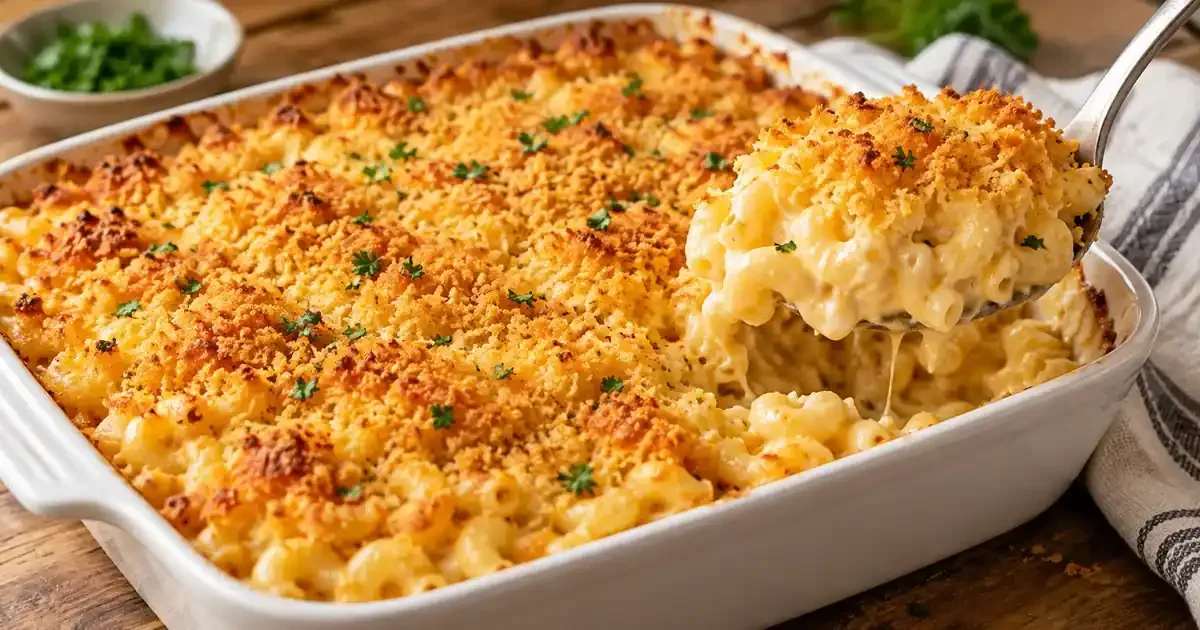
Baked macaroni and cheese is at its best when the pasta stays tender but distinct and the cheese sauce remains creamy beneath a lightly crisp topping. This version uses elbow macaroni or cavatappi, a butter-and-flour roux, warm milk, sharp cheddar, and mozzarella with a little panko for texture.
Looking for a different pasta dinner? Our best pasta recipes guide helps you choose between baked mac and cheese, creamy Alfredo, pesto pasta, tomato sauces, and lasagna.
A smooth cheese sauce depends on moderate heat. The pasta goes into the oven slightly undercooked, and the cheese is stirred into the warm sauce after the saucepan is taken off the burner. These details help prevent a greasy, grainy bake and produce a casserole that serves neatly.
Understanding the Perfect Cheese Sauce
The sauce begins with equal amounts of butter and flour. Cook them together for one to two minutes without letting the flour brown, then whisk in warm milk a little at a time. The starch thickens the milk into a smooth base that can coat the pasta. If you see lumps, whisk them out before adding any cheese. Keep the heat moderate so the milk does not scorch.
Once the milk mixture is smooth and gently thickened, take the pan off the heat. Stir in the cheddar and mozzarella in handfuls, allowing each addition to melt before adding more. Boiling the cheese sauce after the cheese goes in can make it separate into oily patches and grainy curds. If the pan cools too much, return it to very low heat briefly while stirring.
Choosing the Right Pasta: Beyond the Elbow
Elbow macaroni is easy to coat and portion, while cavatappi holds sauce in its spiral ridges. Either works with the quantities in the recipe card. Cook the pasta about two minutes less than the package’s al dente instruction because it continues absorbing moisture during baking. Drain well, but do not rinse, and fold it into the warm sauce before it cools into a thick paste.
Understanding Step-by-Step Excellence
Grate the cheese before starting the roux so it is ready when the sauce comes off the heat. Warm the milk separately or use it at room temperature to reduce lumps. Taste the finished sauce before salting heavily because sharp cheddar already contributes salt. Fold in the pasta gently, spread the mixture evenly in the baking dish, and add the panko just before baking for a crisp top.
Common Cooking Problems
If the sauce turns grainy, it was probably overheated after the cheese was added. Take it off the burner and stir gently rather than bringing it to a boil. If it seems too thick before baking, add a splash of warm milk, one tablespoon at a time. If the casserole dries around the edges, it may have baked too long or the pasta may have been fully cooked before assembly.
Dietary Variations: Gluten-Free and Lighter Options
For a gluten-free version, use pasta labeled gluten-free and a suitable gluten-free flour blend for the roux, following the blend’s thickening guidance. Gluten-free pasta can soften quickly, so begin checking it early. To add vegetables without thinning the sauce, fold in well-drained cooked broccoli or roasted cauliflower. These are variations, not replacements for the measured cheese and milk in the base recipe.
Ingredients and Equipment
Set out one pound of elbow macaroni or cavatappi, freshly grated sharp cheddar and mozzarella, unsalted butter, flour, warm milk, a little nutmeg, garlic powder, paprika, and panko breadcrumbs. The pasta and sauce cook separately before being combined in a large baking dish. A whisk, saucepan, colander, and nine-by-thirteen-inch dish are the essential tools.
The recipe card gives the measured quantities, but the order matters: cook the pasta briefly, make a smooth milk-based roux, remove the saucepan from the heat, melt in the cheese, then fold in the pasta. Keep the panko separate until the casserole is ready for the oven. This sequence helps the sauce stay creamy beneath a crisp topping.
How to Make Baked Macaroni and Cheese
Step 1: Preheat the Oven and Grease the Dish
Preheat your oven to 375°F (190°C) and grease a 9×13 inch baking dish.
Step 2: Cook Pasta Slightly Under Al Dente
Boil the pasta in salted water for 2 minutes less than the package instructions (al dente). Drain and set aside.
Step 3: Make a Light Butter and Flour Roux
In a large saucepan, melt the butter over medium heat. Whisk in the flour and cook for 1-2 minutes until bubbling but not browned.
Step 4: Whisk Warm Milk into the Roux
Gradually whisk in the warm milk, a little at a time, until the sauce is smooth and thickened.
Step 5: Season the Creamy Sauce
Remove the saucepan from the heat. Stir in the nutmeg, garlic powder, smoked paprika, salt, and pepper.
Step 6: Melt the Cheese Off the Heat
Add 3 cups of the Cheddar and all of the Mozzarella to the sauce. Stir until completely melted and smooth.
Step 7: Coat Macaroni with Cheese Sauce
Fold the cooked pasta into the cheese sauce until evenly coated.
Step 8: Add Cheddar and Panko Topping
Pour the mixture into the prepared baking dish. Top with the remaining 1 cup of Cheddar and the panko breadcrumbs.
Step 9: Bake Until the Top Is Golden
Bake for 20-25 minutes until the top is golden brown and the sauce is bubbling.
Step 10: Rest Before Serving
Garnish with fresh parsley and let it rest for 5 minutes before serving.
Practical Tips for Consistent Results
Cook pasta a little less than the time printed on the package because it continues absorbing moisture in the oven. Drain well, but do not rinse away all the starch. The slightly undercooked pasta gives you a better chance of keeping individual elbows intact after baking.
A roux should bubble briefly without becoming dark. Gradually whisk the warmed milk into the butter and flour, starting with a small amount until the mixture is smooth. Adding all the milk at once can create lumps that are difficult to remove once the sauce thickens.
Remove the sauce from direct heat before stirring in the grated cheese. Heat that is too high can cause cheese proteins to tighten and the sauce to split. Cheddar provides sharp flavor; mozzarella melts smoothly and stretches slightly. Grating cheese from a block is often more reliable than using a pre-shredded product with anti-caking ingredients.
A thin layer of panko offers a crisp contrast without needing a thick crust. Sprinkle it evenly, keep the casserole uncovered, and check the dish before the edges become dry. Let the finished bake settle for five to ten minutes so the sauce has time to cling to the pasta before serving.
Serving Ideas and Variations
Serve this baked mac and cheese with roasted vegetables, cucumber salad, or steamed greens to balance its richness. JonasRecipes’ creamy tomato basil soup makes a contrasting soup course, while its Spanish rice and beans offers an entirely different pantry-based dinner.
For a slightly sharper flavor, replace a small portion of mozzarella with another good melting cheese such as Monterey Jack. A pinch of smoked paprika adds warmth without overwhelming the cheddar. If you switch to a much smaller baking dish, the deeper casserole may take longer to heat through and the topping may brown before the center is hot.
Storage and Food Safety
Baked macaroni and cheese is a perishable dairy-and-pasta casserole. Divide leftovers into shallow containers and refrigerate within two hours at 40°F (4°C) or below, or within one hour if the room is hotter than 90°F (32°C). Use refrigerated portions within three to four days. See FoodSafety.gov’s cold storage chart for general leftover storage guidance.
Freeze individual portions promptly in airtight freezer-safe containers, but expect the cheese sauce to lose some smoothness after thawing. Thaw in the refrigerator and reheat with a small splash of milk, covering the dish to prevent the pasta drying out. Check reheated leftovers reach 165°F (74°C) throughout, following USDA reheating guidance.
Creamy Baked Macaroni and Cheese with Cheddar
Ingredients
Equipment
Method
- Preheat your oven to 375°F (190°C) and grease a 9x13 inch baking dish.
- Boil the pasta in salted water for 2 minutes less than the package instructions (al dente). Drain and set aside.
- In a large saucepan, melt the butter over medium heat. Whisk in the flour and cook for 1-2 minutes until bubbling but not browned.
- Gradually whisk in the warm milk, a little at a time, until the sauce is smooth and thickened.
- Remove the saucepan from the heat. Stir in the nutmeg, garlic powder, smoked paprika, salt, and pepper.
- Add 3 cups of the Cheddar and all of the Mozzarella to the sauce. Stir until completely melted and smooth.
- Fold the cooked pasta into the cheese sauce until evenly coated.
- Pour the mixture into the prepared baking dish. Top with the remaining 1 cup of Cheddar and the panko breadcrumbs.
- Bake for 20-25 minutes until the top is golden brown and the sauce is bubbling.
- Garnish with fresh parsley and let it rest for 5 minutes before serving.
Notes
Frequently Asked Questions
Why is my cheese sauce grainy?
Overheating cheese can make the proteins separate. Remove the saucepan from the burner before adding grated cheese and stir gently.
Should I boil macaroni completely before baking?
No. Cook it a little shy of al dente because it continues to soften in the oven.
Can I make mac and cheese ahead?
You can prepare components ahead, but pasta absorbs the sauce over time. A small splash of milk before reheating can help refresh the texture.
What cheeses melt well for this recipe?
Sharp cheddar provides flavor and mozzarella melts smoothly. You can change the blend, but avoid very hard aged cheeses as the only cheese.
How do I keep the top crunchy?
Use a light, evenly distributed layer of breadcrumbs and bake uncovered. Covering the hot casserole tightly traps steam that softens the top.
Make This Recipe Again
The finished casserole should have tender pasta, creamy sauce, and a lightly crisp top. Remove it when the edges bubble and the crumbs turn golden, then rest it for five to ten minutes so the sauce settles. For a different pasta technique, browse the JonasRecipes pasta collection rather than trying to turn this cheddar bake into a tomato-based dish.