
Lemon chicken orzo soup brings together tender shredded chicken, small pasta, vegetables, and a clear, flavorful broth. The lemon is added near the end so it brightens the soup instead of disappearing during a long simmer. A handful of spinach wilts into the hot liquid, while dill gives the bowl a fresh herbal finish.
This is a one-pot soup with an orderly cooking sequence. The chicken cooks first in seasoned broth, then the orzo simmers after the chicken is removed and shredded. That order helps prevent the pasta from overcooking while you wait for the meat to finish. The recipe makes six servings, with enough broth to account for some of the liquid the orzo absorbs. It is satisfying as a dinner on its own and pairs easily with bread or a salad.
Why Lemon, Chicken, and Orzo Make a Useful Combination
Orzo looks a little like rice, but it is pasta made from wheat. It cooks relatively quickly and fits neatly into spoonfuls of soup. That makes it convenient for a weeknight meal, but it also means timing matters. If you simmer orzo for as long as chicken breasts need to cook, the pasta can become too soft and absorb more broth than intended.
Lemon juice and zest play different roles. Juice brings acidity; zest carries aromatic oils. Using both creates a more distinct lemon flavor than adding lots of juice alone. Stir both in after the main cooking so the soup stays bright. Start with the measured quarter cup of juice and adjust at the table rather than turning the entire pot excessively sour.
Boneless, skinless chicken breasts keep the preparation simple. Chicken thighs can be used, but they may require a different cooking time. Regardless of the cut, chicken must reach 165°F (74°C) at its thickest part before serving. A thermometer is more dependable than judging whether the broth has simmered for an exact number of minutes. FoodSafety.gov’s safe cooking temperature chart
Ingredients for Six Servings
Gather 1 pound boneless, skinless chicken breasts, 2 tablespoons olive oil, 1 medium onion diced, 2 carrots peeled and diced, 2 celery stalks diced, and 3 garlic cloves minced. Add 7 cups low-sodium chicken broth, 3/4 cup dry orzo, 1 teaspoon dried oregano, 1/2 teaspoon black pepper, and up to 1/2 teaspoon fine salt depending on the broth. Finish with 2 packed cups baby spinach, 1/4 cup freshly squeezed lemon juice, 1 teaspoon finely grated lemon zest, and 2 tablespoons chopped fresh dill or parsley.
Use a large heavy-bottomed pot, a cutting board dedicated to raw chicken, a knife, a thermometer, measuring cups, and two forks for shredding. A lid helps maintain a gentle simmer. Choose a pot large enough for the broth and additional vegetables without boiling over.
Choosing Your Broth
Low-sodium broth gives you control over seasoning, especially because reduction during simmering concentrates salt. Store-bought broth works; there is no need to make stock from scratch for this version. If using a very salty broth, omit the measured salt at the beginning and adjust once the chicken and pasta are fully cooked. Do not taste broth that contains raw or undercooked poultry.
Is Fresh Lemon Essential?
Fresh lemon is particularly helpful because the zest is part of the recipe. Bottled juice can vary in flavor and cannot provide zest. For the intended bright finish, use a clean, washed lemon and grate the yellow outer peel without digging deeply into the bitter white pith. Add the zest and juice after the pot is taken off the boil.
How to Make Lemon Chicken Orzo Soup
Step 1: Soften the Aromatic Vegetables
Warm the olive oil in a large pot over medium heat. Add diced onion, carrots, and celery and stir for about five minutes, until the onion begins to soften. The vegetables should become fragrant rather than deeply browned. Add the garlic and dried oregano for the final 30 seconds, stirring constantly to prevent scorching. This builds a savory foundation while keeping the soup broth light in color.
Step 2: Add Broth and Cook the Chicken
Pour in all seven cups of broth and bring to a gentle simmer. Add the chicken breasts, black pepper, and only part of the salt if needed. Lower the heat enough to maintain gentle bubbling, cover loosely, and simmer approximately 12–18 minutes depending on thickness. Begin checking sooner for thin breasts. Use a food thermometer to confirm the thickest part reaches 165°F (74°C), then transfer the chicken to a clean plate. Do not return a raw-chicken utensil to the clean serving area.
Step 3: Cook the Orzo Separately in the Same Pot
Bring the broth back to a steady gentle simmer. Stir in the dry orzo and cook according to its package guidance, usually about eight to ten minutes, stirring periodically so it does not settle and stick. If the soup becomes thicker than you prefer, add a little hot water or additional broth. Do not add extra cups automatically; some reduction is normal, and you can correct consistency near serving time.
Step 4: Shred the Chicken and Add Spinach
While the orzo cooks, shred the fully cooked chicken with two forks or cut it into bite-size pieces. Once the orzo is tender, stir the chicken back into the pot along with the spinach. Cook for another one to two minutes, just until the leaves wilt and the chicken is hot throughout. The shredded meat will distribute more evenly than large pieces.
Step 5: Finish with Lemon and Dill
Turn off the heat. Stir in the lemon juice, lemon zest, and chopped dill. Taste using a clean spoon and adjust seasoning a little at a time. If the lemon is very strong, add a small splash of broth instead of balancing it with sugar. If the soup is too thick, add more hot liquid until it has the broth-to-pasta ratio you prefer.
Step 6: Serve While the Orzo Is Tender
Ladle into six bowls, making sure each has chicken, vegetables, pasta, and broth. The pasta will keep absorbing liquid as the soup sits, so serving soon after cooking gives the lightest broth. If you are holding it for later, see the make-ahead method below; storing pasta separately is useful when you want to preserve texture.
How to Avoid Common Chicken Orzo Soup Problems
The orzo absorbs all the broth: Orzo continues taking up liquid after cooking. The stated seven cups account for an initial six-serving batch, but leftovers may require additional broth or water. Reheat gently and adjust consistency before serving. For meal prep, cook the orzo separately and add it to individual portions when reheating.
Chicken becomes dry: A strong rolling boil or prolonged simmer can make lean breast meat firm. Use a gentle simmer and remove it as soon as the thermometer confirms 165°F. Shred it after cooking, not while it is still raw. If using thighs, follow the temperature requirement and adjust time for thickness.
The broth tastes flat: Check the salt level and aromatic base before pouring in extra lemon. Lemon supplies brightness, not the full savory seasoning. A small pinch of salt, fresh pepper, or an extra spoonful of chopped dill at the table may be enough.
The soup is too sour: Lemons vary in acidity. Stir in the juice near the end and taste. If you already added too much, dilute the soup with warm low-sodium broth and recheck seasoning. Avoid adding much more orzo as a fix; that changes the serving count and creates another thickening issue.
Spinach turns dull: Add it during the last minute or two rather than simmering it with the chicken. It needs only a brief wilt, and tender leaves become soft quickly in hot broth.
Serving Ideas and Helpful Variations
Warm bread, crackers, or a simple green salad work well alongside the soup. If you want another tomato-based soup rather than a lemony one, JonasRecipes has a separate creamy tomato basil soup. For a different comforting chicken main, its chicken and potatoes dinner is another option, but the cooking instructions are not interchangeable with this soup.
For a stronger herbal note, use a mix of fresh dill and parsley. If you dislike spinach, finely chopped kale can replace it, though it needs more time to soften. Small diced zucchini may be added with the carrots and celery, but avoid overloading the pot with vegetables if you want to preserve the intended liquid ratio.
You can use leftover cooked chicken in a quicker variation. In that case, sauté the vegetables, simmer the broth and orzo, then add about 3 cups of shredded fully cooked chicken toward the end. Bring it to a safe reheating temperature of 165°F before serving. The timing will differ from the raw-chicken recipe card, so describe it as a variation rather than pretending the two methods have identical cook times.
Is This the Same as Greek Avgolemono?
No. Avgolemono commonly uses an egg-and-lemon mixture to give the broth a distinct velvety body. This recipe contains no egg thickener. It is a lemon chicken orzo soup with clear broth, fresh spinach, and dill. If you decide to develop avgolemono later, it should have its own accurate recipe and search intent rather than being inserted under this title.
Make-Ahead, Refrigeration, and Freezing
Soup is convenient for batch cooking, but a full pot should not be left cooling on the stovetop for hours. Portion into shallow containers and refrigerate within two hours of cooking, keeping the refrigerator at or below 40°F (4°C). FoodSafety.gov lists soups and stews with vegetables or meat for three to four days in the refrigerator. Reheat leftovers to 165°F (74°C). FoodSafety.gov’s cold-storage guidance
For best texture, cook and store the orzo separately when preparing more than one meal. Put a portion of pasta into a bowl and pour hot, fully reheated soup over it. If the pasta was already cooked in the pot, add a little broth or water while reheating; the flavor will be slightly more diluted, so taste and season afterward.
The broth, vegetables, and cooked chicken freeze more gracefully without orzo. Cool promptly, freeze in sealed portions, and add freshly cooked pasta after thawing and reheating. Aim for two to three months for good frozen-soup quality. Thaw in the refrigerator or use an appropriate safe reheating method; avoid leaving frozen poultry soup on the counter to thaw overnight.
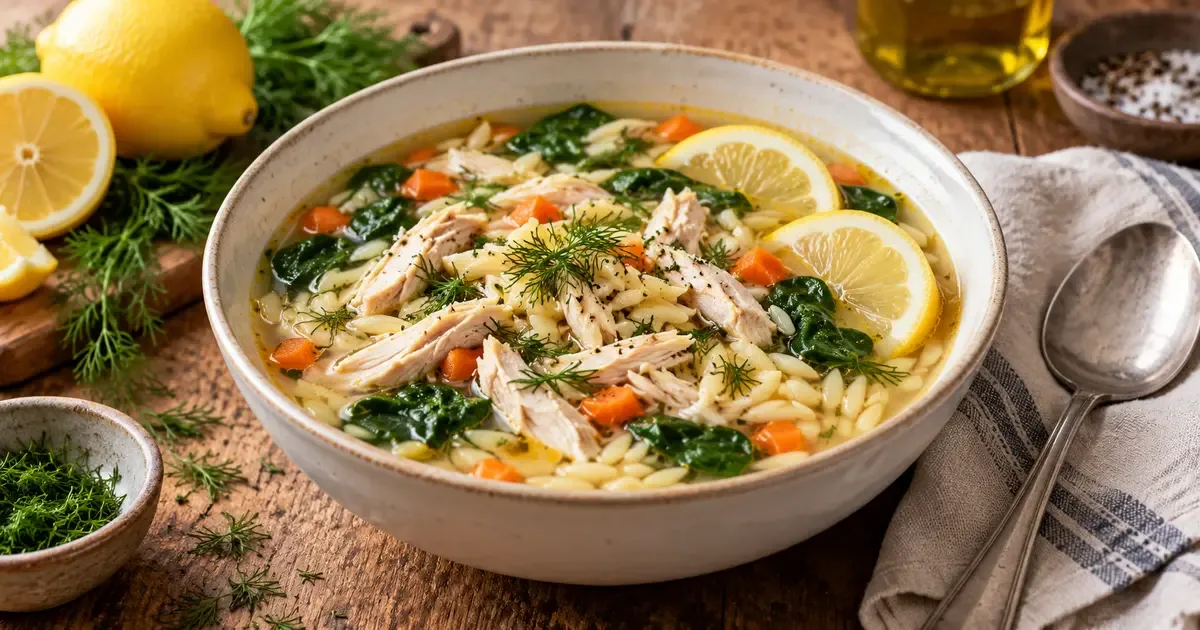
Lemon Chicken Orzo Soup with Spinach and Fresh Dill
Ingredients
Equipment
Method
- Sauté onion, carrots, and celery in olive oil for 5 minutes. Add garlic and oregano for 30 seconds.
- Add broth and chicken; bring to a gentle simmer and cook for about 12–18 minutes, until chicken reaches 165°F (74°C). Remove chicken to a clean plate.
- Stir dry orzo into the simmering broth and cook according to the package, roughly 8–10 minutes.
- Shred the fully cooked chicken. Return it to the pot with spinach and heat until spinach wilts.
- Turn off heat; stir in lemon juice, zest, and dill. Adjust the salt, pepper, and broth.
- Serve hot in six portions.
Notes
Frequently Asked Questions
Can I use rotisserie chicken in lemon chicken orzo soup?
Yes, as a variation. Add approximately three cups of fully cooked shredded chicken after the orzo is nearly tender and heat it thoroughly to 165°F. Because the chicken is already cooked, skip the raw-chicken poaching step and adjust total time accordingly.
Does orzo need to be cooked before going into soup?
Not for this recipe. Dry orzo cooks directly in the broth after the chicken has been removed. Stir periodically to prevent sticking. If you are making soup ahead, cooking the orzo separately can keep leftovers from thickening excessively.
Can I make this soup without spinach?
Yes. Leave it out or replace it with another quick-cooking green. Kale works but requires more simmering time, so add it before the last minute. Keep the main recipe’s other quantities the same if you simply omit spinach.
Why does lemon chicken orzo soup thicken overnight?
Pasta continues to absorb liquid as it sits. Add a little broth or water while reheating and adjust seasoning afterward. Storing pasta separately is the most reliable way to keep the broth relatively clear.
How long will chicken orzo soup keep in the refrigerator?
Properly refrigerated soups with meat or vegetables have a three-to-four-day storage window. Divide the pot into shallow containers promptly, keep cold at or below 40°F, and reheat leftovers to 165°F before eating.
A Comforting Dinner with a Bright Finish
The key to this lemon chicken orzo soup is sequence: build the vegetable base, cook chicken to a safe temperature, then add pasta for only the time it needs. Finish with lemon and herbs away from the boil. Those few decisions keep the meat tender, the orzo recognizable, and the broth pleasantly bright. It is a flexible soup for dinner and a useful batch-cooking recipe when stored carefully.
2 thoughts on “Lemon Chicken Orzo Soup with Spinach and Fresh Dill”