
Classic chicken pot pie combines a buttery crust with a creamy filling of cooked chicken, carrots, peas, and celery. The best result is not just a golden top: the sauce should be thick enough to stay inside a slice without becoming pasty, and the bottom crust should bake rather than soak in liquid.
This version uses two prepared nine-inch pie crusts and fully cooked chicken, which keeps the method approachable. You will make a roux, whisk in broth and milk, fold in the chicken and vegetables, then bake the filled pie until the pastry is golden and the center is hot.
The Anatomy of a Perfect Pot Pie
A dependable pot pie starts with two decisions: keep the chicken fully cooked before it enters the gravy, and thicken the sauce enough that it coats the vegetables instead of pooling at the bottom of the pie plate. The chilled bottom crust then has a better chance to bake through before the filling releases excess steam.
Onion, carrot, and celery soften in butter before the flour goes in. Chicken broth, milk, and thyme form a mild gravy that should taste savory without masking the chicken. Frozen peas go in near the end so they retain their color. Use cooked breast or thigh meat, cut into evenly sized pieces, and avoid simmering it for a long time.
Understanding the Perfect Roux
Use one-third cup butter with one-third cup all-purpose flour to build this roux. Stir flour into the softened vegetables for about two minutes, then gradually whisk in the measured broth and milk. The sauce should bubble gently and become thick enough to leave a trail when you draw a spatula across the pan. If it is thin, simmer a little longer before adding cooked chicken.
How the Filling and Crust Work Together
Let the thick filling cool for about ten minutes while you fit a chilled crust into the pie plate. Spoon the filling in without stretching the pastry. Place the second crust on top, trim and crimp the edges together, and cut several steam vents. A hot, watery filling can soften the lower crust before the oven sets it.
Use a rimmed baking sheet under the pie plate to catch bubbling gravy. If your dish is safe for a preheated baking sheet, that can help deliver heat to the base. Shield the edges with foil if they brown before the center is hot. Steam vents help the top crust bake without trapping moisture, but they cannot compensate for watery filling.
Storage, Freezing, and Reheating Tips
For make-ahead meals, chill the filling promptly and freeze it separately from the pastry when possible. If you freeze an assembled unbaked pie, use a freezer-safe pan and wrap it tightly. Baking from frozen can require substantially longer than baking a fresh pie; do not rely on a fixed extra 15 to 20 minutes. Bake until the filling bubbles and a thermometer reads 165°F (74°C) at the center.
Ingredients and Equipment
This nine-inch double-crust pie starts with fully cooked chicken, onions, carrots, celery, peas, butter, flour, chicken broth, milk, thyme, and two ready-made pie crusts. Use a saucepan and whisk to make the gravy before the filling goes into the pastry. Have a pie plate, a rimmed baking sheet, and an egg for brushing the top crust ready.
Measure the ingredients before beginning and keep your work area organized. The detailed quantities and instructions are available in the recipe card below; the sections above explain the techniques that make the dish successful.
How to Make Classic Chicken Pot Pie
Step 1: Preheat the Oven and Prepare the Pie Plate
Preheat your oven to 425°F (220°C).
Step 2: Soften Onion, Carrot, and Celery
In a large saucepan, melt the butter over medium heat. Add the onions, carrots, and celery. Cook for 5-7 minutes until softened.
Step 3: Cook Butter and Flour into a Roux
Stir in the flour, salt, pepper, and thyme. Cook for 2 minutes to remove the raw flour taste, stirring constantly.
Step 4: Whisk in Broth and Milk
Slowly whisk in the chicken broth and milk. Continue to simmer and whisk until the sauce thickens and bubbles.
Step 5: Fold in Chicken and Peas
Stir in the cooked chicken and frozen peas. Remove from heat.
Step 6: Fit the Bottom Pastry Crust
Let the thickened filling cool for about 10 minutes. Fit one chilled crust into a 9-inch pie plate, then spoon in the filling without stretching or overfilling the pastry.
Step 7: Seal the Top Crust and Cut Vents
Top with the second pie crust. Trim the edges and crimp to seal. Cut 3-4 small slits in the top to allow steam to escape.
Step 8: Brush the Pastry with Egg Wash
Brush the top crust with a beaten egg for a golden finish.
Step 9: Bake Until Golden and Bubbling
Bake on a rimmed baking sheet for roughly 35 to 45 minutes. Shield the edges with foil if needed. The filling must bubble and register at least 165°F (74°C) at the center. Rest the pie for 15 minutes before cutting.
Practical Tips for Consistent Results
Start with cooked chicken, cut into bite-size pieces that can be distributed evenly through the pie. Shredded breast or thigh meat works, provided the pieces are not too large. Cold leftovers can be used, but the assembled pie still needs to heat thoroughly to 165°F (74°C) at the center.
The flour-and-butter roux is the heart of the filling. Let the flour cook briefly in the melted butter before slowly pouring in the broth and milk. Whisk as you add liquid, especially around the bottom corners of the pan. A smooth sauce should lightly coat a spoon rather than run like broth.
Avoid pouring an excessively runny filling into the pastry. If the gravy is too thin, simmer briefly until it thickens before adding chicken and peas. Keep the mixture warm rather than boiling hard after adding the cooked chicken. Cut several slits in the top crust to release steam while the pie bakes.
Crimp the crust edges firmly, place the pie dish on a rimmed baking sheet, and use a foil shield if the edge browns ahead of the center. A fifteen-minute rest after baking helps the filling set. Cutting the pie immediately often makes the sauce run out, even when the ingredients were measured correctly.
Serving Ideas and Variations
Serve a modest slice of pot pie with a leafy salad, roasted broccoli, or sliced tomatoes. For another comforting chicken recipe, the lemon chicken orzo soup offers a broth-based alternative, while creamy tomato basil soup pairs well with a simple green lunch.
Try cooked turkey instead of chicken, or swap a small portion of the peas for sweetcorn. Keep the total filling volume and roux-to-liquid ratio similar so the pie does not overflow or turn watery. A deeper baking dish may require more time than a standard nine-inch plate.
How to Keep the Pastry Crisp
Work with pastry that is chilled but flexible enough to drape into the pie plate without tearing. If the crust becomes warm and sticky during assembly, refrigerate the prepared pie briefly before baking. This helps the layers stay defined and makes it easier to crimp the edge. Avoid stretching the pastry across the dish because stretched dough tends to shrink as it heats.
Keep the filling thick enough to mound softly on a spoon. The gravy should coat chicken and vegetables without running to the bottom of the saucepan like broth. If the mixture seems loose, simmer it for a few extra minutes and stir so it does not stick. An overly watery filling can soak the lower pastry before it has time to bake. A preheated baking sheet under the pie plate can help the bottom receive steady heat, provided your dish is oven-safe for that method.
A few small vents in the top crust allow steam to escape and reduce pressure against the pastry. Brush with a thin egg wash rather than letting it pool near the crimped edge. Once the pie is golden and the center is safely hot, remove it from the oven and rest for fifteen minutes. The sauce thickens slightly as it stands, which makes the first portion much easier to serve neatly.
Storage and Food Safety
Cool cooked food promptly and refrigerate within two hours in shallow containers at 40°F (4°C) or below. For most cooked leftovers, plan to use them within three to four days. Use FoodSafety.gov’s cold-storage guidance to check a specific dish. Reheat leftovers containing cooked meat or poultry to 165°F (74°C).
Freeze portions that you will not use within the refrigerator window, with the date marked on each container. Thaw frozen cooked food in the refrigerator or with an appropriate controlled method, never for hours on the kitchen counter. Texture may change after thawing, especially for creamy sauces, flaky crusts, or crisp coatings.
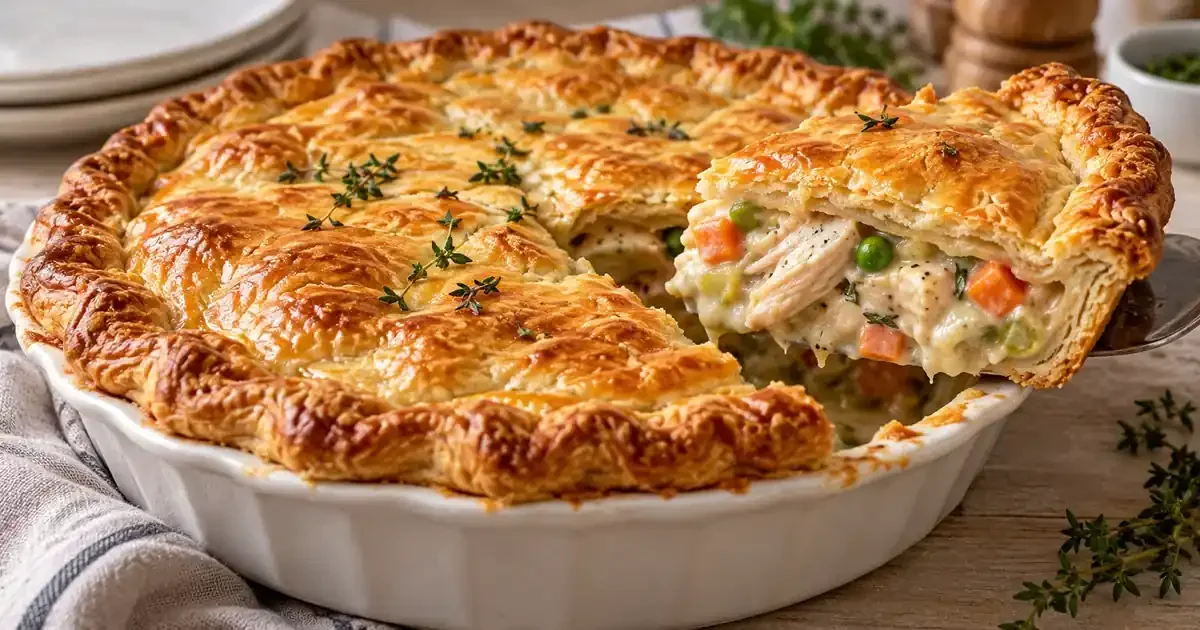
Classic Chicken Pot Pie with Flaky Crust
Ingredients
Equipment
Method
- Preheat your oven to 425°F (220°C).
- In a large saucepan, melt the butter over medium heat. Add the onions, carrots, and celery. Cook for 5-7 minutes until softened.
- Stir in the flour, salt, pepper, and thyme. Cook for 2 minutes to remove the raw flour taste, stirring constantly.
- Slowly whisk in the chicken broth and milk. Continue to simmer and whisk until the sauce thickens and bubbles.
- Stir in the cooked chicken and frozen peas. Remove from heat.
- Let the hot filling cool for about 10 minutes. Fit one chilled pie crust into a 9-inch pie plate and spoon in the thickened filling. Do not overfill the crust.
- Top with the second pie crust. Trim the edges and crimp to seal. Cut 3-4 small slits in the top to allow steam to escape.
- Brush the top crust with a beaten egg for a golden finish.
- Bake on a rimmed baking sheet for about 35 to 45 minutes, shielding the edges with foil if needed, until the crust is golden, the filling bubbles through the vents, and a food thermometer reads at least 165°F (74°C) in the center. Rest 15 minutes before slicing.
Notes
Frequently Asked Questions
Can I use leftover cooked chicken?
Yes. Chopped or shredded fully cooked chicken works well. Keep it refrigerated until you prepare the filling.
How do I prevent a soggy bottom crust?
Use a thick gravy rather than a watery filling, do not overload the pie with liquid, and bake on a preheated baking sheet if your pie plate allows it.
Can I use only a top crust?
Yes. This becomes a top-crust pot pie rather than a double-crust version. Adjust the dish and watch the bake time.
How long should chicken pot pie rest?
Allow at least fifteen minutes for the filling to thicken slightly and for safer, neater serving.
Can I freeze chicken pot pie?
Yes, but allow safe cooling and wrap carefully. Reheat cooked portions until the center reaches 165°F; pastry texture may soften after freezing.
Make This Recipe Again
The best checkpoints are visible and measurable: vegetables soften without browning, gravy thickens before assembly, the crust stays chilled, and the finished center reaches 165°F (74°C). Give the pie 15 minutes to settle, then serve with a crisp salad or roasted vegetables. Refrigerate leftovers promptly and reheat thoroughly.