
A classic meatloaf recipe should give you tender, evenly cooked slices without making dinner complicated. This version combines ground beef with breadcrumbs soaked in milk, eggs, onion, garlic, and a ketchup glaze. The loaf has enough structure to slice, while the breadcrumb mixture helps prevent a dry, dense texture.
Baking an even loaf on a rimmed sheet, glazing it twice, and checking the center with a thermometer produce more reliable results than cooking strictly by the clock. You can serve this beef meatloaf with mashed potatoes or vegetables and refrigerate the extra slices for another meal.
Essential Ingredients for Success
Start with 2 pounds of ground beef that contains enough fat to stay tender, such as an 80/20 blend. Extremely lean beef can produce a firmer, drier loaf. Plain breadcrumbs and milk form a soft panade, which distributes moisture through the meat. Two eggs help the mixture hold together when sliced, while finely diced onion and minced garlic provide flavor without requiring a complicated sauce.
The recipe card uses fresh chopped parsley, black pepper, salt, and Worcestershire sauce. Measure the ketchup, brown sugar, and apple cider vinegar separately for the glaze. The vinegar adds acidity, not cooking wine. Do not add more breadcrumbs to make the raw mixture feel dry: it should be soft enough to shape gently without being kneaded into a dense mass.
Keep a rimmed baking sheet, parchment, a mixing bowl, and an instant-read thermometer ready. A free-form loaf lets heat circulate around the sides and makes it easier to glaze the top evenly.
Why the Panade Makes Meatloaf Tender
Combine the cup of plain breadcrumbs with half a cup of milk and let the mixture stand for five minutes. The softened crumbs absorb liquid and spread through the beef as a gentle binder. This matters because dry breadcrumbs can pull moisture from the meat while it bakes. The goal is a cohesive mixture, not a tight, springy texture.
Add the beaten eggs, onion, garlic, fresh parsley, Worcestershire sauce, salt, and pepper before folding in the ground beef. Mix only until no large pockets of plain meat or panade remain. Do not beat the mixture or compress it forcefully. Form a loaf about 9 by 5 inches on a parchment-lined rimmed sheet so the center and ends cook at a similar rate.
Some cooks soften onion in a pan first, but the recipe card uses finely diced raw onion. Keep the pieces small for an even texture, or cool any pre-cooked onion completely before mixing it with raw meat. For the exact order, temperatures, and measured quantities, follow the recipe card below.
A Tangy Ketchup Glaze That Does Not Burn
The glaze is deliberately simple: half a cup of ketchup, two tablespoons of brown sugar, and one tablespoon of apple cider vinegar. Whisk until smooth. Brush half over the shaped raw loaf before baking, then add the remainder after about 45 minutes. The second coat restores a glossy finish without requiring extra sugar.
The glaze should cling to the top and sides rather than run into a pool on the baking sheet. If it darkens faster than the center cooks, cover the top loosely with foil. The sugar in the glaze can brown quickly, so color alone is not a reliable sign that the beef is done. Check the middle of the loaf with a thermometer.
How to Fix Common Meatloaf Problems
If the loaf is dense, the mixture may have been overworked or packed too tightly. Next time, stop mixing as soon as the ingredients are distributed and shape with light pressure. If it crumbles when cut, check that both eggs and the measured panade were included, then allow the finished loaf to rest for 10 to 15 minutes before slicing.
If the bottom is greasy, use a rimmed baking sheet rather than a deep loaf pan, and carefully drain away excess rendered fat after cooking. Do not balance a raw meatloaf on a makeshift rack that could tip in the oven. If the edges cook before the center, shape the loaf to an even thickness and begin checking the center before the estimated cooking time ends.
If the loaf tastes dry, a very lean beef blend or overbaking may be responsible. Keep the original milk-to-breadcrumb ratio and use the thermometer to stop at 160°F (71°C) in the center. Adding a large splash of milk at the end will not correct an already overcooked loaf.
Sides That Work with the Ketchup Glaze
Mashed potatoes and steamed green beans make a familiar plate, while roasted carrots or a crunchy cabbage salad add contrast to the rich beef. For a lighter dinner, serve a modest slice with roasted vegetables and a simple green salad. Spoon a little extra glaze from the prepared batch over the sliced loaf if you want more tomato flavor.
If you are planning several dinners, this meatloaf pairs well with a simple quinoa salad. For another make-ahead family meal, try the ground turkey sweet potato skillet. Both offer different textures and help avoid repeating the same beef dish.
How to Store, Freeze, and Reheat Slices
Cool cooked meatloaf promptly and refrigerate it in shallow, covered containers within two hours of cooking. Keep the refrigerator at 40°F (4°C) or colder and use refrigerated leftovers within three to four days. For longer storage, wrap individual cooled slices tightly, place them in a freezer-safe container, and label the date.
Thaw frozen slices in the refrigerator. To reheat, warm the slices in a covered oven-safe dish with a spoonful of water or sauce to reduce drying, then verify the center reaches 165°F (74°C). A skillet also works for thinner slices, but watch the glaze so it does not scorch. Refer to the FoodSafety.gov cold-storage chart for storage guidance. Do not leave cooked slices out on the counter for several hours.
Ingredients and Equipment
For this loaf, use two pounds of ground beef with plain breadcrumbs softened in milk, two eggs, finely diced onion, minced garlic, parsley, and simple seasonings. The glaze uses ketchup, a little brown sugar, and apple cider vinegar. Prepare a rimmed baking sheet lined with parchment and keep a food thermometer handy so you can check the thickest part before slicing.
Measure the ingredients before beginning and keep your work area organized. The detailed quantities and instructions are available in the recipe card below; the sections above explain the techniques that make the dish successful.
How to Make Classic Meatloaf Recipe
Step 1: Preheat the Oven and Line the Pan
Preheat your oven to 350°F (175°C) and line a baking sheet with parchment paper.
Step 2: Soak the Breadcrumbs in Milk
In a small bowl, combine the breadcrumbs and milk. Let sit for 5 minutes to form a panade.
Step 3: Combine Beef with the Aromatics
In a large bowl, combine the ground beef, panade, beaten eggs, diced onion, minced garlic, Worcestershire sauce, parsley, salt, and pepper.
Step 4: Mix Just Until Combined
Gently mix the ingredients with your hands until just combined, being careful not to overwork the meat.
Step 5: Shape an Even Loaf
Shape the mixture into a 9×5 inch loaf on the prepared baking sheet.
Step 6: Whisk the Ketchup Glaze
In a separate small bowl, whisk together the ketchup, brown sugar, and apple cider vinegar to make the glaze.
Step 7: Brush On the First Layer
Brush half of the glaze evenly over the top and sides of the meatloaf.
Step 8: Bake Before Glazing Again
Bake for 45 minutes, then remove from the oven and brush with the remaining glaze.
Step 9: Finish Cooking to 160°F
Return to the oven and bake for an additional 15-20 minutes, or until the internal temperature reaches 160°F (71°C).
Step 10: Rest Before Slicing
Remove from the oven and let the meatloaf rest for 10-15 minutes before slicing and serving.
Practical Tips for Consistent Results
Let the breadcrumbs stand in milk for at least five minutes before mixing them into the beef. This breadcrumb-and-milk panade spreads moisture through the loaf more evenly than dry crumbs alone. If it seems very thick, resist pouring in a large extra quantity of milk; the eggs and onion also provide moisture.
Mix the meat only until the ingredients are distributed. Pressing, kneading, or compacting the loaf can make cooked ground beef unusually firm. Shape it with gentle hands and aim for an even thickness. A free-form loaf should hold together without being packed tightly like a hamburger patty.
Apply the tomato glaze in two thin coats. The initial layer forms a lightly caramelized surface; the second layer brings back the glossy tomato flavor near the end of cooking. If the top darkens before the center is done, loosely tent with foil rather than increasing oven heat.
Ground beef should reach 160°F (71°C) at the center of the loaf. Insert a food thermometer into the thickest section without touching the baking sheet. Once done, rest the loaf for ten to fifteen minutes before slicing so the texture firms and the juices redistribute.
Variations That Preserve the Texture
For a less sweet glaze, slightly reduce the brown sugar rather than changing the entire topping. Finely diced onion is important for even slices; large chunks can make the loaf separate around them. Fresh parsley can be omitted if unavailable, but the eggs, panade, and cooking temperature are central to this particular method.
A loaf pan produces a different shape and may hold more rendered fat around the meat, so expect a different cooking time. If you substitute a leaner beef blend, the texture may become firmer; avoid compensating by adding excessive breadcrumbs. For your first batch, use the measured recipe and record the actual time your oven needs to reach the correct center temperature.
Storage and Food Safety
Cool cooked food promptly and refrigerate within two hours in shallow containers at 40°F (4°C) or below. For most cooked leftovers, plan to use them within three to four days. Use FoodSafety.gov’s cold-storage guidance to check a specific dish. Reheat leftovers containing cooked meat or poultry to 165°F (74°C).
Freeze portions that you will not use within the refrigerator window, with the date marked on each container. Thaw frozen cooked food in the refrigerator or with an appropriate controlled method, never for hours on the kitchen counter. Texture may change after thawing, especially for creamy sauces, flaky crusts, or crisp coatings.
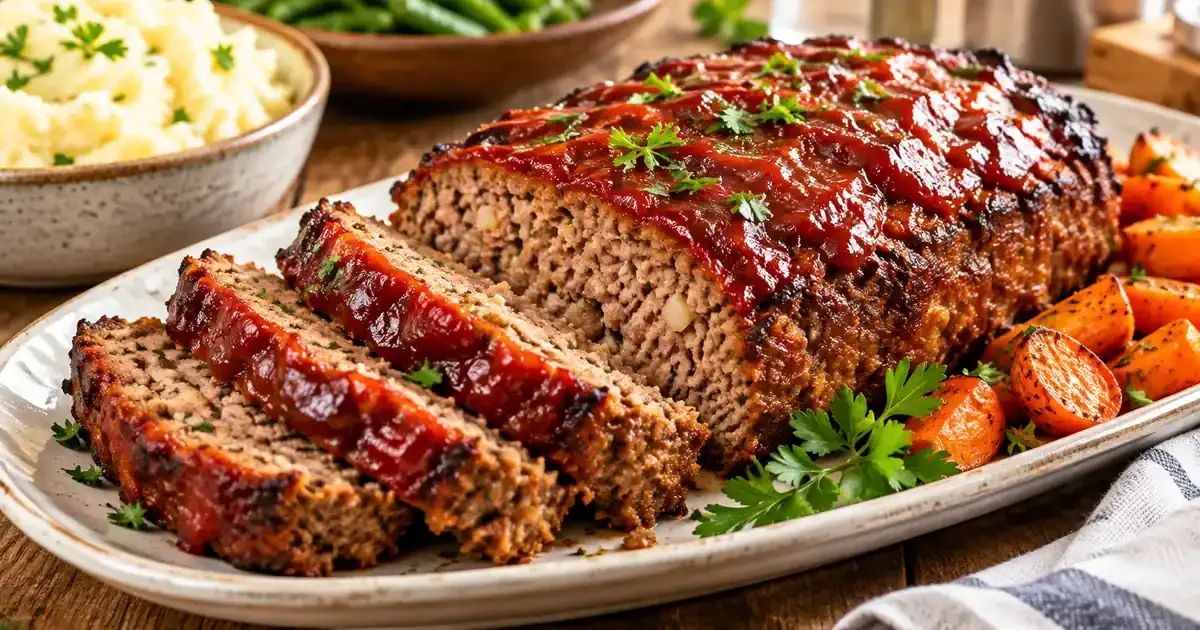
Classic Beef Meatloaf with Tangy Glaze
Ingredients
Equipment
Method
- Preheat your oven to 350°F (175°C) and line a baking sheet with parchment paper.
- In a small bowl, combine the breadcrumbs and milk. Let sit for 5 minutes to form a panade.
- In a large bowl, combine the ground beef, panade, beaten eggs, diced onion, minced garlic, Worcestershire sauce, parsley, salt, and pepper.
- Gently mix the ingredients with your hands until just combined, being careful not to overwork the meat.
- Shape the mixture into a 9x5 inch loaf on the prepared baking sheet.
- In a separate small bowl, whisk together the ketchup, brown sugar, and apple cider vinegar to make the glaze.
- Brush half of the glaze evenly over the top and sides of the meatloaf.
- Bake for 45 minutes, then remove from the oven and brush with the remaining glaze.
- Return to the oven and bake for an additional 15-20 minutes, or until the internal temperature reaches 160°F (71°C).
- Remove from the oven and let the meatloaf rest for 10-15 minutes before slicing and serving.
Notes
Frequently Asked Questions
Why is meatloaf sometimes dry?
A lean mixture, too much handling, or overcooking can make the finished loaf dry. Measure the breadcrumbs, milk, and eggs, and stop baking once the center reaches 160°F.
Why does my meatloaf fall apart?
The loaf may lack enough binder or may have been sliced before resting. Keep the measured eggs and breadcrumbs and allow at least ten minutes before cutting.
Can I bake meatloaf in a loaf pan?
Yes, but the shape and air circulation change, so the cooking time can differ. Check the center with a thermometer rather than assuming the sheet-pan time applies.
Can I make the mixture ahead?
Yes. Cover and refrigerate the prepared mixture promptly until it is time to bake. Never hold raw ground beef on the counter for an extended period.
Does meatloaf freeze well?
Cooked meatloaf freezes well in tightly wrapped slices. Thaw in the refrigerator and warm thoroughly before serving.
A Reliable Meatloaf Checklist
Before baking, confirm that the breadcrumbs have softened in milk, the beef mixture is gently combined, and the loaf is shaped evenly. Brush on the glaze in two stages, check the center for 160°F (71°C), and rest the loaf before slicing. These small decisions make the finished texture more dependable than a timer alone.