
Apple cinnamon baked oatmeal cups turn a bowl of warm oatmeal into neat, handheld portions that can be prepared ahead. Old-fashioned rolled oats form the base, diced apple brings small pieces of fruit to every bite, and cinnamon provides the familiar cozy flavor. A measured amount of maple syrup gives gentle sweetness without making these little breakfasts taste like frosted muffins.
These are baked oats, not bakery-style flour muffins. Their centers should be tender and slightly moist, with a pleasing oat texture rather than a fluffy cake crumb. That distinction matters: adding lots of flour or baking them until completely dry changes the recipe. The method below makes 12 standard-size cups, enough for six servings of two. It explains how to keep the cups together, when to choose different apples, and how to refrigerate or freeze extras for busy mornings.
What Makes Baked Oatmeal Cups Different?
A conventional muffin usually relies on flour, fat, and leavening for a soft, airy crumb. An oatmeal cup is more like a small portion of baked porridge. The oats absorb milk and egg as the pan heats, while a modest amount of baking powder lifts the mixture slightly. It should be spoonable before baking, not kneadable like dough.
This difference explains why oatmeal cups benefit from resting in the pan after baking. Fresh from the oven, the oats are soft and the cup can fall apart if pulled out quickly. Cooling for about ten minutes lets the structure firm enough for lifting. It also helps the apple pieces settle into the oats rather than separating from the mixture.
For the right texture, use old-fashioned rolled oats, not steel-cut oats. Steel-cut oats cook at a different rate and cannot be substituted cup-for-cup here. Quick oats absorb liquid faster and make a softer, more uniform cup; that is acceptable if you prefer it, but the texture is less distinct. Instant flavored oatmeal packets add sugar and seasoning that the formula does not account for.
Ingredients for 12 Oatmeal Cups
Measure 2 cups old-fashioned rolled oats, 1 teaspoon baking powder, 1 1/2 teaspoons ground cinnamon, and 1/4 teaspoon fine salt. The wet mixture uses 2 large eggs, 1 cup milk of choice, 1/4 cup pure maple syrup, 2 tablespoons neutral oil or melted unsalted butter, and 1 teaspoon vanilla extract. Add 1 medium apple, finely diced to make about 1 cup, and a teaspoon of oil to grease the muffin tin.
The milk can be dairy milk or an unsweetened plant milk that behaves similarly when heated. Pure maple syrup supplies the sweetening, so there is no additional sugar in the base formula. If your apple is very sweet, the cups will taste sweeter; if it is tart, the contrast with the syrup will be more noticeable.
Which Apples Work Best?
Apples that hold their shape during baking are easy to use. Honeycrisp, Pink Lady, or Granny Smith are suitable choices. Dice into small pieces, roughly one-quarter inch, so the apple cooks within the same time as the oats. Large chunks can leave hollow pockets and make a cup harder to lift. Peeling is optional if the skin is tender and the apple is washed well.
If your diced apple is particularly juicy, pat it lightly with a clean kitchen towel. Do not drain away all the fruit moisture; simply avoid pouring extra juice from the cutting board into the bowl. Keep the measured fruit quantity consistent when comparing batches.
Does the Recipe Need Flour?
No. The combination of rolled oats and eggs gives enough structure for standard muffin-size portions. Added flour would produce a different texture and is not necessary. If you need the recipe to be gluten-free, select oats specifically labeled gluten-free and check the other ingredient labels for your needs; ordinary oats may be processed alongside wheat.
How to Make Apple Cinnamon Baked Oatmeal Cups
Step 1: Prepare the Pan and Oven
Preheat your oven to 350°F (177°C). Lightly oil all 12 cups of a standard muffin tin or use flexible silicone muffin cups. An ungreased metal pan can grab the oat edges as they bake. Arrange an oven rack in the center and keep a wire rack nearby for cooling.
Step 2: Combine the Dry Ingredients
In a large bowl, stir together the rolled oats, baking powder, cinnamon, and salt. Distribute the cinnamon and baking powder thoroughly; little clumps can create uneven flavor or small bitter spots. This dry mixing also helps the oats stay dispersed when you add the liquid.
Step 3: Whisk the Wet Ingredients
In a second bowl, whisk the eggs, milk, maple syrup, oil or melted butter, and vanilla until combined. If using melted butter, let it cool slightly before mixing so it does not begin cooking the eggs. Whisk until the syrup is incorporated, but there is no need to create a foamy batter.
Step 4: Fold in the Apple
Pour the wet mixture over the dry oats, stirring until no dry patches remain. Fold in the diced apple. Let the mixture rest five minutes while the oats begin to absorb liquid. Stir again immediately before filling the pan because some liquid may settle at the bottom of the bowl. This short pause helps make each portion consistent.
Step 5: Fill and Bake
Spoon the mixture evenly into the 12 greased wells, dividing any remaining liquid among them so one cup is not dry while another is overly wet. Fill each roughly three-quarters full and press very gently with the back of a spoon to level the oats. Bake for 23–28 minutes, until the tops look set and lightly golden and the center is no longer liquid. Since this recipe contains egg, a food thermometer can confirm the mixture reaches at least 160°F (71°C). FoodSafety.gov’s safe cooking temperature chart
Step 6: Let the Cups Set Before Removing
Leave the cups in the tin for about ten minutes. Run a small silicone spatula around the edge and lift each one carefully to a rack. Let them cool further before placing in storage containers. Serving them while warm is fine, but their texture firms slightly as they cool. If a cup sticks, loosening all around the rim works better than pulling from one side.
Why Your Oatmeal Cups May Fall Apart
Not enough resting time: The oat structure is fragile while very hot. Give the pan the full ten-minute pause and release gently. If you pack a cup for later, wait until it is cool enough to hold its shape.
Too much fruit: More fruit sounds appealing, but an extra cup of apple changes the liquid balance. Start with the measured one cup of finely diced apple; add an apple topping after baking if you want more fruit.
Uneven filling: The oat mixture is heavier than the liquid. Stir again just before portioning, then alternate spoonfuls among muffin cups. Return to the bowl for any leftover milk mixture and distribute that too.
Wrong oats: Steel-cut oats require a longer cooking process and do not soften adequately within this recipe’s brief baking time. Instant packets may become mushy and contain added sweeteners. Choose rolled oats when you want the intended texture.
Overbaking: The cups do not need to become crisp like granola. Baking until every trace of moisture is gone leads to dry, hard edges. Look for a set center, a lightly colored top, and the safe endpoint for an egg-containing dish.
Useful Variations Without Changing the Base
For a little crunch, add 1/4 cup of finely chopped walnuts or pecans; divide the added nuts evenly among the cups. For a different autumn note, a small pinch of nutmeg complements the cinnamon. If you prefer less sweetness, reduce the maple syrup slightly, understanding that the perceived sweetness and moisture will change. For extra apple flavor, add a little grated apple in place of part of the diced apple, not on top of the measured quantity.
You can also serve the oatmeal cups with a spoonful of plain yogurt, fresh berries, or a splash of warm milk. These additions belong at serving time so they do not change the bake. If your morning calls for something savory instead, try JonasRecipes’ breakfast sandwich as a separate quick option. Its breakfast cookies are another grab-and-go choice, but they are baked with a different formula and should not be treated as a direct substitution.
Batch-Prep Strategy
If you are baking for a week of breakfasts, decide at the outset which servings will go into the refrigerator and which will be frozen. A batch of twelve cups provides six two-cup portions. Package portions individually only after cooling so condensation does not collect inside the containers. A date label makes it easy to use the oldest batch first.
Avoid covering a hot muffin pan tightly with plastic wrap. Trapped steam makes the tops soggy and can slow cooling. Transfer the cups to shallow containers as soon as they have firmed enough to remove, then refrigerate promptly. This also protects the surface from picking up refrigerator odors.
Storage, Freezing, and Reheating
Refrigerate oatmeal cups within two hours of cooking, keeping them covered at 40°F (4°C) or below. Use within three to four days for a straightforward meal-prep schedule. For longer storage, freeze cooled cups on a tray, then transfer to a freezer-safe container or bag; aim to use within roughly two months for best flavor and texture. Reheat cooked leftovers thoroughly to 165°F (74°C) before serving. A microwave works for one or two cups; a covered moderate oven is useful for several, though reheating times vary by appliance and whether the portions are thawed. FoodSafety.gov’s cold-storage guidance
The oat texture can soften after freezing, but the flavor remains pleasant. If a reheated cup seems dry, serve it with a spoonful of yogurt or a splash of milk rather than adding liquid before freezing. Do not leave reheated breakfast portions at room temperature for a long period before eating.
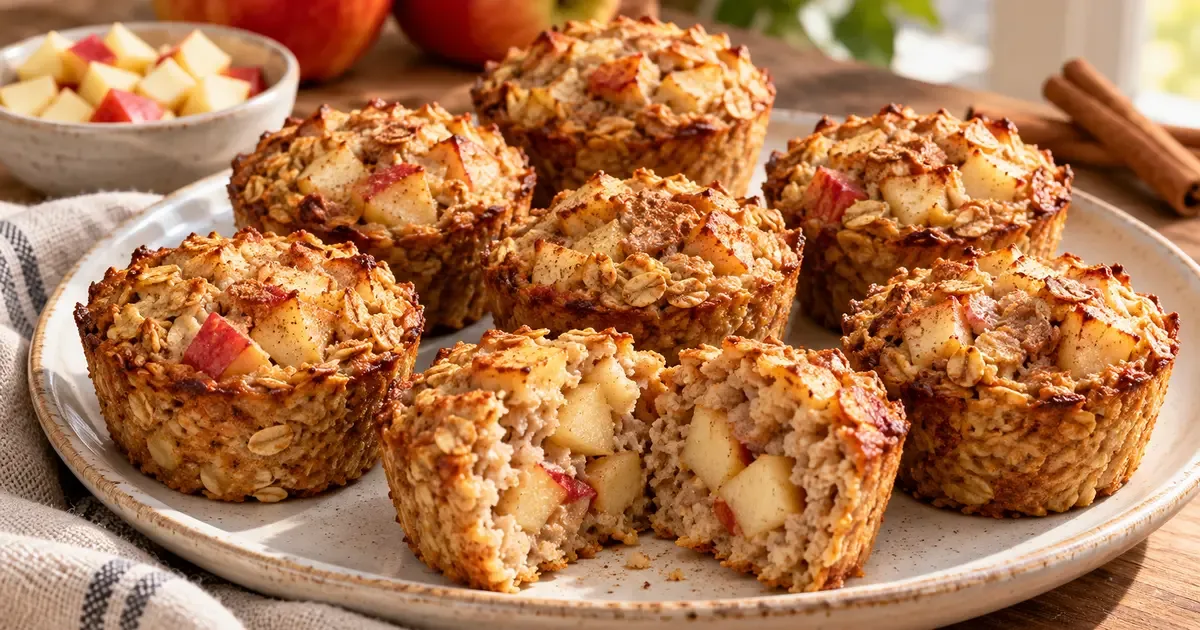
Apple Cinnamon Baked Oatmeal Cups
Ingredients
Equipment
Method
- Preheat oven to 350°F (177°C) and grease 12 muffin wells.
- Mix rolled oats, baking powder, cinnamon, and salt in a large bowl.
- In another bowl, whisk the eggs, milk, maple syrup, oil, and vanilla.
- Combine wet and dry ingredients. Fold in diced apple; rest for 5 minutes, then stir again.
- Divide the oat mixture and remaining liquid evenly among the wells. Bake for 23–28 minutes until set and at least 160°F (71°C) at the center.
- Let the cups stand in the pan for 10 minutes, then loosen gently and cool or serve.
Notes
Frequently Asked Questions
Can I make baked oatmeal cups with quick oats?
Yes, but expect softer and more uniform texture because quick oats absorb liquid sooner. Old-fashioned rolled oats are recommended for a clearly defined oat bite. Steel-cut oats are not a direct substitute for this recipe.
Do I have to peel the apple?
No. A washed apple with tender skin can be diced finely with the peel on. Large or tough pieces of peel may be more noticeable in the finished cup, so peel the apple if you prefer a smoother texture.
Why are my oatmeal cups wet in the middle?
They may need a few more minutes in the oven, especially if your apples are very juicy or the cups are filled higher than recommended. Ensure the mixture reaches the proper safe temperature for an egg-containing dish. A set center should remain pleasantly moist, but not liquid.
Can I freeze apple cinnamon baked oatmeal cups?
Yes. Cool them, freeze individually, then keep in a well-sealed container. Thaw in the refrigerator for more even reheating, and reheat leftovers thoroughly to 165°F. They are most convenient when frozen in one-serving portions.
What is the best way to serve oatmeal cups?
Serve two warmed cups with fruit, plain yogurt, or milk on the side. For a different leisurely breakfast, JonasRecipes’ pancakes recipe is worth keeping in your breakfast rotation, although it uses a stovetop method rather than this muffin-pan method.
Keep Breakfast Simple
These apple cinnamon baked oatmeal cups are useful because the recipe has a consistent ingredient list, an easy oven method, and clearly portioned servings. Choose rolled oats, dice the apple small, stir before filling the tin, and allow enough time for the cups to set. Once you’ve made the base, small variations can keep breakfasts interesting without replacing the reliable method.