
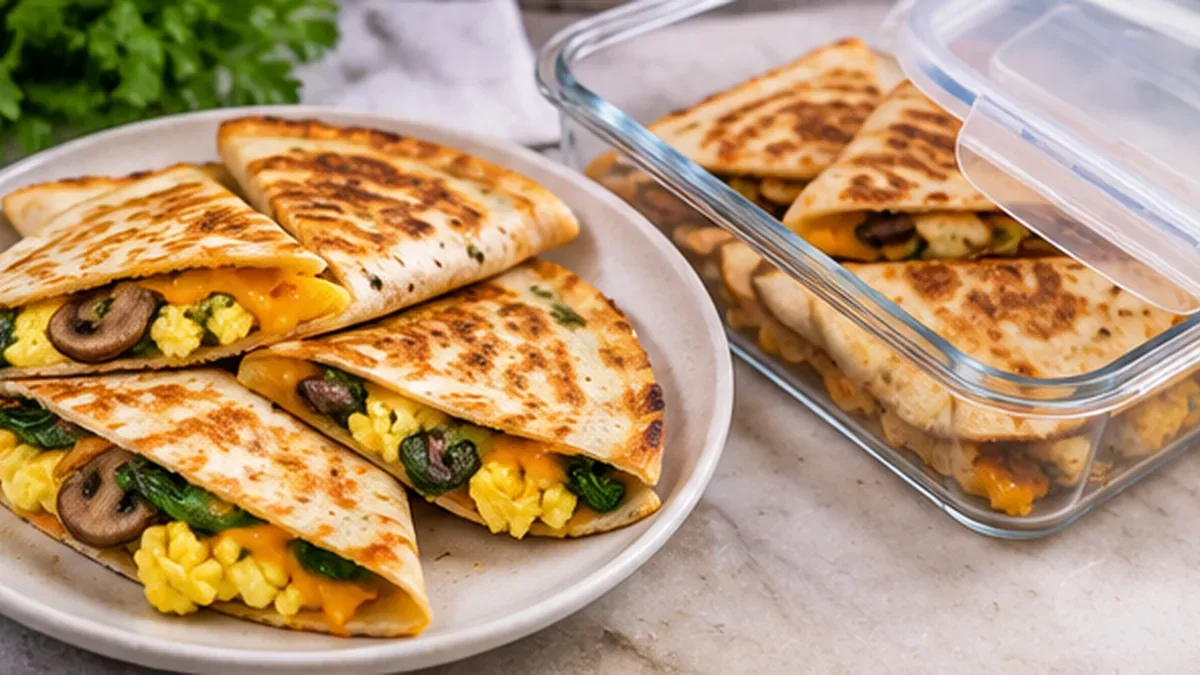
Breakfast quesadillas are quick to make, but keeping them pleasant after a night in the refrigerator takes more care than simply folding a tortilla around eggs and cheese. This guide explains how to choose fillings that will not soak the tortilla, how to cool and store finished portions safely, and how to reheat them without burning the outside. It focuses on storage and reheating techniques rather than a single recipe, so you can apply the advice to your favorite combinations.
Table of Contents
Why Breakfast Quesadillas Lose Their Crispness
A breakfast quesadilla can leave the skillet with a lightly browned tortilla and a warm, cohesive filling, then turn limp inside a lunchbox. The difference is moisture. Eggs release steam, cheese stays warm, and vegetables can continue shedding liquid after cooking. If the quesadilla goes straight into a sealed container, that moisture condenses against the tortilla. The result is a soft surface that may tear when reheated.
This does not mean quesadillas are unsuitable for meal prep. It means they need a cooling and packing strategy that protects the tortilla. The same approach works for egg-and-cheese versions, bean-filled options, and vegetables paired with a modest amount of cheese. Think of crispness as something to preserve where possible and restore during reheating rather than something a refrigerator can guarantee.
Start with a Filling That Is Not Watery
Scrambled eggs should be just set before they go into a tortilla. If they are cooked in a puddle of milk or water, the excess liquid will migrate into the bread. Cook mushrooms and spinach separately until most of their released moisture evaporates. Drain canned beans thoroughly and pat washed vegetables dry. A small amount of grated cheese helps the filling hold together, but a thick layer can make the center greasy and heavy.
Fresh tomatoes, salsa, sliced avocado, and yogurt sauces are better added after reheating. They contribute freshness without soaking the stored tortilla. If you enjoy peppers and onions, cook them until tender and let excess liquid evaporate before assembly. A simple test is to place a spoonful of filling on a plate for a minute. If a visible ring of water appears, drain or cook it a little longer.
Choose Tortillas for Folding and Reheating
Medium flour tortillas are flexible and easy to fold without cracking, especially after a few seconds of warming. Whole-wheat flour tortillas can also work, though brands differ in thickness and flexibility. Corn tortillas offer a different flavor and texture, but smaller sizes and a greater tendency to crack may make them less convenient for folded meal-prep portions.
Choose a tortilla that fits your skillet so it can brown evenly. Avoid overfilling it. A thin, even layer heats more consistently than a large mound in the center. If you prefer two tortillas with filling between them, cut the finished quesadilla into manageable wedges only after it has rested briefly. Cutting while the filling is very hot can cause cheese and eggs to spill out.
Cook for a Dry, Golden Exterior
A heavy nonstick or well-seasoned skillet over medium heat gives the tortilla time to brown before the filling overheats. Use only a thin film of oil or a little butter if the pan needs it. Too much fat can make the exterior greasy, and high heat may scorch the tortilla before the center is hot. Turn the quesadilla when the underside is golden and the filling has begun to hold together.
For a make-ahead batch, cook each quesadilla until both sides are lightly crisp rather than aggressively dark. Reheating will add more color later. Work in batches and keep finished pieces on a wire rack or an open plate rather than stacking them while steaming. The goal is to prevent the trapped moisture that makes even a well-cooked tortilla soften.
Cool Promptly Without Trapping Steam
Allow the cooked quesadillas to release visible steam on a clean rack or plate, then refrigerate promptly in shallow containers. Do not leave egg or cheese fillings sitting at room temperature for extended periods. According to FoodSafety.gov’s food safety guidance, perishable foods should be refrigerated within two hours, or within one hour when the surrounding temperature exceeds 90°F (32°C).
If you are preparing several portions, spread them out instead of piling them in one deep container. Once the food has cooled enough to package safely, place parchment between layers so they do not stick. Avoid sealing a container full of visibly steaming quesadillas. A shallow storage arrangement supports quicker cooling and makes it easier to take out only the portions needed.
Refrigerate Only What You Will Eat Soon
For properly handled cooked leftovers, plan to use refrigerated quesadillas within three to four days. Keep the refrigerator at 40°F (4°C) or colder. Mark the container with the preparation date, especially if you make several kinds of breakfast food on the same day. The storage clock starts when the cooked filling is prepared, not when you assemble a leftover portion later.
Store salsa, sliced fruit, and other fresh sides separately. If you plan to serve quesadillas alongside a smoothie, prepare that separately rather than allowing a cold drink to sit next to a warm container during transport. For a related breakfast planning idea, see our breakfast smoothie guide, which offers options that can be assembled independently.
Freeze Individual Portions for Later
Freezing works well for many cooked quesadillas, especially those filled with eggs, cheese, beans, or well-drained vegetables. Let them cool promptly, then wrap individual portions tightly in freezer-safe material and place them in a labeled freezer bag or container. Press out excess air without crushing the tortillas. Separating portions prevents repeated thawing of a large batch.
The quality is generally best when you use frozen quesadillas within a couple of months, although continuous freezing at 0°F (-18°C) keeps food safe for longer than that quality window. Avoid freezing fillings with large amounts of fresh tomato, lettuce, or watery sauce. These ingredients tend to lose their texture and can soak the tortilla as they thaw.
Reheat in a Skillet for the Best Texture
A skillet is the most reliable choice when you want a crisp exterior. Place a refrigerated quesadilla in a dry or very lightly oiled skillet over medium-low to medium heat. Warm it gradually, turning once or twice, until the tortilla is crisp and the center is thoroughly hot. The exact time depends on thickness and the starting temperature. If the outside browns before the middle warms, lower the heat and cover briefly, then uncover to restore crispness.
Use a food thermometer when reheating egg, poultry, or other perishable leftovers; the general target for reheated leftovers is 165°F (74°C). Do not rely solely on melted cheese as evidence that the center is hot enough. For a frozen portion, thaw safely in the refrigerator before skillet reheating, or use a longer gentle heating process that reaches the center without burning the outside.
Use an Oven or Air Fryer for Several Portions
An oven is convenient for reheating a tray of quesadillas. Arrange them in a single layer on a baking sheet and warm at approximately 375°F (190°C), checking after several minutes and turning if necessary. A wire rack can improve airflow, although a baking sheet also works. Heat until the centers are fully hot, and do not assume every portion will finish at the same time if their fillings differ.
An air fryer can produce a dry, lightly crisp surface with less attention. Start around 350°F (175°C) and check frequently so the tortilla does not become brittle. Leave space between pieces, and avoid loose toppings that might blow into the heating element. For large families, the oven is often more practical than cooking a series of small air-fryer batches.
When the Microwave Is Your Only Option
A microwave is useful at work or school but usually gives a softer tortilla. Put the quesadilla on a microwave-safe plate and heat in short intervals, turning or rearranging as needed. Allow a brief standing period so heat distributes through the filling. Check that perishable leftovers are thoroughly reheated. If a toaster oven or skillet is available afterward, a short dry finish can improve the exterior.
Avoid wrapping the quesadilla in a wet paper towel if crispness is your priority. That method deliberately adds moisture, which can help soften a dry tortilla but works against a toasted finish. For a packed lunch without reheating equipment, consider choosing a filling and serving style that is pleasant when chilled, while following appropriate storage and transport precautions.
Build a Simple Weekly Breakfast Plan
Prepare a few flexible fillings rather than assembling a large number of identical quesadillas. For example, cook one batch of scrambled eggs, another of drained black beans, and a tray of sautéed peppers and onions. Assemble portions with different combinations and label them clearly. Keep fresh herbs and sauces for the day you serve each meal. This reduces monotony without requiring separate cooking sessions.
Our breakfast burrito ideas offer complementary flavor combinations if you want to alternate wraps and quesadillas during the week. If you prefer a lighter side, use fruit or a small bowl of yogurt. The best routine is one you can store safely, reheat consistently, and repeat without creating excessive preparation work.
Troubleshooting Soft or Split Tortillas
If the tortilla becomes soggy overnight, check whether the filling was watery or the food was sealed while steaming. Next time, drain vegetables more thoroughly and spread cooked portions apart before packing. If a quesadilla cracks when folded, warm the tortilla briefly before filling and avoid overloading it. If cheese leaks out, use less filling and leave a narrow border around the edges.
If the exterior burns during reheating, lower the heat and give the filling more time to warm. If the center stays cold, use thinner portions or thaw frozen quesadillas safely first. A quesadilla that is already soft can still be useful: a few minutes in a dry skillet often improves the texture. There is no need to discard a properly stored portion simply because it is less crisp than when freshly cooked.
Fix a wet spinach-and-egg filling: Wilt the spinach separately, squeeze away excess liquid, and let the scrambled eggs finish cooking before assembly. If you use tomatoes, remove the watery seed pockets or add them fresh after reheating. For freezer portions, skip uncooked salsa inside the tortilla and pack it in a separate container.
Fix a cold center with a dark exterior: A very hot pan can toast the tortilla long before a thick frozen filling warms through. Thaw overnight in the refrigerator when possible, then reheat over medium-low heat with a lid for the first part of cooking. Remove the lid near the end to let surface moisture evaporate and restore crispness. Use a food thermometer to verify that reheated leftovers reach 165°F (74°C), especially when eggs or cooked poultry are included.
Fix sticking and torn tortillas: Let the filling cool enough to stop releasing steam, avoid overstuffing, and fold a warmed tortilla gently. Place the seam or folded edge down first in a lightly oiled skillet. When batch cooking, separate finished quesadillas on a rack rather than stacking them hot. Wrap each cooled portion individually before freezing so you can remove one breakfast without repeatedly exposing the rest to warm air.
Frequently Asked Questions
Can breakfast quesadillas be made the night before?
Yes. Cook them, refrigerate promptly in shallow portions, and reheat in a skillet or oven when you want a crisper tortilla.
How long do cooked breakfast quesadillas keep in the fridge?
Use properly handled cooked leftovers within three to four days and keep the refrigerator at 40°F (4°C) or below.
Can I freeze quesadillas filled with scrambled eggs?
Yes, provided the eggs are cooked, cooled and frozen promptly. Avoid adding watery fresh toppings before freezing.
What is the best way to reheat a frozen breakfast quesadilla?
Thaw safely in the refrigerator when practical, then warm gently in a skillet or oven until the filling is thoroughly hot.
Why does my tortilla split when I fold it?
A cold or overfilled tortilla is more likely to crack. Warm it briefly and use a modest amount of filling.
A food-safety check before serving
For quesadillas prepared with cooked eggs, poultry or other perishable fillings, refrigerate promptly in shallow containers and reheat leftovers until the center reaches 165°F (74°C), measured with a food thermometer. A browned tortilla alone does not confirm the filling is hot enough. If the exterior crisps before the middle warms, reduce the heat and cover the skillet briefly, then uncover to restore crispness. Avoid leaving cooked quesadillas at room temperature for more than two hours, or one hour when the surrounding temperature exceeds 90°F (32°C).
A good make-ahead breakfast should be practical as well as enjoyable. Keep wet toppings separate, cool cooked portions promptly, and choose a reheating method that warms the filling while drying the tortilla surface. Those three habits do more for meal-prep quesadillas than adding extra ingredients or complicated equipment.