
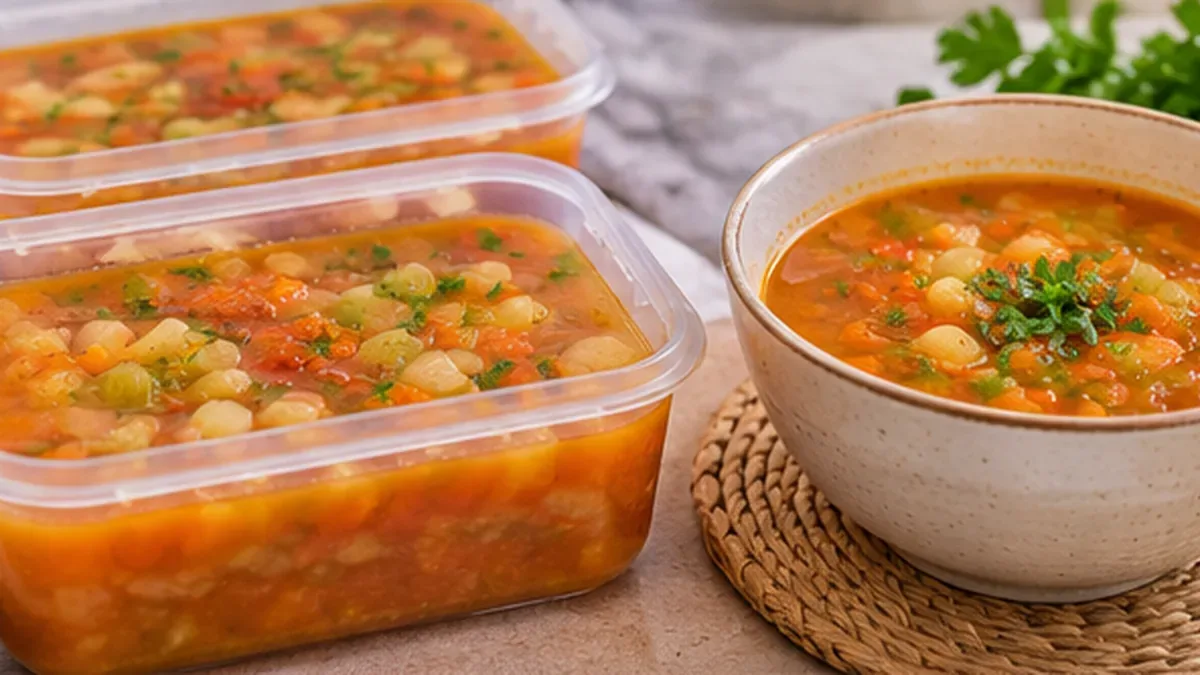
Freezing homemade soup in individual portions is one of the easiest ways to turn a single cooking session into several useful lunches or dinners. But pouring a full pot into random containers can lead to cracked lids, icy surfaces, mushy noodles, and uneven reheating. This practical guide explains how to cool, package, label, thaw, and reheat soup safely while protecting flavor and texture. It is a storage guide, not a single soup recipe.
Table of Contents
Why Freeze Soup in Individual Portions?
A pot of homemade soup is useful for more than one dinner. Dividing it into single-meal containers lets you thaw only what you need, reduces repeated reheating, and makes lunches easier to plan. The key is to freeze a soup when it is fresh and safely cooled, not after it has sat in the refrigerator for too long. Portion size matters: a small bowl thaws quickly, while a family-size container may require planning a day ahead. Think about how the soup will be served before choosing containers.
Which Soups Freeze Best?
Broth-based vegetable soups, lentil soups, bean soups, and many blended vegetable soups usually freeze well. Their texture is relatively forgiving. Soups containing potatoes, pasta, rice, or dairy need more care. Pasta and rice continue absorbing liquid during storage and reheating; cooked potatoes can become grainy. Cream-based soups may separate, although gentle reheating and whisking can sometimes restore an acceptable texture. If you are making a soup specifically for freezing, leave delicate pasta, fresh herbs, crunchy garnishes, and cream to add after reheating.
Freezer texture decision guide by soup ingredient
For lentil and bean soups, freeze the fully cooked base and add a splash of water when reheating if it thickens. For chicken and vegetable broth, freeze the broth with sturdy vegetables but consider cooking noodles separately on serving day. For rice soup, freeze the soup base without rice when possible, then add freshly cooked rice so it does not swell into a porridge. For potato soup, expect some graininess after thawing; blending part of the soup can help, but it cannot guarantee the original texture. For cream soups, freeze the vegetable base and add cream after reheating when the recipe allows. For leafy greens, add delicate spinach at the end of reheating, while sturdier kale can usually be frozen in the soup.
These are texture choices, not food-safety shortcuts. Any chicken or other perishable ingredient must be fully cooked before the soup is chilled and frozen. Never hold a warm batch at room temperature while waiting for pasta or dairy to be added.
Cool Soup Promptly and Safely
Do not leave a large stockpot at room temperature until bedtime. Divide hot soup into shallow, food-safe containers so it cools faster. Refrigerate perishable food within two hours of cooking, or within one hour if the room or outdoor temperature exceeds 90°F (32°C). For a particularly large batch, set a smaller metal pot in an ice-water bath and stir the soup regularly before transferring it into shallow containers; keep the bath water below the pot rim so it cannot spill into the food. You can also refrigerate small, shallow portions while they are still warm rather than waiting for them to reach room temperature. Avoid placing a tightly covered, very deep pot in an overcrowded refrigerator, where the center may cool slowly. Use clean ladles and lids, keep the cooling portions away from raw meat, and refrigerate promptly. Freezing does not make soup safe if it was cooled improperly.
Choose the Right Container
Freezer-safe rigid containers work well for individual bowls. Sturdy freezer bags can be filled with cooled soup, sealed carefully, and frozen flat on a tray; the flat packages stack neatly after they become solid. For glass, use only containers specifically rated for freezer use and follow the manufacturer’s fill-line instructions. Leave space at the top because liquids expand as they freeze. A container that is too full can leak or crack, while a very oversized container exposes more soup to air. Avoid flimsy takeaway tubs that may split at low temperatures.
Measure Portions Before Filling
A practical portion may be about one to two cups, depending on whether the soup is a starter or a complete meal. Measure once with a cup or ladle so your containers have predictable amounts. For family dinners, freeze a few larger portions separately. Do not assume everyone eats the same serving size. If you want bread or salad alongside the soup, smaller containers may be enough. Write the number of servings on each label, not merely the container’s capacity.
How to Freeze Soup Step by Step
First, cook the soup completely and taste for seasoning. Second, divide it into shallow containers and cool it promptly in the refrigerator. Third, transfer chilled soup to freezer-safe packaging, leaving expansion space and removing unnecessary air where practical. Fourth, label each package with the soup name, preparation date, and serving count. Fifth, freeze promptly at 0°F (-18°C) or colder. Keep packages level until solid, then stack them without crushing fragile lids. Rotate older portions to the front so they are used first.
How Long Does Frozen Soup Keep?
At a steady 0°F (-18°C), properly handled frozen food can remain safe indefinitely, but flavor and texture gradually decline. For best quality, plan to use many homemade soups within roughly two to three months. Ingredients and packaging influence results, so treat that period as a practical quality target rather than an automatic safety expiration date. Labeling helps you distinguish an older lentil soup from a fresh batch. If a freezer outage partially thaws the soup, evaluate its temperature and remaining ice crystals using current food-safety guidance instead of relying on smell alone.
Thaw Soup Without Risk
The refrigerator is the simplest choice when you can plan ahead. Place the frozen container on a tray to catch condensation or leaks, and allow enough time for the center to thaw. Some soups can go directly from freezer to saucepan over low heat; stir frequently as the edges melt so the bottom does not scorch while the center remains frozen. A microwave can also work if the container is microwave-safe and you stir during heating. Do not thaw soup overnight on a kitchen counter. Avoid pouring boiling water over containers not designed for thermal shock.
Reheat for Better Texture
For leftovers, reheat thoroughly to at least 165°F (74°C), checking with a food thermometer where practical; bring soups and sauces to a rolling boil when reheating, stirring to heat evenly and avoid scorching. Stir often, especially for thick purees and bean soups. Add a splash of water or broth if the soup has thickened. Dairy-based soups benefit from gentle heat after the soup is thoroughly reheated; avoid prolonged aggressive boiling, which can make them split. If pasta was stored separately, cook or warm it and add it at serving time. Finish with lemon juice, chopped herbs, or a crisp topping for freshness.
Troubleshooting Common Problems
If soup tastes watery, simmer it briefly uncovered after reheating, or add a suitable thickener rather than over-seasoning immediately. If a blended soup separates, whisk it well or blend carefully with a heat-safe blender. If vegetables have softened too much, turn the soup into a puree instead of trying to restore their original bite. If a freezer bag leaks, inspect the seal and double-bag liquid portions next time. If a package has severe freezer burn, quality may be poor even when the soup has remained safely frozen. Never taste soup to determine whether mishandled food is safe.
Make a Simple Freezer Soup Rotation
Choose two soups with different flavors instead of freezing ten identical containers at once. For example, pair a tomato-based soup with a lentil or vegetable soup. Freeze a mixture of individual lunches and family-size portions. Keep a short list on the freezer door with names, dates, and remaining portions; cross off each one when used. This prevents mystery containers and helps you use older meals before making another batch. For related dinner ideas, see creamy tomato basil soup and lemon chicken orzo soup; follow each recipe’s own handling instructions.
Frequently Asked Questions
Can I freeze soup in glass jars?
Only use freezer-safe glass containers, respect the fill line, and leave room for expansion. Ordinary jars can break when liquid freezes.
Should I freeze soup with pasta already in it?
You can, but pasta often becomes softer after thawing. For the best texture, cook and add pasta when reheating.
Can I reheat soup directly from frozen?
Yes, many soups can be reheated from frozen in a saucepan or microwave-safe container, provided they are heated evenly to 165°F (74°C).
Why did my creamy soup separate after freezing?
Fat and water can separate during freezing and thawing. Gentle reheating and whisking may improve texture, but some cream soups do not freeze well.
How do I know when frozen soup should be discarded?
A freezer date alone is not a safety test. Discard soup with an uncertain handling history or unsafe thawing conditions; consult food-safety guidance after a power outage.
For authoritative temperature and cooling guidance, consult FoodSafety.gov’s four steps to food safety and its cold food storage chart. Freezing preserves safely handled food; it cannot undo unsafe storage.