
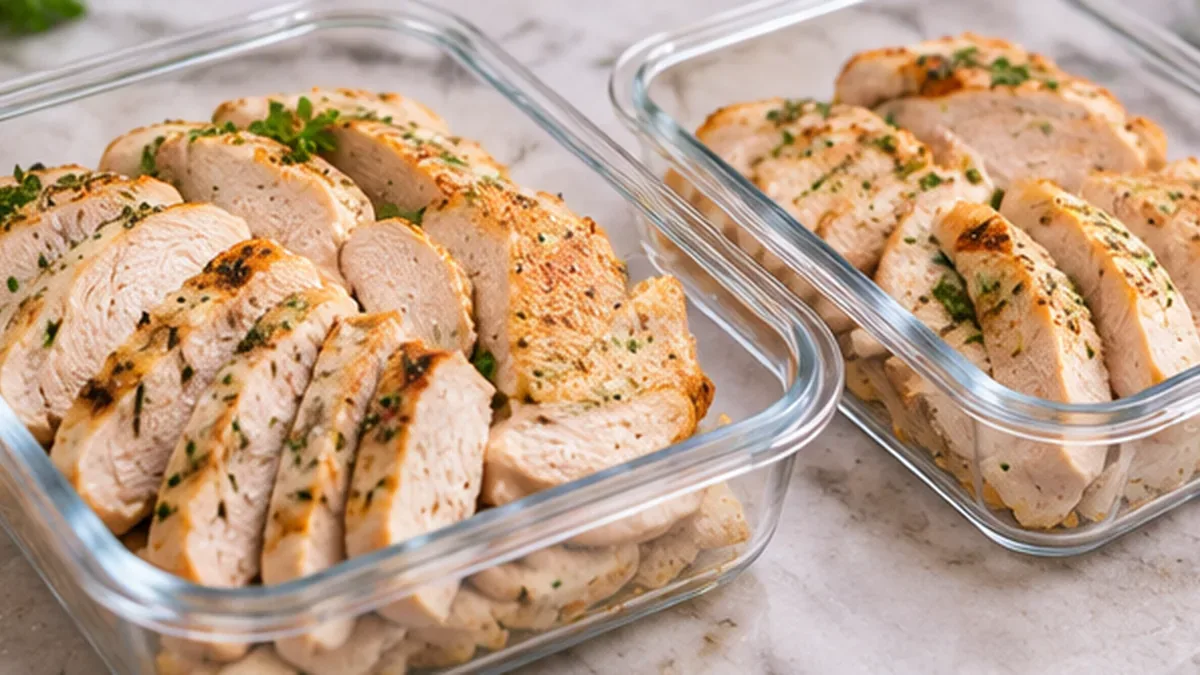
Freezing cooked chicken is a practical way to prepare weekday lunches and dinners ahead of time. The goal is not simply to put leftovers into a container. You want to cool the food promptly, portion it in useful amounts, protect it from air, and reheat it without turning tender chicken into dry strips. This guide covers those steps for shredded chicken, sliced breasts, thighs, and ready-to-use meal components. It is a storage and meal-prep guide rather than a single recipe.
Table of Contents
Can You Freeze Cooked Chicken?
Yes. Fully cooked chicken can be frozen for later meals if it was handled safely before freezing. You can freeze roasted pieces, grilled slices, poached chicken, or shredded meat. The best results come from portions that are still moist, have not been repeatedly reheated, and are packed soon after cooling. Choose the method that fits how you will use the chicken later.
Freezing preserves a convenient ingredient, not the exact texture of a just-cooked meal. Lean breast meat may feel firmer after thawing, while thigh meat often stays more forgiving. Adding a small amount of cooking liquid or a sauce that freezes well can help. Keep rice, salad greens, and crisp toppings separate when their texture matters.
Cool Cooked Chicken Safely Before Freezing
Start with chicken that has reached a safe cooking temperature of 165°F (74°C). Once the meal is finished, do not leave cooked chicken sitting on the counter for hours. FoodSafety.gov recommends refrigerating perishable food within two hours, or within one hour when the surrounding temperature exceeds 90°F (32°C). Use shallow containers so the chicken cools more quickly.
You do not have to wait for food to reach room temperature before placing it in the refrigerator. Divide large batches into shallow portions rather than putting one deep, tightly packed hot container into storage. Keep raw and cooked food separate, use clean utensils, and label the batch. Freeze refrigerated portions promptly instead of leaving them for several days and then expecting the freezer to reverse quality loss.
Choose Portions That Match Your Meals
Think about how much chicken you use in one meal before reaching for freezer bags. A container holding a family-size amount makes sense for a casserole, while smaller portions are more convenient for sandwiches, wraps, and individual grain bowls. Separate plain cooked chicken from strongly seasoned batches so you can use it in different cuisines.
Slice or shred the chicken after it has rested and cooled enough to handle safely. Keep larger pieces intact when possible because they expose less surface area to drying. If you plan to use chicken in a soup, portion it separately from the broth unless you specifically want a ready-to-heat soup. This gives you more control over the final texture.
Best Containers and Wrapping Methods
Choose freezer-safe, airtight containers or sturdy freezer bags. Press excess air out of bags before sealing, or use a suitable vacuum sealer according to its instructions. For rigid containers, select a size that leaves minimal empty space while allowing room for liquids to expand. A layer of parchment between flat slices can make portions easier to separate.
Label each package with the food, the date it was cooked, and a realistic portion count. Lay bags flat on a freezer shelf until solid, then stack them to save space. If the chicken includes sauce, use leak-resistant packaging and leave expansion space. Avoid repeatedly opening a large bag to remove individual pieces; package single-use portions from the start.
How to Keep Frozen Cooked Chicken Moist
Moisture is the main quality challenge. Chicken breast can dry out during cooking, freezing, and reheating, so start by cooking it just to the safe temperature rather than far beyond it. When packaging shredded or sliced meat, add a spoonful or two of its cooking juices, unsalted broth, or a compatible sauce if the planned dish allows. Do not add so much liquid that every meal becomes watery.
Thighs and braised chicken often freeze more successfully because their texture is less fragile. For grilled slices, keep the pieces relatively thick and reheat gently. Avoid freezing crisp coatings in the same closed container as wet ingredients, since trapped moisture softens the crust. For a different way to use cooked chicken later, see our lemon chicken orzo soup and follow its recipe and storage guidance.
How Long Can Cooked Chicken Stay in the Freezer?
The FoodSafety.gov cold storage chart lists approximately two to six months as a quality window for cooked meat or poultry leftovers at 0°F (-18°C) or below. The USDA notes that plain cooked chicken generally tastes best when used within about four months. These are quality recommendations, not automatic safety expiration dates for continuously frozen food.
Keep an inventory so older packages are used first. If the freezer has warmed during a power outage, assess the actual temperature and thawing history rather than relying on the date alone. Freezing does not make previously mishandled food safe. Discard food when its safe handling history is uncertain instead of trying to rescue it with extra seasoning.
Thaw Frozen Cooked Chicken the Right Way
For planned meals, move a portion from the freezer to the refrigerator and let it thaw in a covered container. Place it where any moisture cannot drip onto ready-to-eat foods. Smaller portions thaw more conveniently than a large frozen block. You can also reheat some cooked chicken directly from frozen if the heating method warms it evenly and reaches the proper temperature throughout.
The USDA identifies refrigerator, cold water, and microwave thawing as safe methods. Never leave cooked chicken on the kitchen counter to thaw. If using cold water, keep it in leakproof packaging and cook or reheat promptly afterward. Microwave-thawed food should be heated and eaten immediately. Always follow the safety instructions for the particular meal.
Reheat Chicken Without Making It Rubbery
Reheating is where much of the avoidable dryness happens. In a skillet, add a little broth or water, cover, and warm over moderate heat. In a microwave, use a microwave-safe dish, add a splash of liquid, cover loosely, and pause to stir or rearrange pieces so the heat distributes evenly. For larger portions, a covered oven-safe dish can help prevent surface drying.
Use a food thermometer to confirm reheated leftovers reach 165°F (74°C) throughout, as recommended by USDA reheating guidance. Avoid repeated cycles of heating and cooling. Reheat only the amount you intend to eat, and add fresh herbs, lemon, or a suitable sauce at serving time for brightness.
Meal-Prep Combinations That Freeze Well
Cooked chicken can be the base for several meals without requiring a complicated batch-cooking session. Freeze shredded chicken for a soup, sliced chicken for a rice bowl, or diced chicken for a baked casserole. Keep delicate components such as lettuce, cucumbers, and fresh tomatoes out of the freezer and add them after reheating. Grains can be frozen separately if you prefer to control their moisture.
An easy dinner workflow is to cook a batch of chicken, divide it into three flavors, and package each portion for a specific use. For instance, reserve plain chicken for soup, lightly seasoned chicken for grain bowls, and herb-seasoned chicken for pasta. Our quick dinner collection can help you plan combinations without inventing an entirely new recipe each night.
A Practical Five-Portion Freezer Plan
Suppose you have about five cooked-chicken portions after dinner. Before packing, decide how each portion will be used. Keep two portions plain for soups or quick lunches, two with a small spoonful of cooking juices for rice bowls, and one in a separate container for a casserole. This avoids thawing a large block just to take out a small amount. Use a clean spoon for each portion, and do not return chicken that has been sitting out during meal assembly to the freezer without considering its time and temperature history.
Write a simple label such as “Cooked chicken thighs — 1 serving — Nov 7 — rice bowl.” The date should be the original cooking date, not the day you reorganized the freezer. If you make several batches, use the oldest first. A freezer inventory can be as simple as a note on the door showing the food, number of servings, and intended meal. Cross off a serving each time you use it.
Choose the packing method by the final meal
- For sandwiches or wraps: Freeze sliced chicken in thin, single-meal packages; thaw in the refrigerator and add fresh crunchy vegetables only when serving.
- For soup: Freeze shredded chicken separately in a small airtight container so you can add it during reheating without overcooking noodles or vegetables.
- For rice bowls: Pack chicken with a little cooking liquid, but keep sauces that may split and delicate garnishes separate.
- For casseroles: Dice chicken before freezing if the final recipe calls for diced meat, and label the amount so the casserole can be assembled without guesswork.
When you are ready to eat, transfer a package to the refrigerator in advance or reheat directly from frozen using a method that warms the center evenly. Use a thermometer to verify 165°F (74°C) for reheated leftovers. If the chicken is destined for a mixed dish, check the temperature in the thickest part of that dish rather than assuming a hot sauce guarantees the chicken is fully heated. This small planning step protects both texture and food safety.
Practical portion test: Before freezing an entire batch, pack one single-meal portion and rehearse the full process. Freeze it flat, thaw it in the refrigerator, and reheat it with one or two tablespoons of water or unsalted broth in a covered skillet until the center reaches 165°F (74°C). Record whether the chicken stayed moist, how much liquid it needed, and whether your intended side dish reheated well. This small test is especially useful for lean breast meat, which can become stringy if heated too long. Adjust the packaging or portion size for the remaining batch rather than repeating the same texture problem across several meals.
Texture troubleshooting after thawing: If chicken looks dry but smells normal and has been handled safely, warm it covered with a small splash of unsalted broth and fold it into soup, pasta, or a saucy grain bowl instead of frying it uncovered. If the meat is watery, drain excess liquid before mixing it into wraps or casseroles. If a package has visible freezer burn, trim the affected dry areas when appropriate; freezer burn is generally a quality problem, not by itself proof of unsafe food. However, do not taste food to assess safety, and discard chicken if its storage or thawing history is unsafe or unknown.
Keep a simple freezer log: Record the original cooking date, portion size, whether broth was added, and the meal you plan to make. On reheating day, note which cut stayed moist and which method worked. This turns the next batch into a repeatable meal-prep system rather than guesswork. Use shallow containers for prompt cooling, maintain the freezer at 0°F (-18°C) or colder, and heat leftovers to 165°F (74°C) throughout.
Common Freezer Meal Prep Mistakes
One mistake is packing a large, deep container while the food is still hot and then expecting it to chill evenly. Use shallow containers and refrigerate promptly. Another is freezing chicken without a date or portion label. After a few weeks, similar-looking packages become difficult to identify, and you may thaw more than you need.
Other problems include leaving excess air in bags, mixing crisp toppings with moist ingredients, thawing on the counter, and reheating until the meat is tough. Use the freezer as a planning tool rather than a way to extend the life of chicken that has already been stored too long. For more on flavor changes during storage, read why chicken can taste different after freezing.
Build a more flexible freezer meal-prep system: Label each chicken portion with the cooking date, freezing date, cut, and intended meal. Freeze chicken separately from ingredients that require different reheating times. Cooked beans and pasta, for instance, benefit from their own containers; consult our guides to freezing cooked beans and freezing cooked pasta without mushiness. Move only the portions needed for tomorrow into the refrigerator to thaw, and keep fresh toppings separate until serving.
For packed lunches, use insulated storage appropriate to the food temperature and never rely on smell to decide whether chicken left unrefrigerated is safe. Reheat cooked chicken to 165°F (74°C) and follow our cooked-chicken room-temperature safety guide when planning transport or serving.
Frequently Asked Questions
Can I freeze cooked chicken breast?
Yes. Portion it, wrap it airtight, and freeze promptly after safe cooling. Reheat gently with a little liquid and check that it reaches 165°F (74°C).
Can I freeze shredded chicken with broth?
Yes. A small amount of broth or cooking juices can help retain a pleasant texture. Use a freezer-safe container and leave room for liquids to expand.
Should I freeze chicken with rice and vegetables?
You can, but separate portions often give better control. Keep fresh salad vegetables and crisp toppings out of the freezer and add them after reheating.
How long is frozen cooked chicken best quality?
Cooked chicken leftovers are generally best within two to six months at 0°F (-18°C) or below, with plain cooked chicken often at its best within about four months.
Can I thaw cooked chicken overnight on the counter?
No. Thaw it in the refrigerator or use another USDA-approved method, and follow the appropriate immediate reheating guidance.