
Lemon ricotta pancakes are a fresh variation on the classic breakfast stack. Ricotta gives the batter a tender, moist interior, while finely grated lemon zest makes each pancake taste bright without turning it sharply sour. The finished pancakes have golden edges and a soft center, especially when they are cooked gently rather than rushed over very high heat. They are lovely with berries and plain yogurt, but they also work with a small drizzle of maple syrup.
This recipe uses ordinary all-purpose flour, whole-milk ricotta, milk, eggs, baking powder, a little baking soda, and fresh lemon. You will make the batter in two bowls and cook it on a skillet or griddle, so no special equipment is needed. The measured quantities are in the recipe card. Below, you will find the reasoning behind the mixing method, how to handle thick ricotta batter, and the signs that tell you when to flip.
What Ricotta Adds to Pancake Batter
Ricotta is a fresh cheese with a soft, slightly grainy texture. Folded into pancake batter, it adds moisture and a mild dairy richness without making the pancakes taste like a cheesecake. Small flecks of ricotta can remain in the mixture; that is normal. Do not try to beat the batter perfectly smooth after you add the flour, since the extra mixing can make the cooked pancakes tough.
Whole-milk ricotta gives the most reliably creamy result here, but different brands contain different amounts of liquid. A very wet ricotta may loosen the batter, while a firm variety may create a mixture that needs an extra tablespoon of milk. Start with the specified ratio and judge the consistency only after the ingredients have been combined and rested briefly. It should be thick enough to hold a soft mound on the griddle, but spread when coaxed with a spoon.
The Best Lemon Flavor Comes from the Zest
Lemon zest carries aromatic oils from the colored outer peel. Grate only the yellow layer; the white pith beneath it tastes bitter. Use a fine grater and zest the lemon before cutting it for juice. For this recipe, two teaspoons of zest and a tablespoon of fresh juice make the citrus noticeable while leaving the pancakes balanced.
Bottled lemon juice will not create the same fragrant result because the zest contributes much of the aroma. If you like a more pronounced lemon note, add a little additional freshly grated zest at the table rather than pouring extra juice into the batter. Too much liquid or acid changes the balance of the leavening and can make the surface color and texture harder to predict.
Ingredients and Equipment
All-purpose flour forms the base. Baking powder and baking soda provide lift, with a small amount of sugar to round out the lemon. Eggs hold the batter together, milk adjusts the thickness, and melted butter keeps the pancakes soft. Vanilla is optional but complements the lemon. Keep the ricotta cold until you are ready to mix, and bring the melted butter down from hot to warm so it does not curdle the eggs.
You need a nonstick skillet or griddle, two medium bowls, a whisk, a wide spatula, and a measuring cup. A fine grater is useful for the citrus. A heavy pan gives you more consistent browning than a thin skillet, but medium-low to medium heat remains important in either case. Prepare a small amount of neutral oil or butter to coat the pan lightly between batches.
How to Make Lemon Ricotta Pancakes
Step 1: Whisk the Dry Ingredients
Combine flour, baking powder, baking soda, salt, and sugar in a bowl. Whisk for a few seconds to distribute the leavening evenly. This simple step reduces clumps and makes the finished pancakes more consistent from the first portion to the last.
Step 2: Mix Ricotta, Milk, and Lemon
In another bowl, whisk ricotta with milk, eggs, lemon zest, lemon juice, melted butter, and vanilla. The mixture does not need to look perfectly smooth. Small ricotta curds will soften as the pancakes cook and are one reason the centers taste tender.
Step 3: Fold the Batter and Let It Stand
Pour the wet mixture into the dry and stir with a spatula until the flour is just incorporated. Stop while a few tiny lumps remain. Rest the batter for about five minutes so the flour hydrates. If it seems too stiff to portion after resting, add milk by the tablespoon rather than thinning the entire bowl immediately.
Step 4: Warm the Skillet
Set a nonstick skillet over medium-low to medium heat and coat it very lightly with butter or neutral oil. Let the pan heat evenly, then test with a small spoonful of batter. It should cook steadily and turn pale gold, not scorch while the top is still completely liquid.
Step 5: Portion and Cook the First Side
Use roughly a quarter cup of batter for each pancake and nudge it into a modest circle. Do not force it thin like a crepe. Cook for about two to three minutes, until the outer edge sets and the bottom is golden. Bubbles may form, but because ricotta batter is thicker, do not rely on bubbles as the only readiness signal.
Step 6: Flip Gently
Slide a wide spatula underneath, turn each pancake once, and cook for another one to two minutes. The center should feel set rather than wet when gently pressed. Lower the heat if the underside browns too quickly. Keep the pancakes similar in size so the timing remains predictable throughout the batch.
Step 7: Serve While Warm
Move cooked pancakes to plates and top with berries, plain yogurt, or a little syrup. If holding a batch briefly, place them on a baking tray in a low oven rather than trapping them under a tight lid. The pancakes are best warm, when the lemon aroma and soft texture are most noticeable.
How to Tell When Thick Ricotta Pancakes Are Done
Ricotta pancakes can be thicker than standard flour-and-milk pancakes, so the surface may seem set while the center needs another minute. Look for a lightly browned bottom, a drier outer edge, and batter that no longer flows when you gently move the pancake. If the middle is gummy when you cut the first one, reduce the heat and cook the next pieces more slowly instead of flattening them with the spatula.
A pan that is much too hot creates a dark ring while the middle remains undercooked. Start on medium-low heat and adjust gradually. The lemon juice and sugar can also encourage browning, so this is not a batter to cook over the highest burner setting. Leave space between pancakes for easy flipping, especially if the ricotta batter spreads unevenly.
What to Serve with Lemon Ricotta Pancakes
Fresh blueberries and raspberries are particularly good with the lemon flavor because they add a little acidity without overpowering the pancakes. Strawberries are also an easy choice, sliced just before serving. If you want a richer topping, try a spoon of lightly sweetened yogurt and a small sprinkling of zest. You do not need a heavy syrup for the citrus to come through.
For a larger brunch, serve the pancakes alongside eggs or fresh fruit. A cup of berry breakfast smoothie makes a convenient drink, though you may want to keep the smoothie portion smaller if you are already serving a generous stack. If you prefer a simpler batter without ricotta, our classic homemade pancakes recipe covers the standard method.
Easy Variations Without Changing the Batter Structure
For lemon-blueberry pancakes, press a few blueberries onto each pancake after ladling it onto the griddle instead of stirring a large amount into the bowl. This keeps the berries distributed evenly and reduces blue streaks in the batter. Fresh berries usually release less liquid than thawed frozen berries, but either can work in small quantities.
A tiny pinch of cinnamon gives a warmer flavor, while a little extra vanilla creates a softer dessert-like note. Avoid adding several spoonfuls of lemon juice just because you want stronger citrus; use extra zest or a squeeze of lemon at serving time. If you need a gluten-free pancake, use a dedicated tested recipe such as gluten-free pancakes rather than assuming all flour blends substitute cup for cup.
Troubleshooting Dense or Spreading Pancakes
A dense result often points to overmixing, expired baking powder, or too much flour. Measure carefully and resist beating the mixture after it has come together. Ricotta contributes moisture, not automatic lift; the leavening still needs to be fresh. If the pancakes spread into thin circles, your ricotta may be wetter than usual or the batter may contain too much milk. Rest it briefly before adding more flour.
If pancakes stick, check the skillet surface and the amount of fat. A light coating is generally enough in a good nonstick pan; a puddle of oil can create uneven fried edges. Allow the first side to set before flipping. A torn pancake is more often a timing or pan issue than proof the batter needs extra eggs.
Make-Ahead, Storage, and Freezing
Cooked lemon ricotta pancakes are easy to portion for another morning. Cool promptly, then store in covered containers in the refrigerator within two hours. Do not leave pancakes containing eggs and dairy on the counter throughout a long brunch. Store toppings separately, especially fresh berries and yogurt, so the pancakes do not become wet.
To freeze, arrange cooled pancakes in a single layer until firm, then pack with parchment between portions. Warm in a toaster oven, oven, or skillet until heated through; the microwave produces a softer result. Use moderate heat to protect the surface while the center warms. For more make-ahead breakfast ideas, return to our homemade pancakes guide for extra cooking and storing tips.
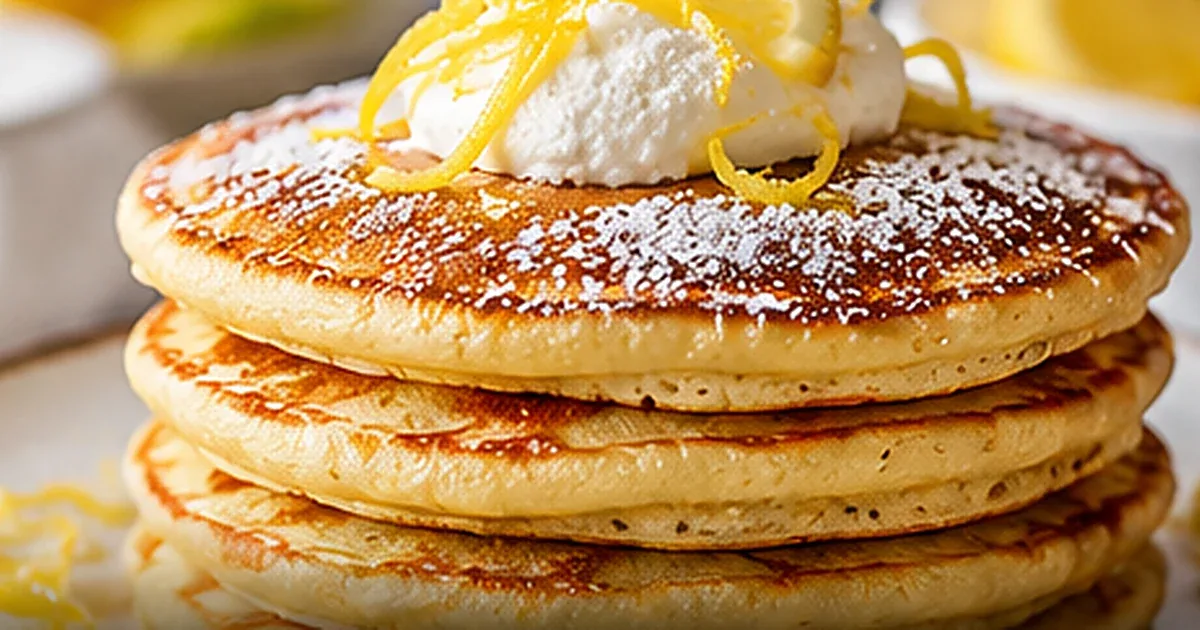
Lemon Ricotta Pancakes with Fresh Lemon Zest
Ingredients
Equipment
Method
- Whisk flour, baking powder, baking soda, salt, and sugar in a medium bowl.
- In a second bowl, whisk ricotta, milk, eggs, lemon zest, lemon juice, melted butter, and vanilla until mostly smooth.
- Add the wet mixture to the flour mixture. Stir just enough to combine; ricotta lumps are fine. Rest the batter 5 minutes.
- Heat a nonstick skillet over medium-low to medium heat and coat lightly with oil or butter.
- Scoop approximately 1/4 cup batter per pancake. Gently spread to an even circle; cook about 2–3 minutes until edges set and the bottom is golden.
- Flip once and cook 1–2 minutes more, until the center is fully set. Adjust heat between batches to prevent browning before cooking through.
- Serve warm with berries, a spoon of yogurt, or a little maple syrup.
Notes
Frequently Asked Questions
Do lemon ricotta pancakes taste like cheese?
Not strongly. Ricotta has a mild flavor and mainly changes the moisture and texture. The lemon zest is more prominent in the finished pancakes.
Can I use part-skim ricotta?
You can, but the texture may be a little less rich and the moisture level may differ. Keep the other quantities consistent at first and adjust milk only if needed.
Why is the batter thicker than normal pancake batter?
Ricotta adds body. The batter should mound softly but still spread into a small circle with gentle encouragement. Do not thin it until it pours like crepe batter.
Can I make the batter the night before?
Freshly mixed batter gives a more predictable rise. If you prepare ingredients ahead, measure the dry and wet mixtures separately, refrigerate the wet ingredients, and combine shortly before cooking.
Can I freeze lemon ricotta pancakes?
Yes. Cool them promptly, freeze with parchment between layers, and reheat just the portions you need. Add fresh toppings after warming.
A Fresh Alternative to the Everyday Pancake
The appeal of lemon ricotta pancakes is the balance between familiar skillet cooking and a lighter-tasting, tender interior. Keep the heat moderate, fold the batter gently, and make the lemon zest the source of the citrus aroma. Once you know the basic texture, a handful of berries or a spoon of yogurt is all you need to make a weekend breakfast feel special.