
Cranberry orange oat bars bring a bright citrus note to a soft-baked, portable breakfast. Old-fashioned oats, whole-wheat flour and yogurt form the tender base, while dried cranberries contribute chewy tartness. The bars are not a crisp packaged granola bar or a crumbly dessert slice; they are closer to baked oatmeal cut into squares. The pan gives you nine portions for busy mornings or a casual weekend breakfast table.
The technique is simple, but cooling matters as much as baking. The mixture needs the right balance of moist and dry ingredients, a correctly sized pan and enough time to set before you lift it out. Use fresh orange zest for fragrance, measure the juice rather than guessing and allow the slab to cool completely before cutting. The structured recipe card supplies exact measurements and baking steps, while the sections below explain how to avoid gummy centers and crumbly edges.
Table of Contents
Why Cranberry and Orange Make a Good Pair
Dried cranberries bring a chewy, pleasantly tart note to baked oats. Orange zest supplies fragrant citrus oils that make the bars taste brighter without relying on a large quantity of juice. The combination works particularly well during colder months, but the ingredients are easy to keep on hand year-round. The bars are designed as a soft-baked breakfast square rather than a crunchy granola bar or a buttery crumb-topped dessert.
The most important choice is the type of cranberry. Dried fruit sold as sweetened cranberries can contribute considerably more sweetness than unsweetened versions. Either can be used, but taste a few pieces before baking. Chop large berries so they spread throughout the mixture instead of collecting in one part of the pan. Fresh cranberries are not a direct substitute because they carry extra moisture and can change the structure of the baked center.
Choose Rolled Oats and the Correct Pan
Old-fashioned rolled oats hold their shape long enough to give the bars texture while still softening during baking. Instant oats can turn the mixture dense or pasty, and steel-cut oats will remain too firm in this relatively short bake. Whole-wheat flour provides additional structure so the slab can be lifted and cut into squares. Spoon flour into the measuring cup and level it; scooping straight from a packed bag can produce a noticeably dry batter.
An eight-inch square metal pan is ideal for the listed amount. Line it with parchment and allow two edges of parchment to extend beyond the sides. This overhang gives you a safe handle for lifting out the cooled slab. A nine-inch pan will make thinner bars and may require a shorter bake, while a small loaf pan creates a center that takes longer to set. Use the pan size in the recipe first before experimenting with alternatives.
How Yogurt, Egg and Oil Hold the Bars Together
Plain yogurt supplies moisture and a slight tang that complements the orange. Egg helps the mixture set as it bakes, while a modest amount of neutral oil prevents the oats and flour from drying into a crumbly texture. Maple syrup provides sweetness and combines easily with the wet ingredients. The recipe intentionally avoids a thick sugar glaze, which would change its role from a breakfast component toward a dessert.
Whisk the wet ingredients until the egg is evenly dispersed, then fold them through the oats, flour and fruit. You are looking for a thick, cohesive mixture rather than a pourable batter. A three-minute rest before transferring to the pan helps the oats begin absorbing liquid. If you notice dry flour pockets after resting, fold a little more; avoid stirring vigorously for several minutes, which can make the finished crumb heavy.
Get Clear Orange Flavor Without Too Much Juice
Finely grated orange zest is the source of much of the citrus aroma. Wash and dry the orange before zesting, and stop grating when you reach the bitter white pith. Two teaspoons of zest are enough to make the fruit noticeable against the cranberries. A small measured amount of orange juice reinforces the flavor, but using all the juice from a large orange can make the batter too wet.
If you have an orange that produces more juice than needed, reserve the extra for another use rather than pouring it in. For a slightly different flavor, a pinch of cinnamon works with both oats and citrus, while optional vanilla powder adds a gentle bakery aroma without using an extract. Keep additional spices restrained so that the cranberry-orange pairing remains the focus of the finished squares.
Mix, Press and Bake the Oat Bars
Heat the oven to 350°F (175°C) before you begin mixing. In one bowl whisk rolled oats, whole-wheat flour, baking powder, cinnamon and salt; fold in the dried cranberries. In a second bowl mix yogurt, egg, maple syrup, oil, orange juice, zest and optional vanilla powder. Combine the two mixtures until every part of the flour is moistened. Spoon into the lined pan, then smooth the top with a spatula.
Bake for approximately 25 to 32 minutes. The top should look set, the edges lightly golden and a toothpick from the center should come out without wet batter. Some moist crumbs are expected because these are soft bars, not a dry cookie. If the edges brown well before the center sets, protect them loosely with foil and continue checking in short intervals. Pan material and oven accuracy matter more than any single minute on the clock.
Printable Recipe Card
Find the measured ingredients, baking temperature, yield and ordered method in the recipe card below.
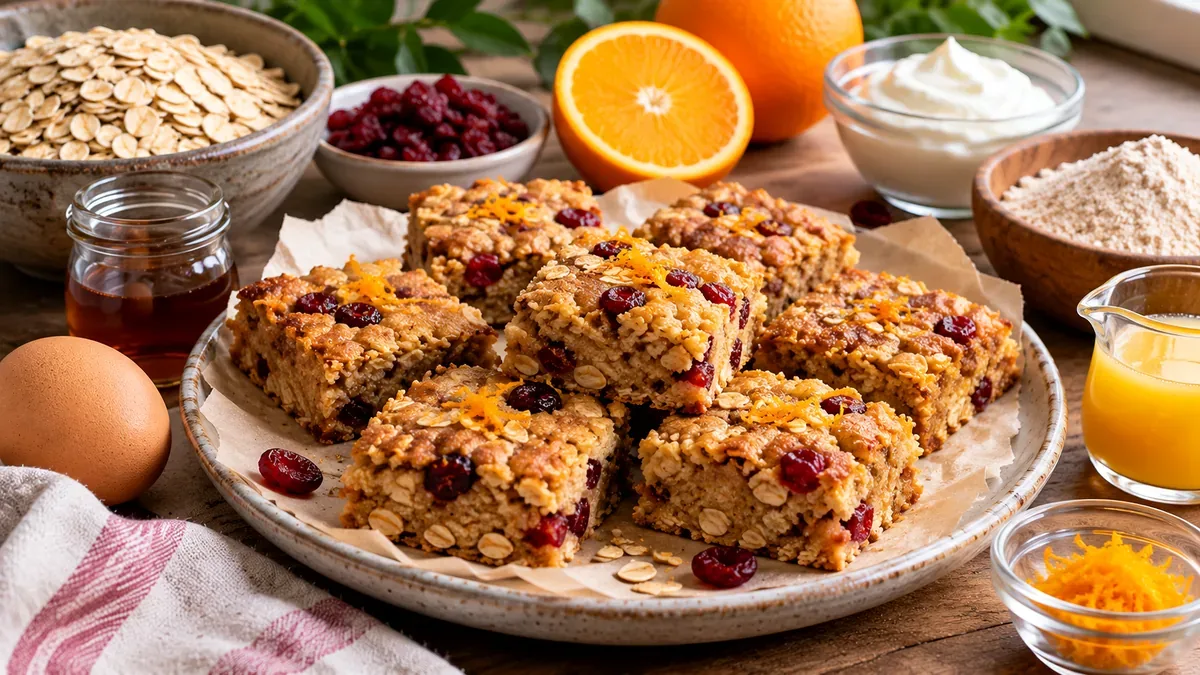
Cranberry Orange Baked Oat Bars
Ingredients
Method
- Heat oven to 350°F (175°C). Line an 8-inch square metal baking pan with parchment, leaving a little overhang for lifting the bars.
- In a large bowl whisk oats, whole-wheat flour, baking powder, cinnamon, and salt; stir in dried cranberries.
- In a second bowl whisk yogurt, egg, maple syrup, oil, orange juice, zest, and vanilla until combined.
- Fold wet ingredients into dry ingredients until no flour pockets remain; let stand 3 minutes so the oats absorb some liquid.
- Press mixture evenly into the prepared pan, smoothing the top without compressing it excessively.
- Bake 25–32 minutes until the center is set, edges are lightly golden, and a toothpick comes out without wet batter. Cool completely in the pan before lifting out and cutting into nine bars.
Notes
Why Complete Cooling Is Essential
The bars may smell ready as soon as they leave the oven, but this is the worst time to cut them. Warm oat bars are delicate because the moisture has not settled through the crumb. Leave the slab in the lined pan on a wire rack until completely cool. Lift it out using the parchment overhang and place it on a cutting board. A sharp knife gives cleaner edges than dragging a dull serrated knife through sticky cranberries.
Cut the square into three rows and three columns for nine even pieces. Wipe the knife between cuts if the fruit sticks to the blade. If the first square crumbles, give the slab more time to cool before continuing. For a different oat-based breakfast that is portioned before baking, try the apple-cinnamon baked oatmeal cups. Their muffin shape and apple flavor make them a genuinely different preparation.
Flavor Variations That Keep the Structure
Dried cherries may replace cranberries, although the bars will have a distinct taste and should not be described as cranberry-orange. A little chopped walnut on top adds crunch, but check for nut allergies when serving others. Plain dairy-free yogurt of similar thickness can replace dairy yogurt if needed; thin substitutes are more likely to leave a soft or gummy center. All-purpose flour will work in a pinch, though the crumb may be lighter.
If you want a less sweet bar, choose unsweetened dried cranberries and keep the maple syrup amount initially unchanged. Reducing sweetener substantially can also affect moisture, so it is better to evaluate the original recipe before making a big reduction. Avoid adding fresh berries without revising the liquid balance. These bars depend on measured proportions of oats, flour and yogurt to remain easy to slice and pack.
How to Serve Them for Breakfast
One oat bar can accompany breakfast without needing to represent a complete meal for every appetite. Pair it with plain yogurt, a piece of fruit or another food you enjoy. A slightly warmed bar makes a pleasant accompaniment to tea or coffee, while a room-temperature square works well in a breakfast box. The citrus taste is especially appealing beside mild, unsweetened foods, which allow the cranberry flavor to stand out.
For a brunch table that offers both sweet and savory choices, serve these bars beside roasted red pepper feta frittata or the spinach mushroom breakfast quesadillas. They use different methods and ingredients, so the combination gives guests variety without making several similar oat recipes. Keep bars on a clean serving platter rather than piling warm pieces on top of each other.
Storage, Freezing and Reheating
Cool bars thoroughly, then transfer them into a covered container and refrigerate promptly. With yogurt and egg in the recipe, use a conservative three-to-four-day refrigerated storage window. Place parchment between layers if stacking to prevent the surfaces from sticking. For longer storage, wrap squares individually and freeze them in a labeled airtight container. Individual portions prevent repeated thawing of the whole batch.
Thaw frozen bars overnight in the refrigerator. Warm only the portion you plan to eat, using a low oven or short microwave bursts, and avoid prolonged heating that dries the edges. Do not leave a pan of cooked bars at room temperature for several days. For additional practical packing advice, see how to pack hot and cold lunches safely, which explains why perishable foods should stay chilled until serving.
Fix Dry, Crumbly or Gummy Results
Dry bars often result from an overfilled flour cup, a longer-than-needed bake or too much pressure when mixing. Next time measure carefully, use the specified pan and start checking for doneness at the early end of the range. If a batch is too crumbly to hold in your hand, use the pieces as a topping for a bowl of yogurt rather than discarding them. This makes practical use of the flavor without pretending the texture is perfect.
Gummy centers are more likely with excessive orange juice, instant oats, a pan that is too small or an underbaked center. If the middle is genuinely wet, return it to the oven briefly and check again. Let the slab cool fully before deciding that it failed to set. Once these details are right, cranberry orange oat bars are a straightforward way to prepare several breakfast portions from a single square pan.
Frequently Asked Questions
Can I use fresh cranberries instead of dried?
Not as a direct one-for-one swap. Fresh cranberries contain much more water, so the mixture and baking time would need adjusting.
Can I make the bars without yogurt?
A similarly thick plain dairy-free yogurt may work, but thin substitutes can make the bars too soft. Keep the original liquid balance as close as possible.
Why do my oat bars crumble when cut?
They may still be warm or the batter may have been too dry. Let the slab cool fully before slicing and measure flour without packing the cup.
Can I freeze cranberry orange oat bars?
Yes. Cool them completely, wrap individual squares and freeze in an airtight container. Thaw in the refrigerator before serving.
Are these crunchy granola bars?
No. They are soft-baked oat squares with a tender center, closer to portable baked oatmeal than a brittle granola bar.